
To Be Unjudged
Leave a reply
By GORDON GLANTZ
@Managing2Edit
GORDONVILLE — Sofia is a playing an angel in her school’s Christmas pageant. Always the performer, she turned our home into a playhouse, and has used the pending occasion to practice the song and dance routine repeatedly.
But it wasn’t until the other night – as she was singing “Silent Night” and busting ballet moves in her angel outfit, complete with wings and halo – that a bitter irony struck me.
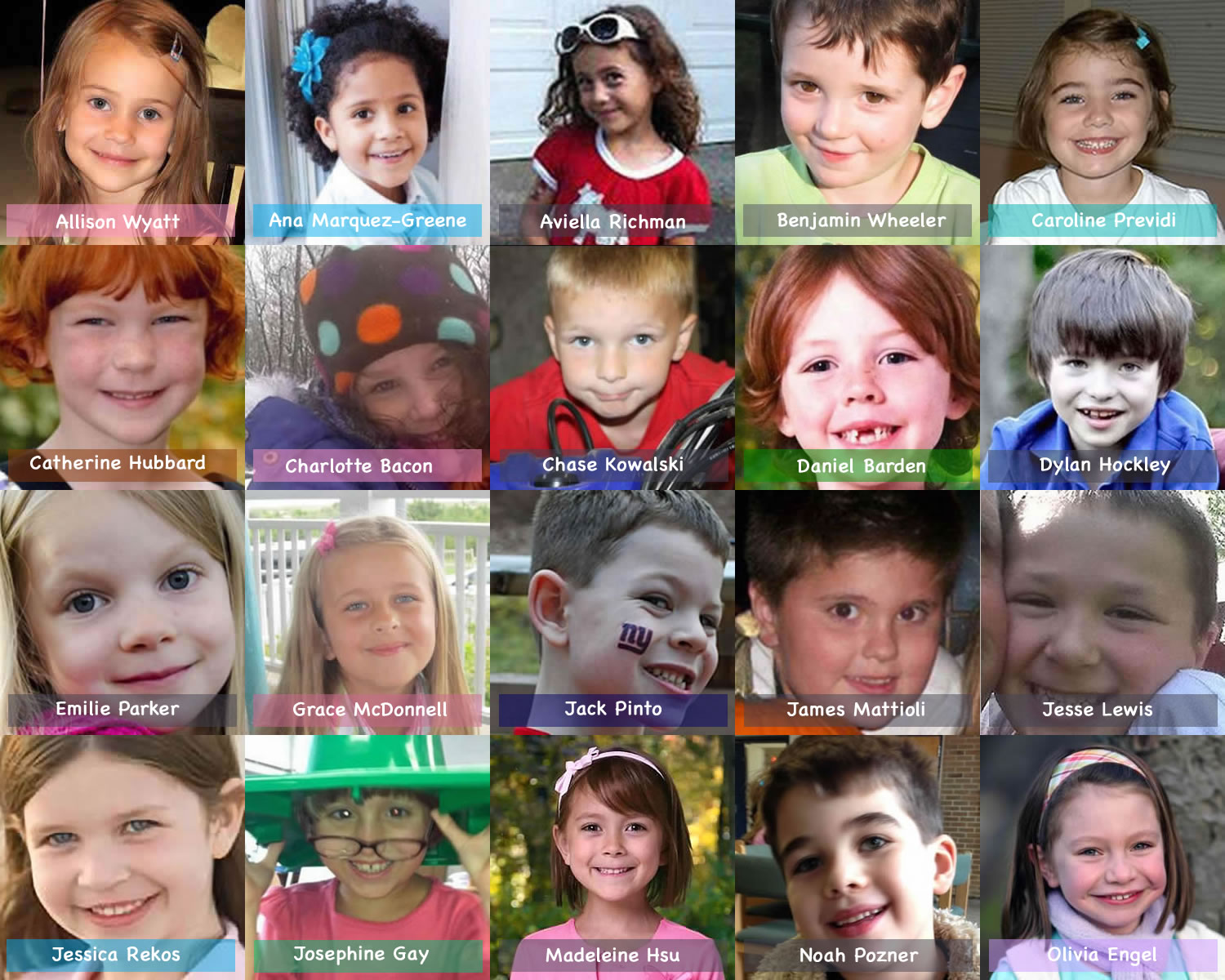
The pageant practically coincides with the one-year anniversary of the mass shooting at Sandy Hook Elementary School in Newtown, Conn. that left 26 people dead.
Twenty of those victims were first-graders huddled together in a corner of their classroom.
Sofia is now in first grade herself.
Sorry if it hits home, but it hits home.
Just like the parents of those once-living angels who never saw 2013’s Christmas, or Hanukkah, I drive her to school each morning and make sure to say “I love you” and get a goodbye kiss before she exits. And my day isn’t complete until she is back in my car, safe and sound, and begins telling me about the happenings of her day with her teen-like verbiage oddly coupled with a baby voice.
And when Sofia and her fellow angels sing “Silent Night,” it will be hard not to think of those other angels from Newtown and the sentiment that they will “sleep in heavenly peace.”
There will be commemorations all across America on Saturday’s marking point of the nation’s 31st – yes, 31st – school shooting since Columbine in 1999, and many will include moments of silence for the victims.
But the silence on gun control – and the powerful stranglehold that the NRA maintains on our weapon-entranced culture – should have ended a year ago.
If that wasn’t the definitive line in the sand, a call to begin fighting back, then what is?
Yes, there had been mass shootings before that begged for change.
But Newtown – maybe because of the time, place and age of victims – seemed to have “last straw” stamped on its ugly face.
The clock had struck midnight in America.
The time seemed right to stay vigilant through the darkness and celebrate a new dawn.
The president, who had not done anything but “try to take your guns away” in his first term, laid down the gauntlet with 23 executive actions, including the CDC doing an about-face on a short-sighted act of Congress calling on the Centers for Disease Control to cease and desist putting the scourge of gun violence under its objective microscope.
The result? Nothing.
Once again – against the will of “we the people” (91 percent of voters support background checks on prospective gun owners, according to a Quinnipiac poll) – those inside the beltway, who are protected by secret service agents, decided to place it on the back-burner and dare to look parents in the eye.
What was a cursory baby step toward sane gun control was shot down by our leaders in Washington, D.C. in a cruel-and-calculated way that more or less exceeded what happened in Newtown, Conn.
People still can’t believe something like that can happen in an upscale New England town.
I still can’t believe something like what happened in response could happen in Congress.
The current year has been just as bloody. Lowlights include 13 being gunned down in a D.C. Navy Yard in September and six school employees at a Santa Monica Junior College in June.
What does or doesn’t make headlines and lead the nation news broadcasts on a given day is an inexact science. Let us not forget six killed in July in Hialeah, Fla. in July or five in Manchester, Ill. (by the nephew of the local mayor) in April or the spree in upstate New York by a 64-year-old who took six lives.
It would be safe to say that the full year since last Dec. 14 has been a silent night.
A long, cold and sleepless one.
“Our lives begin to end the day we become silent about the things that matter,” said Martin Luther King., Jr.
To heed these words, we need to begin standing together and making a noise so loud that our elected leaders will realize that they will be out of work if they choose not to listen.
Newtown has jarred some modicum of progress. Individual states, some which previously had pathetic gun laws, have enacted measures. But without top-down legislation, it’s too shoddy. It’s no surprise that there is a correlation between higher rates of gun deaths and those assigned failing grades by the Law Center to Prevent Violence.
In a clash of titans, the NFL seems to be willing to butt heads with the NRA, as it has refused to accept pro-gun blood money to run ads promoting firearm ownership for the sake of self-protection.
The American Association of Pediatricians, in a recent survey, supported legislative action.
There has been the formation of grassroots groups, several of which I follow on Facebook and repost – much to the annoyance of my gun-toting friends – on my page.
This is a great first step, but these groups – with the exception of the NFL — remain mice fighting gorillas.
All the logical arguments to work toward gun control meet with responses ranging from the sublime to the ridiculous, and from the ignorant to the arrogant.
Common right-wing retort: It is more about addressing mental health than guns.
OK, honestly – and I don’t mean to sound harsh — how do we police every person with issues who may have skipped his meds, let alone all those who go temporarily insane and act on impulse with a gun close at hand.
Here’s a classic: It is impossible to do anything about it.
So … that means do nothing?
That means Nelson Mandela, who said, “it’s always impossible until it’s done,” had it wrong but you “defenders of freedom” – in your infinite wisdom — have it right?
And they like this one: Cars kill more people than guns do, and you don’t want to ban all cars, do ya?
First of all, while my utopian world would be gun-free, no one is talking about banning guns. We are advocating dialing it down a notch from it being the Wild West of yore in the 21st century.
There are, as there should be, a litany of safeguards against the type of driving that takes lives. On top of that, measures are taken to keep safe vehicles on the road. Law enforcement is empowered to make the roads safer.
And, secondly, there are thousands upon thousands of vehicles on the road each day. A miniscule percentage of drivers are looking to do harm, as stupid as they are at times. It’s not apples to apples.
So how do you like them apples?
And they might counter: I am a responsible gun owner. Why should I be penalized?
If you are a responsible gun owner, you won’t be penalized under any of the proposed baby steps toward saving babies.
And there is this old standby: It’s the law. It’s in the Second Amendment. It’s what the founding fathers wanted.
The founding fathers came from a different place and time when they advocated gun ownership. If they could see what is going on in their name, they would be heartbroken.
If they wouldn’t be, they are no one I care to admire.
According to USA Today, there have been more than 200 mass killings (four or more victims) since 2006, which is an average of one every two weeks. That is a conservative estimate, as the exact number is curiously underreported by the FBI (considered 61 percent accurate).
The same article revealed that a third of the victims are under the age of 18.
In the last year, since the unspeakable tragedy at Newtown, 194 children (defined as being under the age of 12) have been killed by guns, according to MotherJones.com.
And the average age per victim was 6, same as Sofia.
Our country leads the world with this dubious distinction, and that rate is four times that of Canada, which is second. It is a rate 65 times greater than Britain or Germany.
In keeping with the holiday season, let’s put it another way.
That’s a whole lot of angels prevented – via a silent night – from sleeping in heavenly peace.
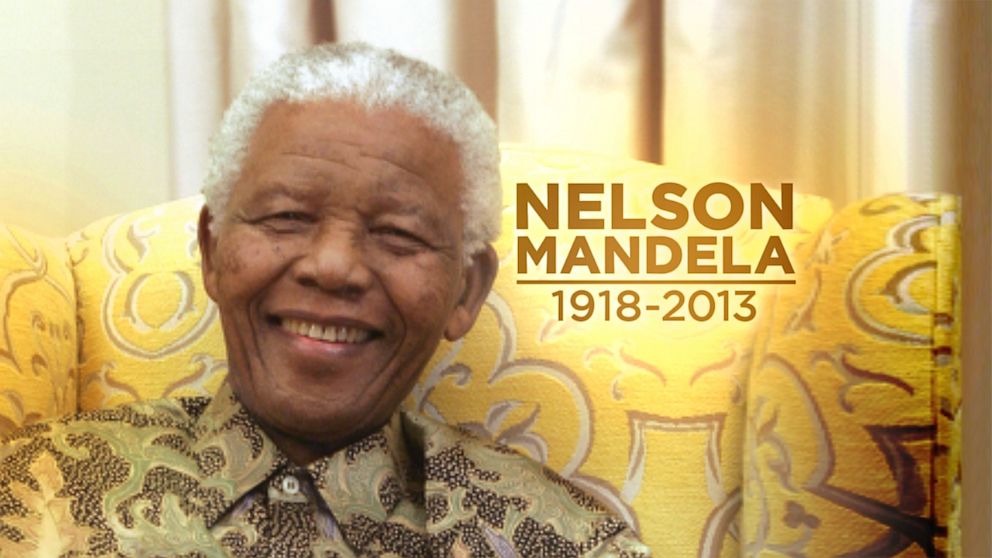
“Do not judge me by my successes, judge me by how many times I fell down and got back up again.”
-Nelson Mandela
By GORDON GLANTZ
@Managing 2Edit
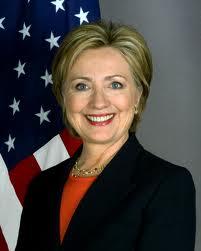
GORDONVILLE – Many of my liberal brethren are quickly lining up behind Hillary Rodham Clinton as their 2016 presidential candidate of choice, and they might be wondering why I have yet to join forces.
After all, I was firmly in her corner during the primary season of 2008, only switching allegiance to Barack Obama after she waved the white flag and endorsed him.
I have the columns from my past lifetime.
Heck, I even have the lawn sign out in my garage to prove it.
So why have you not seen me click “like” on pro-Hilary thread on Facebook, or pontificate on her behalf?
It certainly has nothing to do with gender, as nothing has convinced moi in the intervening years that the best person for the job as the alleged leader of the free world can’t be a woman.
I am the father to a daughter. It would be amazing for her to have such a monumental occurrence so early in her lifetime. I won’t even have to lower myself to say, “you can be anything you want to be, baby.”
It’ll be true.
Age?
Eh, maybe.
A little.
She just turned 66 in October. The math shows that two terms, if elected in 2016, would put her at 77 by 2024.
I had the same concerns about John McCain – until the point became moot when he picked at a scab when the sun doesn’t shine on his body and called it his running mate.
But Americans are living longer, and should continue on that path with more humane health care.
It also has zero to do with the irksome “Benghazi, Benghazi, Benghazi” battle cry of the right wing.
Instead, it goes to a more fundamental core belief about this country and royal families. It is why Jeb Bush, even if he is competent, should be stricken from consideration. It is why I am only lukewarm on the Kennedy clan.
It is why we fought the Revolutionary War, is it not?
Foibles aside, I like Bill Clinton. While it isn’t saying much, he is probably the best president of my lifetime (1965-present). Hillary, for all intents and purposes, is cut from the same ideological cloth.
But it is the same cloth with the same family crest.
And to quote Hall and Oates, “I can’t go for that … no can do.”
At least not yet.
At least not until we see who else is out there, and we do the liberal thing – keep an open mind – and evaluate them on their merits and not be in awe of their last name.
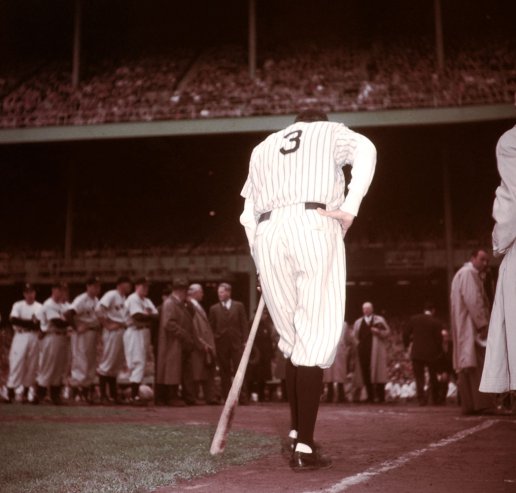
“Every strike brings me closer to the next home run.”
-Babe Ruth
Baseball Legend
By GORDON GLANTZ
Gordonglantz50@gmail.com
@Managing2Edit
GORDONVILLE — Want a conspiracy theory? The NFL tried to sabotage to 2013 Philadelphia Eagles.
How and why the league would do this to one of its larger-market franchises makes far less sense than the plausible case for shots coming from the grassy knoll, but the evidence is there for those wishing to don tin-foil headgear.
The Eagles began the season with three games in 11 days, after which they found themselves at 1-2 and with more questions than answers about new coach Chip Kelly making the transition from his college fiefdom at Oregon to putting the Eagles back on the path to relevance.
The league wasn’t done with the Eagles, not giving them a breather in the schedule until Week No. 11. Such is life for a team that fell off the map after going 4-12.
But here they are, none the worse for wear.
If there was a force trying to keep them from being a storyline on ESPN or the NFL Network, it didn’t achieve its objective.
There were times, like a midseason skid in which the Eagles failed to score an offensive touchdown in two divisional home losses and fell to 3-5 at the midway point, when Kelly’s crew was left for dead.
But whatever didn’t kill them has made them stronger.
Here they sit at their long-awaited break with an opportunity to recharge their engines, dip in the healing waters of the whirlpool and enter the final five games of the season – including three at home – controlling their own destiny in the NFC East with a 6-5 record and riding a three-game winning streak.
Now, at a rest stop on this journey, it’s the perfect time to take a breath and survey the landscape with an analysis of the team.
FRONT OFFICE
People like to mock general manager Howie Roseman, mainly because he isn’t a battle-scarred ex-player. Roseman is often the fall guy for assembling the nightmare “dream team” of 2011 that was the beginning of the end for former head coach Andy Reid. He has been blamed for horrid errors on draft day. With a clean slate to work with Kelly, Roseman has seemingly made the right moves. There has been impact from the rookie crop, and most of the no-frills free agent additions have contributed. It should also be noted that the draft class of 2012, which owner Jeffrey Lurie says was the first with Roseman’s true fingerprint, has come up huge this season. Grade: B+
COACHING
Chip Kelly has made some curious decisions in the heat of battle and seems red-flag challenged. The game plans in home losses to Kansas City, Dallas and the New York Giants seemed lacking in vision. Overall, though, we can’t argue. It’s hard to get a clean read on offensive coordinator Pat Shurmur because Kelly calls the plays that the quarterback has the freedom to alter, so Shurmer is twice removed from the process on game day. However, as a planner in the pre-game strategy and an eye-in-the-sky, it would seem this NFL lifer has been a positive force. He is allegedly in charge of notifying Kelly of when to challenge a call. If true, or partially true, we hope he has visited an eye doctor during the bye week.
Defensive coordinator Billy Davis was in line to be tied to the whipping post after his unit looked like a sieve early on, falling to the bottom of the league stats in almost every category. But they have either grown into his scheme or he has shaped it around the players’ strengths and weaknesses. Whatever the reason, it seems to be working well enough that they hold their own enough to complement the high-powered attack. When it all shakes out after 16 games, we could be looking at a middle-of-the-pack unit that is ascending. The special teams, under Dave Fipp, have endured some ups and downs – namely in the blowout loss against Denver – but has generally been consistent in all phases. Grade: B+
OFFENSE
Quarterback: Kelly named Michael Vick the starter over Nick Foles heading into the season, possibly to keep the peace in a locker room of veterans loyal to Vick. Foles maintained a positive attitude and answered the bell when Vick went down with the inevitable injury. He has not only established himself as the short-term starter, but also the quarterback of, at least, the immediate future. He proved an atrocious outing against Dallas was the exception, not the norm, as he has been named the conference’s offensive player of the week twice and tied an NFL record with seven touchdown passes in a game against Oakland. He entered the bye with the best passer rating in the league (128.0), boasting 16 touchdown passes and zero interceptions. He is 4-1 as a starter and also helped secure victory in relief of Vick on the road in the Meadowlands. In the midst of the quarterback shuffle and injuries to both Vick (hamstring) and Foles (concussion), rookie Matt Barkley saw some time that could prove helpful to his evolution as a career backup. He looked ill-prepared to play meaningful snaps. Having Vick suiting up again after the bye will be a welcome sight.
Individual grades: Foles (A), Vick (B), Barkley (D). Overall grade: B-plus
 Running Back: Not much to say about LeSean McCoy (left), other than that he has taken the ball and run with it. Having more consistent chances under Kelly than Reid, who would often go whole quarters of game without calling McCoy’s number, McCoy has already eclipsed the 1,000-yard rushing mark. Add in yardage on 34 catches, and McCoy has more than 1,400 yards from scrimmage. A disappointment has been backup Bryce Brown, who has failed to pick up where he left off as a force carrying the ball. He has had some nice catches and runs on swing passes and has yet to fumble, but lacks the consistent carries a bigger back needs to find his groove. He would need another McCoy injury, like last year, to prove that he can get stronger as a game wears on. But nobody wants to see that. Third back Chris Polk has scored a touchdown and been solid, when healthy, on special teams. Matthew Tucker, an undrafted rookie out of TCU, was added to the roster from the practice squad but has yet to be on the field for any offensive plays.
Individual grades: McCoy (A), Brown (C), Polk (C), Tucker (I). Overall grade: B+
Wide Receiver: Give Kelly a gold star for making DeSean Jackson matter again. While Reid seemingly just told No. 10 to go deep and be a decoy, Kelly has made an effort to get the ball in the explosive receiver’s hands on short, medium and long passes. The result is that he is on a Pro Bowl track. Jackson entered the break with a team-high 58 catches and was 15 yards from 1,000.
When Jeremy Maclin went down early in training camp with a serious knee injury, Riley Cooper moved into the starting lineup. Perhaps because his head was not completely in the game because of his regrettable off-field controversy or because he just didn’t click with Vick, Cooper was a non-factor and ranked as the least productive starting receiver in the league. A free agent after this season, he was considered a sure bet not to be retained. And then, as fast as you can say Nick Foles, Cooper turned on the jets and took off. He is tied with Jackson for the team lead with seven touchdown catches and is averaging a team-high 19.1 yards on 31 catches. It is at the point now that if Foles is christened as the starter, Cooper has to be kept, meaning Maclin and/or Jason Avant, may not be back. Avant, still a reliable safety valve, has not been as much of a factor since Cooper and Foles developed their chemistry. Going further down the depth chart, Jeff Maehl has made some catches. Damaris Johnson, mainly a return man, has been a non-factor. Versatile veteran Brad Smith was signed recently and it will be interesting to watch how he is integrated after the bye week.
Individual grades: Jackson (A), Cooper (B+), Avant (C+), Maehl (C), Johnson (I), Smith (I). Overall grade: B
 Tight End: The presumption was that since New England coach Bill Bellichick previously elicited Kelly as a consultant, the same heavy usage of tight ends there was going to be deployed here. That theory gained more validity when Zach Ertz was drafted in the second round and put in a stable with the tenured veteran Brent Celek (left) and free agent James Casey. While Celek and Ertz have made some key catches, there have also been some bad drops when the chains were crying out to be moved. The trio has combined for a modest 43 catches on 71 targets. Give Celek props for solid blocking, which has become a strength after it being a flaw in his game early in his career.
Individual grades: Celek (B-), Ertz (B-), Casey (D). Overall: C+
Offensive Line: With left tackle Jason Peters and center Jason Kelce returning from serious injuries, this unit was hyped as being one of the best in the business. It hasn’t been that seamless, as players don’t just regain form by fans wishing upon a star. Peters is still good, but not quite as dominant. Kelce is smart, but has been overwhelmed by 3-4 teams with powerful nose tackles. Left guard Evan Mathis has been solid. Right guard Todd Herremans, shuffled back inside after playing tackle and left guard in the past, seems to be improving after some early struggles. Right tackle Lane Johnson, drafted fourth overall, has played as expected. He has shown he has a high ceiling, but has made some mistakes. Johnson seemed to hit a midseason wall, but fought through it. The only sub to have played much is journeyman Allen Barbre, who has held his own when Peters has been dinged. If the Eagles have to go any deeper on their bench, beyond Barbre, it could spell doom. In the final analysis, when a team has the league’s leading rusher and top-rated passer, the line deserves credit.
Individual grades: Peters (B), Mathis (B+), Kelce (B), Herremans (B-), Johnson (B), Barbre (C+). Overall grade: B
DEFENSE
Defensive Line: After dealing away Isaac Sopoaga, one of the few free agents who pulled a Houdini, the unit was left with six young-but-hungry battlers. Defensive tackles Fletcher Cox (three sacks) and Cedric Thornton (team-leading four tackles for losses) come from opposite ends of the pedigree spectrum, as Cox was last year’s first-round pick and Thornton is a self-made undrafted guy. However, they are combining to be a formidable tandem. Rookie Bennie Logan moved into Sopoaga’s nose tackle spot and plays with a lot of hustle. Give him an offseason to add 10 more pounds and he could be a keeper. It is no coincidence that the line got a lift once second-year man Vinny Curry wasn’t inactive on game day. Curry, a pass-rushing specialist originally pigeon-holed as a bad fit for the new 3-4 alignment, shares the team lead with four sacks. Damion Square, an undrafted rookie out of Alabama, has worked his way into the rotation. Why Clifton Geathers is on the team remains a mystery. Aside from Geathers, who is simply as placeholder on the roster for now, all the others in this group are in their first or second seasons in the league.
Individual grades: Thornton (B+), Cox (B), Curry (B), Logan (B-), Square (C), Geathers (D+). Overall grade: B-
Linebacker: If not for San Francisco’s Patrick Willis and Carolina’s Luke Kuechly, DeMeco Ryans would be looking at a Pro Bowl nod. While emerging as a team leader in the locker room, Ryans has silenced doubters who said he was strictly a traditional 4-3 middle linebacker. His stats across the board – 96 tackles (76 solo), three tackles for losses, two sacks, two interceptions – speak for themselves. Not far behind is the other inside linebacker Mychal Kendricks. While he is not quite as disciplined as Ryans, Kendricks has been productive – 68 tackles (54 solo), three tackles for losses and three fumble recoveries – while also often drawing the short straw and having to “spy” on the more mobile opposing quarterbacks.
At outside linebacker, Connor Barwin may not have the name cache for Pro Bowl consideration, but he has been a model of consistency. He has four sacks, tying him with Curry, to go along with 10 passes defended and three tackles for losses. At the other outside spot, we have Trent Cole. The longest-tenured Eagle, switching from defensive end to linebacker, picked up two sacks against the Redskins to raise his total to three this season. It appears that Davis is starting to meet Cole halfway, asking him to do what he does well, which is go downhill. Cole, though, is a free agent at the end of the season and the addition of real dynamic force opposite Barwin would make this linebacking corps dangerous. A name to watch, considering where the Eagles will likely be picking in the first round, is Kyle Van Noy out of BYU. Backups – Brandon Graham, Najee Goode, Casey Matthews and Emmanuel Acho – have held their own when called upon.
Individual grades: Ryans (A-), Kendricks (B+), Barwin (A-), Cole (B-), Graham (C+), Goode (C+), Matthews (C), Acho (C). Overall grade: B+
Cornerback: The Eagles are 31st in the league against the pass, so it’s difficult to hand out plaudits for those charged with covering receivers. However, we can respond to this bad report card with a note from home. There has been drastic improvement since being singed by the likes of Payton Manning and Philip Rivers earlier in the season. Cary Williams and Bradley Fletcher, each with two interceptions, are effort guys who play with attitude and hustle and take it personally when giving up a big play (a welcomed change from the past two seasons). Nickel corner Brandon Boykin, in his second year, leads the team with four interceptions and is a player on the rise. Roc Carmichael, who was signed off waivers from Houston, and started when Fletcher was out the last two weeks. For the most part, he held his own. Curtis Marsh has returned to the nest but has yet to play on defense.
Individual grades: Boykin (B+), Williams (C-), Fletcher (C+), Carmichael (C), Marsh (I). Overall grade: B-
 Safety: A true impact player – via draft or free agency – remains a priority, but the improvement of this group has mirrored that of the defense. That is mostly true of Nate Allen (left). who has 46 solo tackles, good for third on the team behind Ryan and Kendricks. He has gone from target of the boo-birds to at least blending in with the scenery by following his assignments. Patrick Chung’s shoulder injuries allowed rookie Earl Wolff to emerge as a starter, at least until Wolff injured his knee. Kurt Coleman has almost played strictly on special teams. Last game, when Chung exited and Wolff was not in uniform, fans had to have scary flashbacks to last season when Coleman and Allen were oft-burned as the starting safeties. However, the Redskins were kept in check until Chung was hurried back. Colt Anderson, an ace on special teams, has barely played on defense. Only Wolff – out of the entire group – has an interception, and that came on a Hail Mary pass.
Individual grades: Wolff (B-), Allen (C+), Chung (C), Coleman (C-), Anderson (I). Overall grade: C+
SPECIAL TEAMS
Kicking: One disappointment has been Alex Henery, who is a pedestrian17-for-22 with a long of 48 yards. While not abysmal, he is not inspiring the confidence that a kicker that was drafted in the fourth round a few years back should. Grade: C-
Punting: The signing of veteran Donnie Jones is proving to be a stroke of genius. He is averaging 45.4 yards per punt with a net of 40.9. On top of that, he has put 22 punts instead the 20, as compared to a mere five touchbacks. Grade: A
Coverage: There have been a few breakdowns, but coverage has largely been a non-issue. Grade: B+
Return Game: Damaris Johnson has seemingly been relieved of his duties after being pedestrian, at best, as the primary kickoff and punt returner. He has a decent average on kickoffs – 25.9 per return – but has used poor judgment by brining many out from deep in the end zone. While Brandon Boykin almost broke a kick while filling in when Johnson was hurt, Brad Smith could be the long-term answer. He has four kickoff returns for touchdowns in his career, although only one since 2010. DeSean Jackson, who established himself as a lethal punt returner in a previous life, has been handling the job lately with mixed results. His average of 9.0 per punt return (pretty much what Johnson had) is largely due to 32-yard gainer in Oakland (he was flagged 15 yards for grabbing the tackler’s facemask). Grade: C-
CRYSTAL BALL
Let’s say the Eagles win three of the next five, making them 9-7, which should be good enough for first place in the NFC “Least.” That would mean a home playoff game, and a likely loss to a team like, say, the Carolina Panthers. No one should or could complain, even if the score is 49-10, but they will anyway. It goes along with the territory.
While Pro Bowl bids – along with All-Pro nods and being named to post-season teams by other publications – come with grains of salt, the Eagles will be well-represented. Earlier in the season, it looked like McCoy, maybe Jackson, would be it. Now, we also have Mathis and maybe Peters (on reputation). Foles would at least be in line for being a Pro Bowl alternate, which would be quite an achievement for a guy who didn’t even begin his second season as the starter. Defensively, Ryans and Barwin will be in the conversation. Ditto for Jones as the punter. Johnson, Ertz, Logan and Wolff could be in All-Rookie consideration. Kelly? Coach of the Year? Probably second to Reid, proving that fact is stranger than fiction.
This column is also available at http://www.phillyphanatics.com

By GORDON GLANTZ
@Managing2Edit
GORDONVILLE – With the coming of the 50th anniversary of the assassination of John Fitzgerald Kennedy, the 35th president of the United States, it is a natural time to look back.
To look back in sorrow –sorrow about a bright light, even if more a figment of pop culture imagination than reality, being burned out before its time.
To look back with nostalgia – nostalgia loaded down with all that self-absorbed, I-remember-where-I-was stuff.
Me? I’m just looking back in anger.
A lot of it.
There are too many questions than answers to have a more mellow reaction and mourn for Camelot and all that jazz designed to take our eye of the ball.
It has been 50 years, and I am among the large percentage of “we the people” who don’t believe the fairy tale that Lee Harvey Oswald acted alone in gunning down JFK from the sixth floor of the Texas School Book Depository in Dallas on Nov. 22, 1963.
The fourth estate – my chosen profession of journalism — became
the first to be duped.
Fifty years later, it is an entity not even worthy of tackling this one. The best they can do is stay in the wheelhouse of discrediting anyone who beats them to the punch.
Since I am not really in the business anymore, I can say that it’s now personal.
When I walked into a movie theatre to see Oliver Stone’s “JFK” in 1991, I was already well-versed on the topic. I had read books, and seen documentaries and feature films, namely the 1973 movie “Executive Action,” starring Burt Lancaster.
I was already convinced that one of the more vile works of modern fiction ever injected into the bloodstream of our culture – like heroin in the veins of a junkie — was the Warren Report that hastily ignored any evidence pointing to a conspiracy and followed a predestined path to lay the guilt solely with Oswald.
Prior to the release of “JFK,” the average person was passé on the topic. They accepted the “official” story about Oswald but post-Watergate cynicism made them say they wouldn’t be surprised if there was an alternate theory that was swept under the rug.
Sitting in the theatre that night, I almost got chills when I could feel an awakening as viewers around me laughed aloud at that utter silliness of the incongruent Warren Report.
There were some liberties taken by Stone in “JFK,” lest a three-hour movie last three days without composite characters and supposition about meetings that took place, but the hatchet job done on him by the supposed left-leaning press told us all we need to know about the ability to tell a story in the light of day in America.
Stone’s legacy, in lieu of breaking the case, is putting the question marks back into public consciousness, which he now says was his primary objective.
Pretty much every network – from NBC, ABC, CBS and PBS to CNN, FOX and all the others – has run its own specials, using tantalizing advertising, only to lead viewers down the same dead end street and conclude that Oswald acted alone.
Like climate change naysayers, they ignore an abundance of evidence and pass it off as saying there is “no real proof” of a conspiracy.
Back at you.
There is “no real proof” that Oswald acted alone – or at all (ballistic tests showed he likely did not even fire a rifle that day).
There is more concrete evidence that he killed a Dallas cop, J.D. Tippit, than that he killed the president, and even that case is circumstantial (witness descriptions of Tippit’s killer vary).
The American public never knew his side of the story – and there are always two sides to every story – because there was no trial.
Jack Ruby was somehow able to enter the armed fortress that was the police station where Oswald was being held and shoot him while being transported to a high-security jail where he would have been an untouchable for anyone to silence before he spilled whatever beans he had to spill.
Perhaps the ante was ratcheted up when he blurted out that he was a “patsy.” There was a panic that he needed to be shut up, and Ruby had the connections to get close.
This tells me Oswald was not without some guilt, at some level, in the assassination.
Ruby was not just some random goofball. He had ties to the mob, the FBI, the Dallas Police Department (his strip club was a popular hangout for cops, possibly even Tippit) and with the district attorney.
The argument that he was never a hit man does not hurt the theory that he was silencing Oswald on someone’s order. It actually furthers it, as the killing of Oswald by a known hit man would have created obvious questions about a conspiracy.
There are many fantastical scenarios, a lot more ridiculous than the one of Oswald acting alone – which the American public at the time was conditioned to believe, as lone nuts killing presidents (i.e. Lincoln) are written into history books in indelible ink.
It would be A-OK with me if Oswald’s guilt could be proven beyond a reasonable doubt, but too many loose ends remain.
In “JFK,” Stone really didn’t lay out one alternate scenario, but rather a litany of “what-ifs,” some of which are easier to dismiss than others.
Because of this, he was discredited – most vociferously by some media icons that made their names on the day of Kennedy’s assassination – instead of lauded for systematically dismantling the ludicrous Warren Report (ordered to be wrapped up quickly by JFK’s successor, Lyndon B. Johnson, for his own political gain).
LBJ wanted to sell the American people a cover story they could almost be comforted by – one that assured them that the Cubans or the Russians were not behind the JFK murder – and move forward with the escalation of the war in Vietnam while appeasing the Kennedy people to his left with civil rights reform.
Kennedy, on the other hand, was never sold on Vietnam and it likely had the establishment of the Military Industrial Complex more than a little rattled that this president, still in his 40s, was not down with sticking with the script of rich old men who
were anxious to profit on more war.
Did that get him killed? Makes as much sense as Oswald acting alone, maybe more.
I was 26 years old in 1991. The movie sparked more research, to the point where it became an obsession.
Life experience in the intervening 22 years has taught me a lot, including the fact that the truth – which is really a stew made up of all of our perceptions of our realities and
realities of our perceptions – is a moving part.
The truth here, as in most cases, is that what really happened 50 years ago is likely somewhere between the Warren Report and Oliver Stone’s version.
Oswald was likely involved, at some level, but was a link in a chain. My gut feeling is that those on the ground had no idea who was pulling their strings and passing along envelopes of cash.
I try to let it go and move on, but then I go against my better judgment and watch a “special” like the one on CNN the other night that left out more facts than it put in
just to disprove conspiracy theories.
Just when I thought I was out, they pulled me back in.
To me, the mechanics of how it went down that day are not hard to recreate.
Just like Oswald’s transfer time from the police station to the jail was mysteriously changed from night to day, so was Kennedy’s parade route. It put him, in an open car, in an area – Dealy Plaza – where the open vehicle would have to slow down to a speed that made him an easy target.
Shots came from three directions – the Texas School Book Depository from JFK right rear, the Dal-Tex Building from the left rear and from behind the fence from the grassy knoll to his right front.
Each location likely had a team that included an advance person to set up the sniper’s nest and have a weapon waiting there. The lead man would assist the shooter and spotter as they moved into place.
There were also some operatives on the street – like the man who had a seizure to create a distraction around the time the shooters set up shot – that never turned up at any local hospital.
And we have the man who curiously pumped an umbrella as Kennedy’s car came into prime position.
This could have been a signal to the shooters that car was in position. It could have been an ominous dig at Kennedy, letting him know that he was being killed for the lack of the “umbrella” of air protection during the botched Bay of Pigs invasion. It has even been suggested that the CIA had developed a device where a small projectile could be fired from an umbrella, which could explain the wound in Kennedy’s neck that doctors at Parkland Hospital recorded as an entrance wound (the Warren Report later changed it to an exit wound to fit the story of a single shooter).
One thing for sure is that it was not raining, and there was no need to open an umbrella at such a suspicious time.
While panic ensued in the aftermath of the shooting, the man with the umbrella was seen calmly sitting on the curb with another man, possibly the same one who had the “seizure.”
There were also pictures of Jack Ruby on the street, suggesting he was part of the operation.
Witnesses reported a man matching Ruby’s description running with a sense of purpose, while everyone else was on the ground, seconds after the shooting.
Oswald’s role?
He was probably the advance person inside the Texas School Book Depository, where the planners expected the kill shot would come from (even though it likely ended up being the grassy knoll). He set up the nest, left the rifle (not the same feeble one attributed to him) and waited inside the building before helping the shooters leave.
At some point, he probably deduced that he was being set up. This led to panic, and the possible shooting of Tippit, who could have been involved the plot – at least to the extent that he was told when and where to arrest the predetermined patsy or to shoot him dead and make it look like self-defense.
Who were these other shooters and operatives? Probably just hired hands, maybe ex-military marksmen for hire, who went through layers of middle men.
Those involved in the killing likely had little to zero knowledge of the breadth of the plan.
Who was behind it?
We can make logical guesses, based on who had the most to gain, but the trail goes cold after 50 years of treating us like we’re children.
We will probably never know the truth.
For all my research, your guess – 50 years later — is as good as mine.
And that is what leaves me angry.
That secret died, not only with Lee Harvey Oswald but with a lot of other people.
Lee Bowers. David Ferrie. Guy Bannister. Dorothy Kilgallen. George de Mohrenschildt.
And that’s to name just a few, whose coincidental deaths are also peculiar.
All of them are – or were — vital pieces to the puzzle.
None of them – and their mysterious deaths – received a passing mention in the CNN mockery of a farce of a sham. Instead, the special spent more time on discrediting former New Orleans District Attorney Jim Garrison than the ludicrous magic bullet theory concocted by Arlen Specter or the litany of witness who were positive the kill shot came from the grassy knoll (consistent with the way Kennedy’s head violently snapped, according to the famed Zapruder film, where frames were deliberately flipped to deceive the public).
The Dal-Tex Building, much like the grassy knoll, is the location where nearby witnesses claimed to have heard gunfire. It was actually locked down before the Texas School Book Depository.
A man in a leather jacket and gloves was taken into custody, questioned and released. His name was stricken from officials records. Also in the building at the time of the lockdown was career criminal from California, Eugene Hale Brading (aka James Braden and James Lee), who just happened to be passing through Dallas.
The day before the assassination, he and another man – Morgan Brown – checked into the Cabana Motel. He then visited with oil man Haroldson L. Hunt.
After the shooting, he was questioned for “acting suspiciously” but released after he said he was inside the building – while everyone else was outside to watch the motorcade – to make a phone call.
Ruby, who was believed to have met with Hunt the same time as Brading/Braden/Lee, reportedly visited the Cabana Motel near midnight.
When Tippit was killed by Oswald, instead of the opposite, they had a problem to discuss that night at the motel.
Were all these men, including the dude in the leather jacket on a warm day, were part of the team on the ground that included those taken into custody – and promptly released – from behind the fence beyond the grassy knoll?
We don’t, and won’t, ever know.
We do have the best living example of more than three shots being fired, a man named James Tague. He was struck in the face with a bullet fragment, which is proof that there had to be at least a fourth shot.
Did CNN mention Tague, whose position in Dealey Plaza, would have been directly in the line of fire from the Dal-Tex Building?
Was he interviewed?
No.
There needed to be the conclusion to the two-hour waste of time.
The brilliant deduction was that we, as a culture, don’t embrace the truth about Oswald because we can’t handle the truth.
What we can’t handle is being deceived by lies and half-truths.
If it makes you nostalgic and/or sad, fine.
It makes me angry.
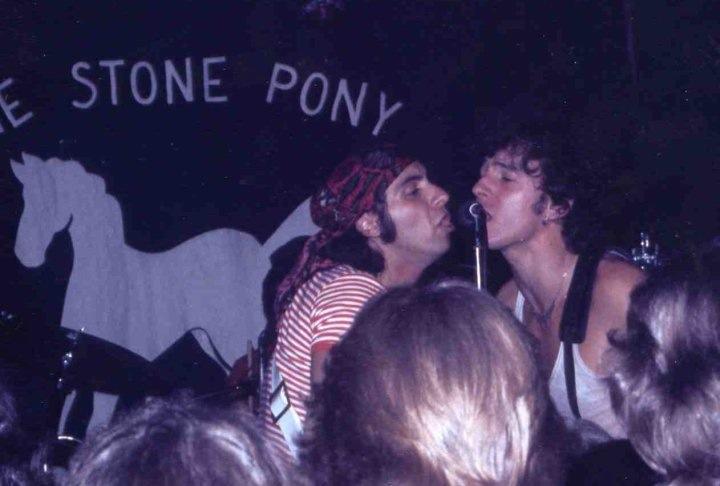
“We busted out of class had to get away from those fools
We learned more from a three minute record than we ever learned in school
Tonight I hear the neighborhood drummer sound
I can feel my heart begin to pound
You say you’re tired and you just want to close your eyes and follow your dreams down
We made a promise we swore we’d always remember
No retreat no surrender
Like soldiers in the winter’s night with a vow to defend
No retreat no surrender”
-Bruce Springsteen
No Surrender

By GORDON GLANTZ
Gordonglantz50@gmail.com
@Managing2Edit
GORDONVILLE – In the fall of 1971, a plane was hijacked in the Pacific Northwest. The suspect, who purchased the ticket under the alias Dan Cooper – misreported by news wire services as D.B. Cooper – received ransom money and parachuted from the plane into the cold and dark night.
Although some of the money was recovered in 1980, Cooper was neither seen nor heard from again.
His disappearance remains one of those head-scratching unsolved mysteries for amateur sleuths and conspiracy theorists (most experts believe he didn’t survive the jump).
Here in the Delaware Valley, in the fall of 2013, fans of the Philadelphia Eagles have dealt with not only the disappearance, but also the mercurial reappearance of another Cooper.
That would be wide receiver Riley Cooper.
The same guy a lot of people wanted to run out of town after a video surfaced of him, in a possible drunken stupor, using a racial slur at a Kenny Chesney concert at the Eagles’ home, Lincoln Financial Field.
But with starting wideout Jeremy Maclin down for the season with a knee injury, rookie coach Chip Kelly had a different reaction. It was to let Cooper work through the controversy, mend fences with his teammates and pick up where he left off during the final third of the 2012 season, when he clicked with then-rookie Nick Foles.
Cooper began the season opposite DeSean Jackson in Kelly’s lineup and was, at one point, the far-and-away least productive starting receiver in the entire league.
Cooper was doing some stellar downfield blocking, but his primary job is to catch passes. Keeping him on the field, getting starter’s snaps, was akin to playing a .200 hitter every day because he bunts well or starting a guy who averages 3.2 points per game because he sets nice picks.
In the first five weeks of the season, with Michael Vick at quarterback, Cooper had eight catches for 93 yards and one touchdown.
Cooper’s disappearance led for open questions about why a guy who had offended so many people – at least until Richie Incognito came along to make him look like a boy scout – was still here. In house, though, Kelly was confident that the guy who was Tim Tebow’s roommate and favorite target at Florida would step up.
Cooper has not only stepped up, he has soared.
The cause-and-effect behind the change is obvious, which is quarterback Nick Foles seizing the opportunity to start – after Vick was injured – and becoming one of the league’s top stories.
Two games ago, when Foles tied a league record with seven touchdowns in one game, three of those tosses in the 49-20 romp over the Raiders were to Cooper. Last week, in a 27-13 seminal win at Green Bay, a game most marked down as an automatic “L” when the schedule was released, Foles threw three more touchdowns. Two were to Cooper.
All told, Cooper has had three 100-yard games since working with Foles. With the Foles delivering the ball, Cooper has caught 20 passes for 462 yards and six touchdowns. While projections are a tricky business, that equates to 64 catches for 1,478 yards and 19 touchdowns.
It’s doubtful Cooper would post numbers that gaudy over the highs and lows of a 16-game season, but anywhere in the same zip code would be a major payoff for a fifth-round pick in 2010 who had made his bones as a special teams guy.
Cooper is a free agent after this season. Presuming Foles is retained and christened the quarterback of the immediate future, retaining Cooper – as his “blanky” – would now look like a no-brainer when the opposite seemed true a few weeks ago.
Cooper’s situation also sheds an interesting twist on what happens with Maclin, who is also a free agent coming off a knee injury. There is also the question of reliable slot receiver Jason Avant, who seems to have become less integral to the offense since Foles took over.
Depending on how much dough the Eagles want to dump into receiving corps, which could also include recent signee Brad Smith, we could be looking at a veteran group of players who could combine to put tremendous pressure on defenses in three- and four-receiver sets.
It would also take the onus away from drafting a receiver, let alone a quarterback, in the early rounds of next April’s draft. This would allow more focus on other needs, hence a win-win for the organization.
But these are questions for the future. In the here and now, we are faced with mystery about Cooper’s about-face.
While it is clear that Foles is the primary reason, despite Kelly’s coachspeak that “he knew it was coming” anyway, we need to explore the wherefores and whys.
First, let’s remove the lowest common denominator and dispense with the elephant in the room. Vick wasn’t throwing the ball to Cooper, but it has nothing to do with Cooper’s off-field controversy.
When it happened, Vick was one of the first African-American players on the team to speak out on his behalf. He is the primary reason, or one of them, that Cooper was able to come back to the team after a brief time of searching his soul and get back to work.
And the NFL – past, present and future – is littered with teammates who were oil and vinegar off the field and sugar and spice on it. No quarterback on the planet is going to look elsewhere when he has an open receiver, best buddy or not, open in the end zone.
It has also been theorized that it goes back to last season, when Foles and Cooper worked together on the team’s second unit, building chemistry between them. There is evidence to support this claim, as the two not only clicked down the stretch of an otherwise nightmarish 4-12 season (Cooper had 16 of his 23 catches and two of his three touchdowns during Foles’ six-game stint as a starter), but also when Foles shined in the 2012 preseason to the extent that some in Eagles Nation were quick to proclaim they had seen a glimpse of the future.
The only hitch in this theory is that Cooper, after Maclin’s injury early in camp, was working with the first unit this preseason. Yes, Foles and Vick were splitting first-team snaps for a few weeks, but it was all Vick once the season began.
It is not necessarily automatic that any chemistry between Foles and Cooper would magically reappear once Foles returned to the lineup in a vastly different offense from the prior season. Nonetheless, we have to say that this is part of it, if only from a confidence standpoint. Foles believes in Cooper enough to look for him, and it explodes – instead of implodes – from there.
There are some other factors to consider. One is height. Foles is 6-6 and Cooper is 6-3 (Vick is 6-0). A tall quarterback able to see a tall receiver breaking open 40 yards downfield sounds simplistic, but should not be discounted off-handed.
Also, there is the Jackson factor. The team’s No. 1 receiver is on pace for a career season, and it’s because he was established – early in the campaign, and early in games – by design. The inability to do so the last few years, and leave one of his greatest weapons marginalized, was one of former coach Andy Reid’s greatest transgressions. With defenses focusing on Jackson, Cooper has been able to exploit single coverage.
But why not sooner?
We have to face facts, folks. Vick may be more mobile, but he is not the right quarterback for Kelly’s system because he is a square peg in a round hole when it comes to the other prerequisites.
Foles is decisive, accurate, goes through his progressions and delivers the ball to the right receiver. He has a quick release, which keeps pressure on defenses already gasping for air trying to defend a high-octane attack (i.e. the Oakland game). And even though he is not Steve Young, he is not quite the statue in the pocket that his detractors make him out to be. A big-time basketball recruit out of high school, he is able to avoid pressure and make the throws.
And his current interception total – zero, against 16 touchdowns – shows his ability to take care of the ball. When it needs to be thrown away, he throws it away. While it may be more perception than reality, it seems that his only incompletions have been the results of deliberate throwaways or drops.
While Vick can be credited with getting Jackson going early in the season, a fact which has helped Cooper – albeit once Foles came into the picture – he was often guilty of eyeballing one receiver.
That receiver was usually Jackson. If not, it was typically Avant or tight end Brent Celek.
While the Foles-to-Cooper connection is making headlines, Foles has continued keeping Jackson on a Pro Bowl path and gotten other receivers – LeSean McCoy on screens, rookie tight end Zach Ertz and others – in the mix. It comes from those innate traits that all the scrambling ability on the planet can’t make up for.
Another difference between Vick and Foles is the way the ball comes to a receiver. Vick threw fastballs, usually at the receiver’s numbers while facing him. Foles arcs the ball, often misinterpreted as lacking arm strength by casual observers, trying to place it over the receiver’s shoulders and into their arms while in stride.
The main benefactor has been Cooper, who seems to prefer catching the ball that way.
So, taken in their entirety, the mystery of his sudden emergence isn’t really that much of a head-scratcher.
At least not is comparison to that of Dan “D.B.” Cooper.
This column also appeared at http://www.phillyphanatics.com
By GORDON GLANTZ
@Managing2Edit
GORDONVILLE — We of the GCP – Gun Control Patrol – have a new martyr.
It could, should and would be a victim of a mass shooting — the events that have become so commonplace that they are barely mentioned on the nightly news anymore.
Or a victim of knee-jerk gun violence, like the black woman recently shot to death in Detroit for having the temerity to knock on a white person’s door for help after being involved in a car crash.
Or the toddlers who shoot themselves with the loaded guns kept their homes of their “responsible” caregivers,
But that pain is too recent and raw for all you Joe and Joanne Duh-Plumbers to wrap your mitts around.
So, as public service, we numb it up and dumb it down.
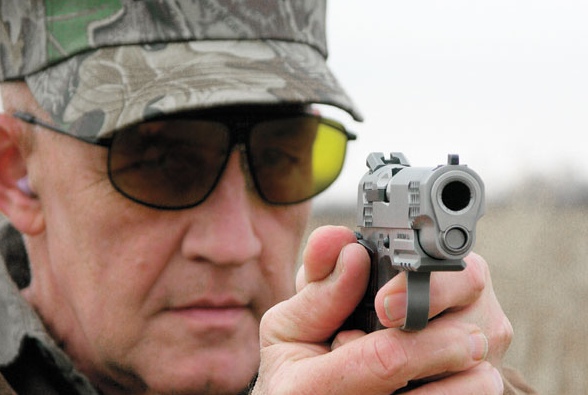
Enter Dick Metcalf, a man’s man seemingly born with a gun in his hand.
His curious case is an example of everything that has gone haywire in what should be a logical debate on the issue. We are left with a band aid to put on the figurative wound that is runaway gun violence, circa 2013.
Guns and Ammo Magazine, which bills itself the “world’s most widely read firearms magazine,” seemed to have turned a corner toward common sense when it printed an editorial – “Let’s Talk Limits” — by Metcalf, a contributing editor.
In the editorial, Metcalf wrote: “Way too many gun owners still seem to believe that any regulation of the right to keep and bear arms is an infringement. … The fact is, all constitutional rights are regulated, always have been, and need to be. … All U.S. citizens have a right to keep and bear arms, but I do not believe that they have a right to use them irresponsibly.”
And if the magazine’s power trust was OK with those words, which are far from radical and merely mirror what the vast majority of Americans think and feel, they should have foreseen — and been prepared — to handle the inevitable storm from readers when the December edition rolled out.
Instead, the bosses – namely editor Jim Bequette — buckled. The much-maligned Second Amendment trumped the more sacred First Amendment.
In response to backlash described as “immense,” particularly from the bastion of utter stupidity known as social media — the place where the tail wags the dog in the world of mass communications — Bequette folded like a house of cards.
He posted a hasty apology to readers threatening to pull their subscriptions faster than they pull the trigger on an unsuspecting deer during hunting season.
“Dick Metcalf has had a long and distinguished career … but his association with ‘Guns & Ammo’ has officially ended,” wrote Bequette .
Setting himself up for Weasel of the Year honors, Bequette added: “In publishing Metcalf’s column, I was untrue to that tradition, and for that I apologize. His views do not represent mine — nor, most important, ‘Guns & Ammo’s. It is very clear to me that they don’t reflect the views of our readership either.”
Like, duh?
Your magazine represents a readership imbedded in a subculture in which six percent of Americans are hunters.
Bequette, who was going to vacate his post on Jan. 1 anyway, then announced that he would be hastening his departure.
Bye.
Who looks like the hero? I suppose Metcalf, but remember he was still a shill for this same pro-gun stance anyway. He just had some sort of burst of logic, which cost him his gig.
While magazines differ from newspapers, in that they are niche publications catering to readers paying for certain wants and needs, the real loser here is the First Amendment.
You know, the pesky one that guarantees free speech, including that of the press, as well as freedom of religion. Revolutionary in its time — unlike the Second Amendment, which merely mirrored some 17th century English law — is it also protected the right to peaceably assemble.
And there was one about petitioning the government for a redress of grievances.
We of the GCP have plenty of those.
Thousands upon thousands per year.
Enough that the Second Amendment should get a second look.
Dick Metcalf saw the light and put it into words.
Instead, he was shot down.
You may call it the price of doing business.
I call it a crime.
 ingordonville