Author Archives: gordonglantz

‘Aliens’ To Shake Up Planet NovaCare

Stanford safety Ed Reynolds (29) celebrates after returning an interception 25 yards for a touchdown during the second half of an NCAA college football game against Washington State in Stanford, Calif., Saturday, Oct.  27, 2012. Stanford won 24-17. (AP Photo/Marcio Jose Sanchez)


By GORDON GLANTZ

@Managing2Edit

Gordonglantz50@gmail.com

GORDONVILLE Cue up picture of the USS Enterprise with standard background music. The seen is bridge, where there are concerned looks on faces …

Captain Kirk: Captain’s Log, Stardate 93164.67. Our path to the Eagles’ opening of training camp has been obstructed by the appearance of some alien beings. We are in a holding pattern.

Mr. Sulu: Look, Captain, there’s another one.

Captain Kirk: Spock? Advise.

Mr. Spock (raising one eyebrow and appearing unfazed): Highly logical, Captain, and not without precedent. Without Andy Reid as the coach, there would be no reason to panic. It appears we are encountering the off-the-radar players who will shake up the depth chart once training camp and the preseason begins.

Dr. McCoy: Dammit, Spock! I don’t need anyone to shake up my depth chart. Just give me my flask of whiskey and a few snowballs to throw at Santa Claus – or Jimmy Johnson.

Captain Kirk: Are they dangerous, Spock?

Mr. Spock: To the contrary, Captain. They can be very helpful. Remember Trey Burton last summer? They may or may not make the team, but they are worth examining and pose little risk.

Mr. Chekov: I never understood that sport.

Dr. McCoy: That’s because you grew up with soccer.

Captain Kirk: Scottie, can you get us around this?

Mr. Scott: No way around it, Captain. I’ll need more time.

Lt. Uhura: I’m picking up a signal Captain, they wish to reveal themselves.

Captain Kirk: Spock, McCoy, Mandatory Expendable Extra in a Red Shirt … we’re beaming down.

Dr. McCoy: Oh no, not me, Jim.

Captain Kirk: Yes, you, McCoy. There could be injuries.

Mr. Spock: It’s football. Impossible – and highly illogical to assume – that there won’t be injuries, which means more opportunities for these beings.

With that, they are transported to the Planet NovaCare to investigate the players (indicated in bold letters) who are currently deep on the Eagles depth chart but are likely to rattle a few cages and make final cuts difficult. One or two, like Burton, might make the 53-man roster. Several will earn spots on the practice squad or get stashed on injured reserve. Others will, at the least, make the team better by creating competition (and giving us something to talk about besides Tim Tebow).

OFFENSE

LINE: The Eagles are entering the season with the belief that All-Pro tackler Jason Peters will remain in top form and former first-round pick Lane Johnson will evolve to that level, giving them two bookends at the tackle position. Add in Pro Bowl center Jason Kelce, and the theory seems to be that average lunch-pail types like Allen Barbe and someone else – likely Matt Tobin, Andrew Gardner or Dennis Kelly – and they will be good to go. So much so, that Evan Mathis was allowed to walk for no compensation and no linemen were added in the draft. This opens up two or three roster spots, depending on how many active linemen they want to keep and on their versatility — for some guys whose jerseys are not exactly hot sellers. However, offensive line coach Jeff Stoutland has put a great deal of overtime drilling the likes of Kevin Graf and Josh Andrews (no relation to Shawn or Stacy), during their stints on the practice squad a year ago. Graf (6-6, 309) was a four-year starter at USC before signing with the Eagles as an undrafted rookie in 2014. He was even on the active roster for a spell. Graf was a college tackle but has likely worked inside. Andrews (6-2, 311), a guard out of Oregon State, has taken snaps at center. Stoutland also has connection to Jared Wheeler (6-5, 320) from Miami (Fla.), who is a guard/center. That versatility gives him a chance to beat out David Molk, who is strictly a center (except in an extreme emergency) or the more undersized center/guard Julian Vandervelde (6-2, 300 and no relation to the Flyers’ fourth-line forward Chris VandeVelde).

RECEIVER: The first five would seem to be set with Jordan Matthews, rookie Nelson Agholor, Riley Cooper, Josh Huff and Miles Austin. If they keep six receivers, special teams ace Seyi Ajirotutu, would likely have the edge over Jeff Maehl (despite Maehl’s Oregon connection). But training camp and preseason games, by nature, offer extended auditions unknown receivers. A year ago, Quron Pratt – unsigned out of Rutgers – did just that and earned a paycheck on the practice squad. The Eagles signed three undrafted free agents with intriguing size and upside in Philly native Rasheed Bailey (6-2, 205; Delaware Valley College), John Harris (6-2, 218; Texas) and Devante Davis (6-3, 215; UNLV).

TIGHT END: A year ago, the aforementioned Burton played so well in the preseason – catching every ball thrown his way and tackling anything that moved on special teams – that an exception was made and four tight ends were kept. After third tight end James Casey was released, it would have seemed logical that they would save the roster spot and go with three, with Burton getting an expanded role in the offense. However, the Eagles have brought in three tight ends – an excessive number– to likely battle it out for one practice squad spot. Eric Tomlinson (6-6, 263; Texas-El Paso) would not only seem to have the inside track, but also the chance to rival Kelce for the wildest beard.

RUNNING BACK: Again, it comes down to math, and how many Chip Kelly wants to keep on the active roster. The three-headed monster of DeMarco Murray, Ryan Mathews and Darren Sproles projects as the best in a league loaded with “by-committee” approaches. With each playing a vital role in the rotation, and given Murray’s and Mathews’ health histories, look for a lot Matthew Tucker and Kenjon Barner in the preseason. Neither is really an unknown, though. Tucker spent the last two years on the practice squad and could be eligible for one more. Barner was a standout for Kelly at Oregon who was in training camp briefly, cut and then brought back under the cover of darkness to the practice squad. The hard-running Tucker (6-1, 227) has always been a preseason standout and Kelly has mentioned Barner, who is more of a third-down back/return man (he is 5-9, 185), by name several times this offseason.

QUARTERBACK: N/A … We know the names, we are just sure who will be playing.

DEFENSE

LINE: Last year, the Eagles kept seven and six rotated enough to keep the unit highly effective on a weekly basis. The odd man out was fifth-round pick Taylor Hart, who was on the roster but never active on game day. While seventh-round pick Brian Mihalik is likely ticketed for seasoning on the practice squad, two guys who could press for a roster spot are Frank Mays and Travis Raciti. When players are cut but brought back a year later, it means the coaches saw something they liked. Such is the case with Mays (6-9, 291), who barely played until his senior year at Florida A&M but was likely asked to work on some skills on his own. Meanwhile, Raciti (6-5, 285) was rated as a high as a mid-round draft pick after racking up 14.5 career sacks as a two-year captain at San Jose State but somehow slid out of the seven-round meat market, only to be scooped up by the Eagles. For either, sticking would mean beating out Hart, or maybe even Brandon Bair, for the seventh spot. A tall order – given that Bair played well in a reserve role last year and that a draft pick and a year of development was invested in Hart – but not impossible (even though both Bair and Hart are Oregon guys).

LINEBACKER: So we have Kiko Alonso, Mychal Kendricks, DeMeco Ryans and rookie Jordan Hicks inside and the outside is set with Pro Bowler Connor Barwin, Brandon Graham, last-year’s first-round bust Marcus Smith and special-teams ace Bryan Braman. Free agent Brad Jones, who can play inside or outside (and has some starting experience in Green Bay), would be there for insurance. Well, not so fast. Don’t count your eight or nine linebackers until they are hatched. Two players coming off injury, Travis Long and Najee Goode, are well-liked by the coaching staff. A year ago, Long (6-4, 255) had the team made, probably over Goode and certainly over Casey Matthews, having learned to man inside linebacker while still showing his pass-rusher burst from the outside. But the injury bug caught up to him yet again. A shoulder injury hurt his draft status in 2013, despite a solid career at Washington State (20 ½ sacks, 42 for a loss), and he tore his left knee ligament in the 2014 preseason finale. Assuming he stays healthy, which is a big assumption, his better grasp on the defense could push the likes of Smith onto the street. And with other special-teams specialists on the roster, one has to wonder if Braman becomes more expendable. Goode (6-0, 244), placed on injured reserve after the season opener last year, is a solid special teamer – lauded by Kelly for his “extra gear” — has played in 18 NFL games (making one start for the Birds in 2013) and could press Braman , or even Jones, for a roster spot.

SECONDARY: We have free agent prize Byron Maxwell at one corner and either Nolan Carroll or rookie Eric Rowe at the other. Brandon Boykin, much to his chagrin, is the slot corner and Malcolm Jenkins will likely be joined at safety by Walter Thurmond. All other spots are up for grabs, although one would think last year’s fourth-round pick Jaylen Watkins and special-teams standout Chris Maragos would be fairly safe. A guy to watch is 2014 fifth-round pick Ed Reynolds, who got a slow start last year because he was out of Stanford and missed all the post-draft mini-camps. In preseason games, he seemed active in pass coverage and a willing tackler, but was kept on the practice squad while more shovel-ready safeties – Jerome Couplin III and Chris Prosinki — were signed. While both those guys are back in the fold, Reynolds would seem to have to overtake 2013 fifth-round pick Earl Wolff to avoid a second year on the practice squad. Don’t be surprised if he does just that.

SPECIAL TEAMS

KICKER: N/A

PUNTER: While veteran punter Donnie Jones would not appear to be in any immediate danger of being out of work, he did slip a notch last season. It was enough for the Eagles to bring in a second leg in rookie Kip Smith of Oklahoma State. The 235-pound Smith, who can also double as a kickoff specialist, will get plenty of preseason work. If he excels, he could be kept around as an eventual heir apparent.

RETURNERS: Well, Sproles made the Pro Bowl last year as the return specialist (he was also used on offense more than he was by Kelly as the season wore on), and Huff showed promise after taking a kickoff back 106 yards (a franchise record). Meanwhile, Agholor was a lethal punt returner at USC and can handle kickoffs. That doesn’t mean others who are more expendable – like Barner — won’t get chances in the preseason, where long and exciting returns are the norm. It becomes a prime vehicle to get noticed. The ability to make something happen can tell coaches they have a “football” talent, even if they chances of them ever being regular-season options as returners are low. Sixth-round pick JaCorey Shepherd, a defensive back from Kansas State, is a former wide receiver and was a decent kickoff returner in college. And Raheem Mostert, a high-end backup running back at Purdue, was signed as an undrafted free agent for his return game prowess (26.0 yard average on kickoffs, including two for touchdowns, and is the school’s all-time leader in return yardage). He’ll also get some early-game snaps in the backfield.
 

The ‘Euro’ Effect

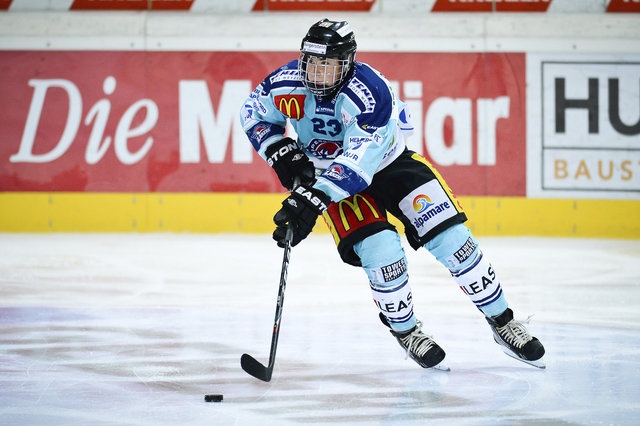
Swiss Fish

By GORDON GLANTZ

GordonGlantz50@gmail.com

@Managing2Edit

GORDONVILLE — The 2015 NHL Draft is considered stronger than the impressive Class of 2013 (Nathan Mackinnon, Sean Monahan, Seth Jones) and has the potential of being on a par with that of 2003 (three All-Stars in the first 14 picks, Shea Weber in the second round).

A lot of that impression has to do with the mortal-lock top two picks, franchise centers Connor McDavid and Jack Eichel, but there is also exciting depth at all positions. In 2003, the back end of the first round included future standouts Zach Parise, Ryan Kesler, Corey Perry and others. Meanwhile, Weber highlighted a second-round group that also featured David Backes and Joe Pavelski. (The Flyers didn’t have a second-round pick in 2003, but netted Jeff Carter and Mike Richards at No. 11 and 24, respectively, in the first round.)

Notice what is missing from those names?

They are easy to pronounce. They are all of North American – Canadian or US – origin.

While once-in-decade talents McDavid (Canadian) and Eichel (American) will make the 2015 draft (June 26-27, Sunrise, Fla.) historic, even if followed by 13 busts, the depth – projected to have first-round talents still into the second round and second-round talents well into the third – comes from a notable collection of European players.

It is not simply that they learned to play hockey in Europe. Some of the best players in the world spent all, or most, of their career overseas.

Finnish legend Raimo Helminen played 117 games in the NHL early in his career, as compared to 977 in Sweden and his native Finland, which he represented six times in the Olympics. Dieter Hegen and Udo Kissling (one NHL game) each appeared in five Olympics for Germany. Petterr Thoresen never played a shift in the NHL but is considered a hockey legend in Norway, having played in five Olympics.

And then there were all the former greats from the USSR squad that won seven gold medals from 1956 to 1988, with the only interruptions coming in the United States in 1960 and 1980, who never got to play in the NHL because of the Cold War.

Top-end European talents began to appear on NHL rosters in the 1970s – with Toronto setting the pace by importing Swedes Borje Salming and Inge Hammarstrom – but the NHL didn’t really reflect the best the world could offer until the 1990s, after the fall of the Iron Curtain.

Ever since professionals were allowed to participate in the Winter Olympics, Canada has captured three gold medals (2002, 2010 and 2014) and the USA two silvers (2002, 2006). The Czech Republic claimed a gold (1998) and bronze (2006), Sweden has taken gold (2006) and silver (2014), while Finland (silver in 2006 and bronze in 2010 and 2014) and Russia (silver in 1998, bronze 2002) are always in the highly competitive mix.

A scan of World Under-18 and Under-20 tournaments shows similar results, with the likes of Switzerland (fourth last year in the Under-18 fray) skating into the picture to further spread the wealth.

What, then, in the difference in more recent drafts – particularly in 2015?

NHL teams are less reticent to pull the trigger and invest in a high pick on Europeans. Why? They are less fearful that the picks would go wasted if European players that were not ticketed for superstardom (i.e. Peter Forsberg, taken fourth overall in 1991 by the Philadelphia Flyers, only to be the key piece in a trade for Eric Lindros, a Canadian) decided to play their careers overseas in leagues like the SEL (Swedish Elite League) and KHL (Russian-based Kontinental Hockey League) instead of accepting two-way contracts to toil in the minor leagues of North America in hopes of climbing the ladder to the NHL.

Draft-eligible Europeans, at age 18, are showing their willingness by increasingly playing Junior Hockey in Canada and enrolling in potentate NCAA schools in the United States. An example is Sweden’s Jakob Forsbacka-Karlsson of Sweden. A likely second- or third-round pick this year, Forsbacka-Karlsson will be playing next year at powerhouse Boston University to help fill Eichel’s void. If he were playing in Sweden, there is a chance his draft stock would not be as high.

As a result, 36 of the top 100 players for this year’s draft –as rated by the Hockey News – are of European origin.

The group includes a fair share of Russians, Swedes, Czechs and Finns. But there are some notable additions to enhance the depth. Ranked No. 13 is Swiss winger Timo Meier.

Meier and man-child Russian forward Yevgeni Svechnikov might be the first two players draft out of the same Quebec Major Junior Hockey League (QBJHL), where it was once an oddity for even a North American not of French-Canadian descent to lace up the skates.

But there is more, enough to prove 2015 is more the kicking in the door of a trend than an oddity.

The family of winger Daniel Spring, ranked 25th, moved to Canada from the Netherlands so he could focus on hockey. One of the top-rated goalies, at No. 61, is Matej Tomek of Slovakia. Fellow Slovakian, winger Radovan Bondra, is ranked No. 81.

Before the seven rounds are complete, don’t be surprised to see Danes, Germans and Austrians have their names called.

And the net is only going be cast wider in years to come. An example is David Levin, who was born in Israel and was sent to live with relatives in Canada to develop his skills. He was recently drafted first overall in the OHL junior league, making him a hot name to watch come 2018.

This was once considered a situation where the risk portion of risk-reward of overloading on Europeans was simply too great for some teams to take. But not anymore.

It is a matter of survival, of staying competitive.

One of those teams was the Flyers, who have remained fairly xenophobic – as compared to other teams – until recently reaching across the pond to pad their roster with more venerable Europeans (Austrian Michael Raffl in 2013, Frenchman Pierre-Edoard Bellemare in 2014 and Russian Evgeni Medvedev this offseason).

In a bitter irony, the first NHL team to draft a Russian (“Soviet” at the time) was the Flyers, who tabbed Viktor Khatulev 160th overall in 1975. He ended up not knowing he was ever drafted until years later and was allegedly murdered in 1994, at the age of 39.

Since then, the Flyers – while employing their share of Swedes and Finns – shied away from Russians and Czechs in the draft. They paid the ultimate price, getting swept in the 1996 Stanley Cup Finals by a Detroit team led by five Russians and four Swedes (the Flyers had zero Russians, one Swede who played in more than 34 games, one Finn and one Czech who played in more than 18 games).

In a recent Hockey News article about the tragic life and death of the volatile Khatulev, who lost his wife in a car accident was left to raise a young daughter while battling alcoholism, former Flyers star center and general manager Bobby Clarke denied any discrimination against Russian players, explaining it was more business that personal for the same guy who broke the ankle of the Soviet star Valeri Kharlomov with a vicious slash during the 1972 Summit Series.

“It was a time when you didn’t know if you could ever get them out of the country,” said Clarke, who added he didn’t know Khatulev was a draft pick of the Flyers until they met during a 1979 exhibition game that ended in a 4-4 tie. “The Soviets were producing some great players, but the next level below the greats was below mediocrity. We just thought we’d be better off with Canadians.”

But, just as Iron Curtains fall, times change.

The Flyers have gone 0-6 in Stanley Cup Finals since Clarke led them to their second in a row in 1975. That was 40 years ago. They have the  seventh overall pick this year and could very well end up with Russian defenseman Ivan Proporov or Czech center Pavel Zacha, both of whom played junior hockey in Canada last season – and no one will give it a second thought.

Media Makes Philly Look Silly

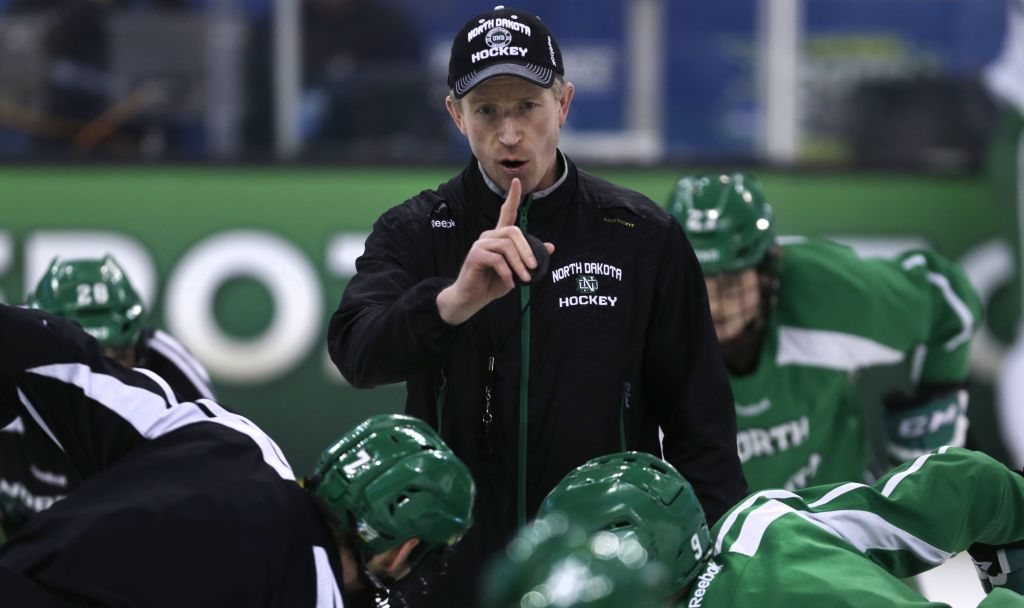
Hakstol

By GORDON GLANTZ

GordonGlantz50@gmail.com

@Managing2Edit

GORDONVILLE — On the surface, Marcus Mariota and Mike Babcock have little in common.

Mariota is from Hawaii, and plays football. Babcock hails from Manitouwadge, Ontario. He coaches ice hockey, a sport that would seem as unlikely to thrive in Hawaii as surfing would in Canada.

But both were fed as red meat to the ravenous Philadelphia fan base as messiahs for the two teams that have gone the longest without championships – the Eagles (1960) and the Flyers (1975) – in the city of otherly angst.

And they were done so by a media that should be fined – or maybe forced to don those fluorescent jackets like first-time DUI offenders and cook and serve cheesesteaks at the Pat’s-Geno’s Mecca in South Philly – for being irresponsible to the disappearing craft of fair, impartial and accurate journalism.

And for leaving new Eagles quarterback Sam Bradford and just-hired Flyers head coach Dave Hakstol under additional public scrutiny before taking a snap or making a line change.

Yes, Mariota was a hand-in-glove fit for the Eagles, as no other team’s system – for obvious reasons – matches his skill set. Drafted second overall by the Tennessee Titans, Mariota has almost been set up to fail, meaning the Eagles could catch the coveted quarterback on the career rebound when his rookie deal is nearing an end in four years.

Even with that being a given, the odds of him coming to the Eagles in a draft day trade were probably less than Chase Utley winning the batting title.

And yet the pot was stirred right up until he was drafted by the Titans, and the flames were even kindled a bit in the days after (even though the NFL rarely sees trades involving just-drafted players not from the Royal House of Manning).

As far as Babcock goes, his name was fluttering around William Penn’s three-cornered hat as soon as Craig Berube’s stint as the Flyers’ 18th coach ended after a season laden with enough close losses that any and all coaching decisions were placed under the magnifying glass.

But nobody bothered to read the small print.

If Babcock was going to move on to his next challenge – after building his long resume with the Red Wings in Hockeytown, U.S.A. (a much nicer way to describe the economic ghost town that Detroit became) – it would be with, at the very least, an officially unofficial “coach/general manager” name plate on his desk.

In Philadelphia, where general manager Ron Hextall has tentatively been given as much free reign as Grand Puba Ed “Al Davis” Snider is able, a power-sharing agreement in what was going to be Hextall’s first major decision in shaping the team in his own image after a year of toddler steps (a promising 2014 draft, a few deals) was not a hand-in-glove fit akin to Mariota playing for Chip Kelly.

To quote the late Johnny Cochran, “if it doesn’t fit, you must acquit.”

Earning the acquittal here is Hextall, not the media – including the alleged “insiders” (anyone with a Twitter account) and the dudes who like to hear themselves yammer on talk-radio – which is guilty as charged for creating stories where there were none and not logically thinking through their concocted scenarios.

The logic – or lack thereof – with Mariota was that Eagles coach/general manager Chip Kelly would “find a way” to land Mariota, his college quarterback, as if it were as easy as Fonzie tapping the juke box for the song he wanted to hear so he could dance with the girl of his choice.

With Babcock, it was tunnel vision – and a true lack of overall hockey knowledge – in seeing the Flyers as the one and only pathway for Babcock.

The proof of the lack of hockey awareness was the first online headline about the hiring of Hakstol, which called him a “no-name” coach.

Anyone who at least casually follows college hockey should know that he is as big a name in his sport as any heavy hitter in college basketball or football – not to mention that college hockey in places like North Dakota is as engrained in the culture (with rabid fans with painted faces and cheerleaders) as football and basketball are in the mainstream.

The “no-name” mistake would be semi-excusable if not for the fact that North Dakota was on the ice at the Wells Fargo Center for the Frozen Four just a year ago.

He may not have been Babcock, or a recycled head coach making his next stop on the NHL carousel, but he carries more name value in legitimate hockey circles than most NHL assistants and/or AHL or junior-level head coaches.

And, with Hextall, Hakstol fits likes the hand in a glove that Mariota would have – if Kelly were able to pull a rabbit out of his visor.

The Hakstol hiring rings true with the rebuilding plan that will continue to unfold as veterans are slowly shed from the Flyers’ roster and are replaced by a semi-stocked stable of prospects that will, hopefully, be helped with two more first-round picks next month.

For thinking outside of the box (Hakstol is the first college-to-first-NHL-job head coaching hire since “Badger” Bob Johnson went from Wisconsin to Calgary before moving on and winning the Stanley Cup in Pittsburgh) and being ahead of the curve (“real” insiders see this hire as a budding trend), Hextall should be lauded as much as those who created a superficial story should be taken to task.

The column originally appeared at http://www.phillyphanatics.com

Building the Duck Dynasty

Oregon-Ducks-baby-blanket

By GORDON GLANTZ

Gordonglantz50@gmail.com

@Managing2Edit

GORDONVILLE — If it walks like a Duck and quacks like a Duck, it is probably going to be an Eagle.

That sounds like a non-sequitur unless cast in an NFL context, where Eagles Emperor Chip Kelly has taken to padding his roster with University of Oregon products he coached first-hand or recruited before making the leap to the pro level in 2013.

It is not a new approach. A few generations back, Dick Vermeil had a few UCLA guys – from first-round pick Jerry Robinson to role players like John Sciarra, Wally Henry and Terry Tautolo – on the roster.

Kelly came to the Eagles after a 4-12 campaign in 2012 and posted a pair of 10-6 seasons and one division title.

Though the roster has been drastically, and shockingly, overhauled in Kelly’s first offseason while doubling as the personnel czar, the Oregon presence remains.

The pre-draft Eagles have eight Oregon products on their active roster. That number includes newcomers Kiko Alonso, the linebacker acquired in the LeSean McCoy trade, and free agent defensive back Walter Thurmond – while subtracting much-maligned linebacker Casey Matthews, now with the Minnesota Vikings.

Another ex-Duck, receiver Jeff Maehl, remains an unsigned exclusive rights free agent. Except in the unlikely event that someone beats down his door, expect Maehl back in the camp for another go-round as well.

A point of note, though, is that Alonso – presuming he is healthy – is the only projected starter. Thurmond and receiver Josh Huff, a third-round pick last year who showed flashes of potential but had plenty of costly mental miscues, have chances to either start or play key roles. Defensive end Brandon Bair was effective as a reserve in first year of live action at age 30. Another defensive end, Taylor Hart, was a fifth-round pick last year who never saw the field after a middling preseason.

Receiver Will Murphy somehow earned a second year on the practice squad over more talented camp hands, as did undrafted rookie nose tackle Wade Keliikipi. Running back Kenjon Barner was picked up late in the preseason, cut and then signed to the practice squad later on.

So, at present, that is really a whole lot of nothing – or next to nothing – overly meaningful from the Oregon contingent.

One would think that maybe Kelly is ready to do away with his green security blankie with the oblong O on it, but we all know that likely won’t happen.

With draft winds blowing, and rumors swirling, expect more Ducks to be drafted and others to be signed off the street after it all ends May 2.

As a primer, let us take a closer look at the crop of Ducks in the 2014 draft class, and where they could be plucked and how they would fit in once reunited with Kelly.

Elephant – or giant duck – in the room

First and foremost, we need to put aside all talk about Ducks morphing into Eagles and dispense with elephant in the room – quarterback Marcus Mariota, the reigning Heisman Trophy winner.

One of the more intriguing mysteries around the draft is what will become of Mariota, whose unique skill set pretty much makes him a fit for only certain offenses, with the Eagles topping the list for obvious reasons.

But the Eagles pick at No. 20. After trading Nick Foles for Sam Bradford and declaring the oft-injured Bradford his quarterback – perhaps directly leading to the signing of DeMarco Murray, Bradford’s close friend – Kelly pronounced that he wouldn’t “mortgage the future” to trade up for Mariota.

But what Chip says and what Chip does are akin to comparing a quacking duck and a soaring bald eagle.

If Mariota falls past the top two slots, which is more than possible, Kelly can use semantics to wiggle his way out of the corner he painted himself into with the “mortgaging the future” talk.

Moving up to No. 6, where the Jets pick, would still be costly. But if Mariota is still around once the draft goes to the double digits, it would be shocking if the phone lines in the Eagles’ war room aren’t working overtime.

And don’t forget that when the Foles-for-Bradford bombshell was first dropped, it was initially reported that the Eagles were swapping first-round picks with the Rams, moving from 20 to 10.

That proved erroneous, without explanation – or even much in the way of a retraction from supposedly legitimate news sources — but perhaps it was partial information that leaked out and was misinterpreted. Do the teams have a handshake agreement on 20-for-10 deal should Mariota still be on the board?

Let’s say this, what once look like a five percent chance of happening is now more in the range of 30 percent.

Other Ducks

As the draft wears on, and familiarity with players  becomes crucial, it is about 100 percent chance that at least a few Ducks will find their way from the pond to the Eagles’ nest.

One such player you could almost send a limo to Philly International Airport for now is offensive lineman Jake Fisher. A tackle by trade, Fisher, a 6-6, 300-pounder and three-year starter well-versed in all the mandatory blocking schemes, could slide inside at guard and eventually go to right tackle when Lane Johnson inevitably replaces Jason Peters at left tackle in a year or two.

The problem is that Fisher is not quite a first-rounder. He could last until the late second round, when the Eagles pick again. Then again, he may not.

Another player Kelly would ache to get is center Hroniss Grasu. But unless Kelly plans to make him an undersized guard at 6-3 and 295 pounds, or has notions to jettison Jason Kelce, it would not seem pragmatic to burn a Day 2 (second- or third-round) pick on the high-character Grasu.

The same goes for defensive end Arik Armstead, who is nearly 6-8 and in the 300-pound range. Seen as a more of a raw product with unlimited upside, Armstead could go to a good team willing to wait on his development at the end of the first round or last into the early second.

In the unlikely event he is still on the board when the Eagles’ come to bat in the second round? Not a position of need – with the likes of Fletcher Cox and Cedric Thornton and Vinnie Curry, not to mention Bair and Hartm around – but a tempting option, nonetheless.

Pass-rushing specialist Tony Washington was moved all around the defensive front at Eugene, but his size (6-3, 250) makes him more likely an outside linebacker project than a defensive end at the NFL level. Many mock drafts have the Eagles locking in on Washington in the seventh round, which is likely more probable than them getting Mariota in the first.

Derrick Malone Jr. was a productive inside linebacker in Oregon’s 3-4 scheme. However, he is too undersized (6-2, 220) to play inside in the NFL. He would have to be a weakside outside linebacker in a 4-3 alignment, which the Eagles don’t even play. It would make zero sense to burn a draft pick, even a late one, or even a roster spot for training camp. But they’d probably bring him in if he doesn’t get drafted.

Secondary Ducks

Going to the secondary, where Eagles’ fans are cautiously optimistic after Kelly broke the bank for Byron Maxwell and brought in Thurmond and E.J. Biggers, there are some Oregon products to keep an eye on.

Before tearing up his knee late last season, Ifo Ekpre-Olomu – despite his size (5-9, 195) – was considered a first-round talent.

Where the elite athlete (4.46 speed) ends up now is anyone’s guess, as he could be a redshirt as a rookie. For the Eagles, who might be looking for a long-term solution in the slot after this year – Brandon Boykin is entering the final year of his contract and is the subject of trade rumors – could it be worth a third-round pick to rip a page out of Sam Hinkie’s playbook?

Any other school or origin? Not likely. Oregon? Could happen.

It might be wise to pencil in another Oregon corner, Troy Hill, as either a late-round pick or priority free agent. He was suspended from the team a junior after a domestic dispute with his girlfriend.

A red flag? Not when viewed with green-and-gold-colored glasses.

At safety, there is a pretty solid Oregon product, Erick Dargan. He had 13 career interceptions in Eugene, including a PAC 12-leading seven in 2014, his first as a full-time starter.

He might be a tad short (5-11) and a step slow (4.62), but he weighs around 215 and plays with his heart on his sleeve.

Those intangibles would likely not be enough to trump the size-speed issues, but he walks like a Duck and quacks like a Duck.

In the late rounds, or beyond, expect him to be an Eagle.

This column originally appeared at http://www.phillyphanatics.com

You can leave a response, or trackback from your own site.

Leave a Reply

Name (required)

Mail (will not be published) (required)

Website

Reality Bites


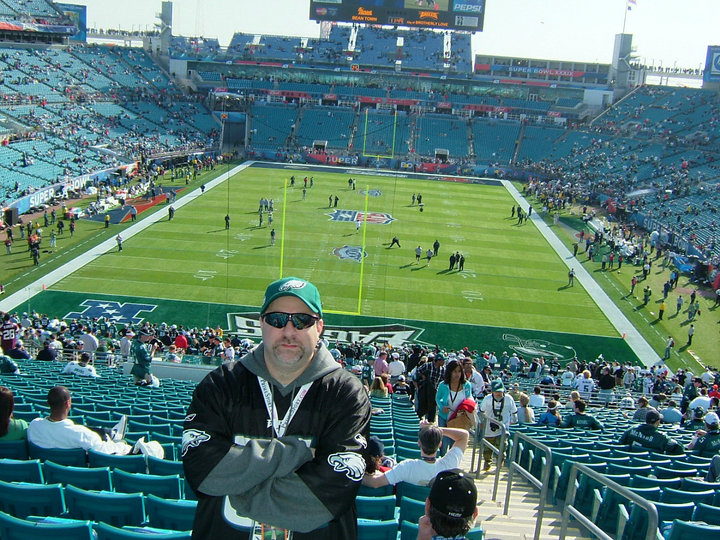
Philadelphia Eagles v Jacksonville Jaguars

By GORDON GLANTZ

Gordonglantz50@gmail.com

@Managing2Edit

GORDONVILLE — Press “rewind.” Go ahead, I’ll wait.

When you hit “play,” you may find me on the floor, passed out from shock.

And not much shocks me anymore, particularly in the world of sports.

When I first saw something on my Facebook news feed about LeSean McCoy being traded to the Buffalo Bills, my inner cynic thought it was one of those prank stories that pop up.

When a second, third and 12th story popped up, I knew something was up.

Being an old-school guy, trading a franchise back in his prime goes against the grain more than, say, a franchise back in his prime cutting back against the grain.

In my day – when we used large boulders instead of footballs to play rough-touch at playtime in our diapers preschool – running backs like McCoy were valued commodities that teams were built around.

As such, my initial impression – despite knowing the return of Bills’ linebacker Kiko Alonso, hurt or not, was far better than the zilch received for Desean Jackson – was that I was not impressed.

After going through the stages of grief – including denial (thinking maybe it’s just a ploy by the Eagles or Drew Rosenhaus, McCoy’s agent, in ongoing contract restructuring talks) – I came to accept the fact that McCoy was gone. And that the sun has set on “my day,” with a little help of Eagles’ Emperor Chip Kelly.

When I arose the next morning, it was time to deal with the reality.

Dealing with reality

Once my mind cleared, it occurred to that Kelly must feel pretty confident about other pieces falling into place to pull this trigger.

And after years of sort of being bold – but more calculated – maybe it’s time for this organization to throw the bomb and see what happens.

Alonso, if you haven’t seen him play, can be a keeper at the epicenter of the defense. He is a three-down linebacker, equally stellar at diagnosing the run and covering downfield while also getting to the quarterback on blitzes.

Alongside Mychal Kendricks – assuming Kendricks is not dangled as draft-day trade bait while the dice is rolled on a healthy return of DeMeco Ryans – the Eagles could have one of the best duos of 3-4 inside linebackers in the league.

But this is where “if” becomes a four-letter word.

It was a risk for Kelly to jettison McCoy in favor of the running-back-by-committee approach favored by a lot of teams, up to and including the standard-bearing New England Patriots, for the reward of a stud linebacker with health concerns (a serious knee injury while playing for Kelly at Oregon followed by a torn ACL while working out at Oregon than cost him all of last season) and some off-the-field questions (a few arrests while quacking like a Duck).

But the risk-reward is greatly mitigated by the fact that the Eagles have a king’s ransom to go shopping with when free agency officially begins this week.

The embarrassment of riches – projected at above $50 million – comes courtesy of a house-cleaning that goes beyond shedding McCoy’s contract before his trade-in value depreciates. Venerable veterans – offensive lineman Todd Herremans and converted linebacker Trent Cole – were stripped of their wings. Joining them was cornerback Cary Williams, who would be a Hall of Famer if he played as well as he talked. It seems unlikely free agent linebacker Brandon Graham will be back, as he will be in demand as a 4-3 defensive end with a mid-range price tag.

And my loyal dog, Rex, has more of a chance of being signed than corner Bradley Fletcher and safety Nate Allen.

Going on shopping spree

So now comes the time to shop. And it won’t be for special-teamers like Chris Maragos and Bryan Braman this time around (no offense to those guys).

This is Nordstrom’s now, not Wal-Mart.

But we all know that does not always mean it’s time to be fitted for Super Bowl rings. There was that ill-assembled Dream Team of 2011 that turned into a nightmare.

The difference, we hope, is that Kelly is as smart as he portends to be and knows what he wants and how to get it.

And when Plan A fails, and part of it surely will, he needs to be able to seamlessly shift to Plan B.

There are obvious areas the Eagles will address, and there are some high-end names they will target, knowing they can win most bidding battles.

The reality may be somewhat different. There are 31 other teams. While all might not be able to spend on multiple players, they could have enough to lure away a prime target for the Eagles.

So, as we depress the Play button and go to the oft-harsh reality of real time, begin chanting the mantra of the Eagle fan – hope for the best, be prepared for the worst – as the frenzy commences.

If we are to believe all shreds of speculation, the outside linebacker spot where Cole and Graham more or less platooned opposite Connor Barwin, who went to the Pro Bowl, will be filled by Jason Worilds, who has been dominant, when healthy and focused, in Pittsburgh.

Secondary concerns

In the secondary, where as many as three starters may be sought to join last year’s free agent prize, safety Malcolm Jenkins, the most money is likely to be allotted. While it would be nice to add a piece like safety Devin McCourty, whom the Patriots have reportedly decided to let walk while trying to keep corner Derrelle Revis, they may not want to overspend.

So keep in mind names like Will Hill (Ravens), Ryan Clark (Redskins), Rahim Moore (Broncos).

Clearly, as Kelly has learned the hard way, cornerback is the new running back in a pass-happy NFL, where receivers are built like NBA power forwards and run like Olympic sprinters while having oversized hands that seem to be laced with a natural form of adhesive.

And he needs two of them to go along with slot corner Brandon Boykin, who is aching for a shot outside but probably won’t get the chance until he tests free agency next offseason.

If they reel in the position’s top prize, Byron Maxwell, who is parlaying his spot in Seattle’s famed secondary into a once-in-a-career payday, they may have to face the reality that the other corner spot will be a training camp battle between Nolan Carroll and Jaylen Watkins and, maybe, a rookie.

Or they could get two guys – maybe Tramon Williams from Green Bay and Kareem Jackson – instead of Maxwell, but the upgrade over last year may be more of a 90-degree turn than a 180.

That would especially be the case if they do court McCourty and hand the world to Worilds in two scenarios that sources say seem somewhat plausible.

They could add another defensive piece, and they just might, but there are now complications of their own making.

Creating holes

On offense, the Eagles have now created needs where none existed before by trading McCoy and releasing Herremans. They also have to decide on how much money should be allotted to retain Jeremy Maclin, the No. 1 receiver coming off a career year after missing a year with a knee injury.

There are shovel-ready guards on the market – Fernando Velasco, Orlando Franklin, James Carpenter, Mike Iupati – and they don’t command as much of a breaking of the bank as tackles do, but someone younger and more the upswing than Herremans will want to be paid as such.

They could “coach up” someone in house – Andrew Gardner, Matt Tobin, etc. – or look to the draft, where guards tend to go off the board in the second and third rounds after the premier tackles are snatched, but that is where they could have gone after other defensive needs.

Moreover, the quarterback situation seems more in doubt since the McCoy trade, as not having a featured back might be an indication that they are really eyeballing a running quarterback – not a drop-back, pocket-passer like Nick Foles – to keep defense more off-balanced.

It is wildly speculated that the Eagles would and could move up from No. 20 to No. 6 in the first round, sending Foles to the Jets in the swap, and taking Marcus Mariota (if he slips past the first two picks).

If not, maybe they would trade Foles to St. Louis, sign free agent Jake Locker and draft the likes of UCLA’s Brett Hundley.

There are running backs of note in free agency – ironically, former Buffalo Bill C.J. Spiller immediately lobbied to swap places with McCoy, but injuries have kept him from duplicating the numbers posted in his 2012 breakout season – and there is some chatter about Mark Ingram, although New Orleans is going to work hard to retain him or drive up the price.

Here, Ingram’s one-cut, north-south style would seem ideal – especially for a guy who has yet to break 1,000 yards (he had more than 900 last year for the Saints) and would be eager to completely shed the label as a guy who never lived up to his advanced billing.

Or, the Eagles could stay at No. 20 and take one of the two premier running backs – Melvin Gordon of Wisconsin or Todd Gurley of Georgia – sending me on a nostalgia trip back to “my day” when quarterbacks called their own plays and running backs were the centerpieces of franchises.

Maybe we should keep our fingers on the rewind button, just in case.

This column originally appeared at http://www.phillyphanatics.com

Watching The Detectives

Chippy

By GORDON GLANTZ

Gordonglantz50@gmail.com

@Managing2Edit

GORDONVILLE — In May of 1983, in celebration of my pending walking papers from Northeast High School, The Police – the new wave/pop band, not the fuzz that we used to hide from in alleys – released what was the top-selling song of the year and fifth-biggest of the “me” decade, “Every Breath You Take.”

The song’s writer, Sting (real name Gordon Sumner), said: “I woke up in the middle of the night with that line in my head, sat down at the piano and had it written in a half an hour.” While he added that the tune was simplistic, the ominous lyrics were “interesting.”

He added: “It sounds like a comforting love song. I didn’t realize at the time how sinister it is. I think I was thinking of Big Brother, surveillance and control.”

He was also looking 32 years into the future.

A clairvoyant Sting knew I’d be, well … stung by not getting a key role in the Eagles’ front office, the one since filled by Ed Marynowitz, to be in Chip Kelly’s right ear on personnel assessments (the fun part) and Howie Roseman’s left on making it all work within the unforgiving constraints of the salary cap (the hard realities).

You don’t want me in the inner circle? Fine. Whatever. I can take my heap of crow and eat it without crying over lost causes.

But that doesn’t mean that I, as one with an Eagles Super Bowl victory before I perish holding the top spot on my sports bucket list, won’t be watching you.

I will.

Every breath you take.

And every move you make.

Every bond you break, every step you take.

I’ll be watching you.

With the stopwatches dusted off for the NFL Scouting Combine and free agency pending, no one has any seeds of an inkling or clue what is up your sleeves.

I can only hope that your vision comes equipped with a plan, and that the plan has enough built-in vision to be flexible.

I know mine does.

Don’t believe me?

What good are cards if not laid out on the table? That’s what my grandfather, a former player for the famed Frankford Yellowjackets, used to say (not really, on both accounts, but it sounds good).

So here it is. It’s fourth-and-short, and I’m going for it.

I’m operating on the belief that this team is close, coming off a pair of 10-6 seasons, and taking two steps back for a step ahead is simply idiotic.

The line in the sand is no immediate fixes. I want to keep this team young and ascending with all moves, but no young and ascending assets will be jettisoned (you know, like that team with the eternal timetable that works across the street).

The risk – for a team that is close – outweighs the reward.

I guess you know where this is all going

Yes, for some inexplicable reason, I will have to start with a vision for the quarterback position. No, in the execution of my plan – within my broader vision – there will be no deal for Oregon’s Marcus Mariota.

Nick Foles is our guy, at least for now, folks.

I know it’s tempting to take Mariota as a plug-and-play option in Kelly’s up-tempo offense that sometimes makes Foles look like a foil for nay-saying fans, being that Kelly’s template at Oregon is what made Mariota a household name.

The irony is that there may not be any other place in the league for Mariota to thrive. Maybe a read-option team.  Maybe.

A dink-and-dunk West Coast team, like Kansas City, might – with “might” being the operative word – work out.

But price tag to move up from No. 20 to grab Mariota – if not first or second, then probably at No. 6, when the Jets pick – would be too steep.

One of those teams will surely ask for Foles, who has already proven to be a quality pro quarterback who can make all the NFL throws, and an ascending defensive player (Fletcher Cox, Mychal Kendricks) and maybe a third player (Brandon Boykin, Jaylen Watkins, Josh Huff). The outgoing UPS package would include multiple draft picks, beginning with firsts this year and next and Day 2 picks (seconds and/or thirds) for the next two or three years.

For one guy, who may or may not work out? Pardon the pun, but I’ll pass.

What would I do behind Foles? Try to bring back Mark Sanchez as the backup. That’s Plan A. Plan B, I go after Jake Locker. Yes, his was a sad lament in Nashville as a first-round bust, but he was in a toxic work environment with the Titans. The zip on the arm is there (better than Mariota, to be honest) and he was some running ability.

The one move I would make is with third-stringer Matt Barkley. I’m thinking about something like packaging Barkley with the 20th overall pick, and the fourth-rounder obtained from Buffalo for Bryce Brown, and sending them to Houston for the 16th overall pick and a fifth.

At No. 16, we have a better chance of grabbing the best player available without sweating it out. And if contract negotiations with receiver Jeremy Maclin go sour (if I’m in charge, they wouldn’t), we could take someone like West Virginia receiver Kevin White.

Moving Barkley would open up a spot for developmental quarterback to be nabbed on Day 3 (fourth through seventh round) to compete with holdover G.J. Kinne, who might make a better third-stringer, in this system, than Barkley anyway.

File away the name of Bryan Bennent. He was recruited by Kelly at Oregon, waged a fierce battle with Mariota for the starting job and then transferred to Southeastern Louisiana and put up big numbers — albeit at a lower level of competition — and recently impressed scouts at the Senior Bowl and combine.

Again, his deep arm is probably better than that of Mariota. Doesn’t mean he has the same accuracy or release, let alone the mobility, but all the tools are there. Think of Tony Romo without the smirk and, hopefully, the penchant for losing in the clutch.

Aside from a developmental quarterback and receiver – someone like Washington State’s Vince Mayle in the middle rounds would be highway robbery – I’m not touching the offense.

Yes, third-string tight end James Casey was just released, but the trio of Zach Ertz – backed up by Brent Celek and Trey Burton – is sound.

No, not even the line. The numbers may say to cut guard Todd Herremans loose, but that would be a mistake. Not one, in this fantasy, that I would make.

Remember, top reserve Allen Barbre, who missed 15 ½ games last year, will be back. Ditto for Andrew Gardner, who finished the season at the right guard in place of the injured Herremans. Other lineman, from Matt Tobin to practice-squaders Kevin Graf and Josh Andrews are also in the mix.

The focus is on the defense, period. Substantially improving the defense – as opposed to some cost-effective tinkering — is what will turn 10-6 (and maybe making the playoffs) into 12-4 (and hosting, and winning, a playoff game) by next year and 14-2 (and going to, and winning, the Super Bowl) the year after that.

The Eagles’ had, to be kind, a porous secondary. And all the big-gaining, back-breaking plays were made more disturbing by the fact that the Eagles have an OK pass rush.

The only players that could return are Boykin at slot corner and safety Malcolm Jenkins, who had a knack for the being in the right place at the right time – even though he had a penchant for dropping interceptions after three in the first three games – but couldn’t be everywhere at once.

That means another safety to replace the oft-exposed Nate Allen, who was caught with his pants down one too many times – despite a misleading team-high four picks. And it means two corners. Bradley Fletcher, who evoked memories of Izell “Toast” Jenkins (my friends and I used to call him “I Smell” back in the days when The Police dominated the radio), is a free agent who won’t be retained, if only for his own health and psychological well-being.

The other outside corner spot is a little trickier, with Cary Williams still under contract. He was not the disaster that Fletcher and Allen were, and we are talking about a guy who was a No. 2 corner on a Super Bowl winner in Baltimore just a few years back, but his escalating price may not be worth the lack of production (one interception) and constant motor mouth and locker-room lawyering.

My plan/vision – or is it vision/plan? – is to address the dire state of the secondary before the draft so that we have the freedom to draft the best player available without feeling we have to fill a need (i.e. Marcus Smith).

One way to shop is to go right to the high-end products, like Darrelle Revis (assuming he is not retained in New England) or Seattle’s Byron Maxwell, but either might cost so much that the option at the other corner would be to either ask Williams to restructure his contract – and then watch him laugh in our faces – or try to get by with Watkins, Nolan Carroll or even Boykin on the  outside.

Or, draft a rookie high and live through the growing pains of having him tested while the highest-paid guy on the team barely sees any action.

A more prudent move would be a two-for-one deal. We could sign a pair of ascending corners that would cost the same as a pair as either Revis or Maxwell would after what would likely be a long bidding war that would cost opportunities to add other pieces.

Without getting too bogged down with names, guys like Kareem Jackson and Davon House of Green Bay would fit the bill. Jackson (5-10, 188) is 26. House (6-0, 195) is 25.

At safety, there is the draft, and I would rule it out in a “best player available” situation. A veteran like Troy Polamalu might be cut loose by the Steelers, or Tampa’s Bay’s Deshon Goldson could be had in a trade for probably not much in return.

In free agency, there could be an under-the-radar type, like Kansas City’s Ron Parker, who could fit the scheme of defensive coordinator Billy Davis, who really needs versatile defensive backs – guys who have played corner, safety and in the slot – to cover pesky extra receivers and tight ends and running backs over the middle of the field to make his system truly work.

But there are also a lot of in-house options – with Carroll, a physical guy who last year’s nickel linebacker and a leading special-teams tackler last year, heading a list that includes Watkins and fifth-round picks from the last two years, Earl Wolff and Ed Reynolds, to battle it out for one spot. For some reason, I’m not as worried about it.

I’m actually more concerned about inside linebacker, and the opportunity to line up Eric Kenricks of UCLA next to Mychal Kendricks, is tempting. That doesn’t preclude DeMeco Ryans returning as a mentor, but a does realism is needed. The front seven, at least at linebacker, is not as solvent as it seems.

This is what keeps me up at night.

And it should do the same for Kelly and Marynowitz, the “boy wonder” (my ageism lawsuit is in the works), with Roseman sitting in the next room with calculator and crying towel.

The frustrating part is that they can, and will, do what they want, and people like you and me can do nothing about it.

Except maintain surveillance.

I will.

Every breath you take.

And every move you make.

Every bond you break, every step you take.

I’ll be watching you.

This column initially appeared at http://www.phillyphanatics.com

Hat In The Ring

Super Bowl 39

By GORDON GLANTZ

Gordonglantz50@gmail.com

@Managing2Edit

GORDONVILLE — There are jobs, and then there are callings.

And some people were made to fill roles, lest they not be self-actualized and the world a little bit a lesser and lonelier place for not having them there.

Imagine Shakespeare having never written a word.

Imagine Sinatra never singing.

Imagine Springsteen never picking up a guitar.

Imagine Spock not on the Enterprise to provide logic when others were losing their cool.

Here’s another example: Imagine me not in a NFL front office.

I was made to fill the type of role recently vacated by Howie Roseman, who was unceremoniously demoted into a promotion by being forced to trade in his stop watch used for the scouting combine in exchange for an updated salary cap computer program that is compatible with Windows 8.

Roseman was the GM, but now he is the executive vice president – and he even gets to oversee the training staff, equipment and hot dog vendors.

In his place, will be more of a “football guy” to, in theory, work more harmoniously with head coach Chip Kelly.

Who will it be?

Who knows?

For the record, I am using this missive to formally throw my hat – and I have many now, since there is a burgeoning bald spot to cover – into the proverbial ring for consideration.

I know I have no shot, which is kind of shame.

It’s a shame for Eagles Nation, which remains starved for a Lombardi Trophy. The last time the Eagles won the NFL title, it was against Vince Lombardi and the Green Bay Packers in 1960, five years before I was born and seven years before there even was a Super Bowl.

And it’s a shame for me, because it would be more than just a job.

It would be a calling.  I would not be some mercenary building his resume so I can move to another position with another franchise.

So far, and it’s not because I’m midnight green with envy or anything, the list of interviewees for the job has been a bit underwhelming.

I half expect the next guy to come through town to be the former assistant to the former assistant personnel/promotions guy for the Chicago Bliss in the LFL (Lingerie Football League).

Actually, I fully expect it – if they happen to have a surname with NFL royalty, like Polian.

And that ain’t me.

I ain’t no fortunate son.

But I am qualified.

Ever since I can remember, I have been fascinated with drafts. Any draft. Any sport. Any time.

But the NFL draft is king.

I always purchased every reputable draft publication necessary, and the Internet has provided supplemental information.

Before you LOL (or is it “ha ha” these days?), don’t write me off as just another Draftnik.

My track record is pretty good.

I don’t take any one single publication or site as gospel, but I draw a consensus and match them up against the Eagles’ short- and long-term needs – and schemes – to lay a yearly strategy.

This may sound a bit sophomoric, but the sad truth is that I could have sat in a locked room with my information and easily done a better job than the Eagles, through different coaches and personnel “geniuses,” over the passage of generations (and three owners).

Imagine my crude approach if you gave me a few scouts – and a few “football” guys, namely coaches and an assistant with a draft track record (the Eagles employed a chap name Phil Savage a few years back as an adviser  and netted some results) – to bounce names off of first.

This would be my main selling point in an interview. Teams are built through the draft. Period. You sign free agents to put you over the top after the foundation is built via the draft.

If the Eagles asked me what I would have done differently in the Kelly-Roseman era, I would tell them.

And tell them and tell them.

Not to go too deep into it now – I will lay out my full 2015 plan if and when they hire someone else for my job – but imagine Kelvin Benjamin, the guy who made two circus touchdown catches for Carolina against Seattle’s all-world secondary, as an Eagles instead of Marcus Smith (zero tackles all season).

However, I would also tell the Eagles I didn’t think Roseman was a bad GM, and certainly not one who should have been X-ed out of the equation after the second consecutive 10-6 season (after the Eagles were completely off the radar at 4-12 in 2012). He made mistakes in the past, particularly in what was an increasingly dysfunctional situation with the last coach, but I was always taught that mistakes are not mistakes unless one doesn’t learn from them.

Only a fly on the wall could tell who was to blame for what recent miscue, but I have a hunch it was a team effort.

It usually is.

For whatever reason, Roseman was pushed out – and Tom Gamble was escorted out – and a spot, the one seemingly tailor-made for me, has opened up.

I’m not a former player, at least not in the traditional sense. Yeah, I did play briefly in college, if special-teams duty in flag football counts (something about chasing after another dude, trying to pull a flag from his waist kind of ended that career).

Even though my preferred sport was hockey, a football game – touch, rough-touch, tackle in the snow – tended to break out more often than not. In Northeast Philly, one kid with a Nerf football emerging from his house was more realistic than two nets and two sets of goalie equipment – let alone enough sticks and a ball.

I was pretty good, though peaking in my middle teens. Couldn’t get deep too often as the years passed, but I hardly ever dropped a pass (picture Gregg Garrity with a Jewfro).

Every Friday after school, we used to play the same black kids in football – until the spring, when it was basketball – in some classic down-to-the-wire encounters. This was far from a race riot. We were all friends, often sticking up for one another in the hallways. We would bust on each other during the week about the previous week’s game and playfully trash talk during the games.

If the Eagles were to hire me, more on the merits of my innate personnel skills, the fans would be able to know I once knocked heads so hard with a kid that we both had concussions. In the ER, they had to give me a butterfly bandage around my swollen and discolored eye to stop the bleeding.

This battle scar, which can still be seen, left me having to convince members of the fairer sex that I had not been beaten up over the weekend.

I guess this would help me earn some street cred with the E-A-G-L-E-S hard-hat types, especially if they learned that my migraines – above this same eye – were worse ever since, leading to a seizure in 2005 that left me with a separated shoulder.

Personally, I still don’t quite get the wherefores and whys behind the need to have some oft-concussed ex-player sitting in the GM’s chair. Not knocking it, if it works out, but the front-office graveyard – in all sports – is littered with ex-jocks while those wearing those rings we find elusive often do not fit the mode.

But in Philadelphia’s blue-collar town, guys like Roseman – with a voice than sounds like it was created by deep inhale of helium – are trying to swim upstream with a cinder-block attached in the court of public opinion.

When the Eagles do well, it’s all Chip. When they fall short of expectations, Howie takes the fall.

Honestly, though, I would not be another Roseman. I would probably agree more with Kelly and his vision for building a long-range winner than with a bottom line that would create a turnstile at the locker room door at the end of each season, leaving the team safely under the cap and always able to retain a few targeted players, but not good enough to maintain the culture required for titles and … for matching the right people with the right callings.

Imagine that.

The column also appeared at http://www.phillyphanatics.com

Eagles Should Stick With Nick

Nick-Foles-2

By GORDON GLANTZ

Gordonglantz50@gmail.com

@Managing2Edit

GORDONVILLE – How old am I?

Old enough that I went to junior high, not “middle school.”

And it was at that unforgiving rest stop between the bliss of grade school and the coming-of-age happenings of high school that I fell behind the pace in the sore subject of math.

Addition, subtraction, division, multiplication, percentages – heck, I can do those in my head, without a calculator, to this day.

The other stuff – the X, Y and Z of algebra and the virtual foreign language of geometry and anything beyond – remains such a haunting ghost on my psyche that I have recurring dreams about being back at school, trying to remember my locker combination because I have to pass math in order for everything that happened in my adult life to be valid.

Pretty scary stuff.

I credit the basic math prowess to being a sports fan at a young age, and learning the lost art of keeping a scorecard at games while keeping seasonal statistics for myself playing wiffle ball and street hockey and replaying seasons through Strat-O-Matic, (I’m so old that, yes, Strat-O-Matic was a sports board game).

That translated to a fascination with – and general success in – fantasy sports. (I’m so old that I remember when it was called “rotisserie” sports).

Favorite page in the sports section – and yes, I’m so old that I still read it – is the agate page. It is free of pontification from columnists that I think I know more than anyway, and give the cold and harsh truth of the sheer numbers.

There is one sports statistic – more of a formula, actually – that I could not figure out if the reward were no more of those dreams about going back to school to pass geometry.

Passer rating.

All I know is that it is pretty sophisticated, taking all of a quarterback’s relevant statistics – completion percentage, touchdown-interception ratio, yardage, etc. – and mixing them up in a blender to come up with a final number.

A perfect passer rating, which has been achieved in single games 61 times by 50 different quarterbacks (as of the end of the 2013 seasons) since 1948, is 158.3. For a season, it would be a super-human feat, as 100 over a full slate pretty much equates to an “A” on a report card.

Aaron Rodgers came into the season with the best career passer rating (105.2) – sure to improve, once the league’s actuaries adjust this season’s 112.2 mark – and best single-season passer rating (122.5).

Critics of the stat will argue that it doesn’t take into account many other factors, such as sacks taken and fumbles lost while it credits 8-yard completions on third-and-18 (Donovan McNabb’s version of the “tuck rule”).

Most of all, it doesn’t factor in winning, which is the reason for playing the game – even wiffle ball or street hockey (I’m so old that I played those game at a place called “outside”) – in the first place.

Quarterbacks, it can be successfully argued, can pad their numbers in games where their teams are trailing.

So, it would seem, the best form of evaluation would be quarterbacks who score well on the passer rating exam while passing the “is he a winner?” portion of the evaluation process.

This brings us to the current situation swirling around the Philadelphia Eagles, who matched last year’s record at 10-6 but missed out on the postseason.

Aside from a porous defense, a big reason the missed the playoffs this season was turnovers, mainly committed by the quarterbacks – Nick Foles and Mark Sanchez, who played the second half of the season after Foles broke his collarbone.

Foles has a year left on his rookie deal. As a third-round pick in 2012, he is making the league’s version of slave wages for at least one more season. Sanchez was signed, for a year, to back Foles up after his once-promising star crashed a burned with the New York Jets.

After the Eagles finished their season with a 34-26 win over the New York Giants, in the same stadium where Sanchez was witch-hunted out of town, the questions came hurling at Eagles’ coach Chip Kelly – and everyone else around the team, from owner Jeffrey Lurie to the water boys – about the quarterback situation.

For all the talk-show fantasies of the Eagles swinging some sort of magic deal to get the first pick in the draft and select Marcus Mariota (Kelly’s quarterback at Oregon and the Heisman Trophy winner), or maybe trading a bag of air for Colin Kaepernick, the reality is that the choice is really Foles or Sanchez.

The kind of quarterback who will be in the NFL recycling bin – Jake Locker, Michael Vick (he’ll be available), oft-injured Sam Bradford, etc. – would be of lesser talent and carry too much baggage.

In the wake of the season that went from carefree dance party to a funeral dirge, Kelly and Co. put the QB question off better than politicians on gun legislation after a school shooting, saying they would address it – after a period of thorough self-examination – in March.

There is a problem with that scenario.

My birthday is in March, and I’ll be 50 – yep, the big 5-0.

That’s how old I am.

And the Eagles remain the only Philadelphia team of consequence (although I admit to a soft spot for the Philadelphia Stars of the USFL, whom I just ordered up in a Strat-O-Matic retro set) that I have not seen win a title in my lifetime.

So they will have to excuse me if I take this a little personally.

I’ll save them the time and effort of waiting until my birthday month, and I do this as public service, so they can focus on the glaring holes on the defensive side of the football that really cost this team a playoff berth, with or without turnovers.

There is only one option at quarterback: Foles.

If Sanchez can be convinced to return as a backup, that would be ideal. It may be a tough sell, at least at first, but he may not have anyone beating down his door with the offer of starting job.

Why Foles?

Well, let’s go back to that passer rating thing, shall we?

During the 2013 season, Foles’ second in the league and first in Kelly’s unique system, he replaced an injured Vick and never relinquished the job.

He went 8-2 as a starter, tied a league record with seven touchdown passes in one game and threw 28 for the season. Largely based on a mere two interceptions, his quarterback rating was a league-best 119.2.

It was the third-best of all time, behind Rodgers and some Peyton Manning guy. If you throw that away based on some shoddy play this season under peculiar circumstances (including a new quarterbacks coach), Kelly and general manager Howie Roseman could and should be flagged for intentional grounding.

A year back, Foles played well enough in the playoffs against New Orleans to provide the Eagles with a lead that the special teams and defense combined to squander as time expired.

Then, to cap it all off, he went to the Pro Bowl as an alternate and was named the game’s Offensive MVP.

But he was still young, and young quarterbacks have learning curves. It is not uncommon for initial success to be met with a precipitous drop.

This year, while I suspect he was playing hurt long before absorbing his knockout blow in Week 7 against the Houston Texans, Foles was playing behind a pieced-together offensive line that was creating no holes in the running game and little prolonged pass protection.

Foles seemed to force throws, perhaps trying to take too much upon himself to make things happen. While among the league leaders in several categories, mainly yardage, his 13 touchdowns were marred by 10 interceptions.

While Sanchez had a better passer rating (padded in losses, like a humbling setback to Rodgers and Co. in Green Bay), his lack of a deep arm respected by opponents was apparent.

By contrast, Foles (81.4 passer rating, which is jaw-dropping after last year but far from hideous) was second to only Rodgers in completed passes of 50 yards or more. He had seven in just eight games (less considering he was injured during the game in Houston on Nov. 2).

And there is that winning thing. The Eagles were 6-2 in games he started, as opposed to 4-4 in games started by Sanchez.

I’ll do the math, thank you.

Foles is 14-4 as a starter under Kelly, meaning other quarterbacks – Vick and Sanchez – while more quotable and exotic, are 6-8.

Why does he win a lot? Because even in games where he doesn’t play well, he finds a way to make the throws he needs to make in crunch time.

The Quarterback Graveyard is littered with passers who had gaudy numbers and losing records.

If they want to dip into that box chocolates, and not know what they are going to get at the vital QB position, then maybe Kelly and Roseman aren’t as smart as they make themselves seem.

Given the lack of viable options, and Foles’ learning curve, it’s time for the heart and minds of the team’s decision-makers to give Foles a vote of confidence, and deploy a virtue geezer know as patience, or move on.

Using the passer rating as the barometer, there is a myriad of applicable scenarios where an investment in a quarterback’s psyche yielded a big-time payoff.

I could give you names like Drew Brees, Philip Rivers, Joe Flacco, Matthew Stafford and Eli Manning. Some had seasons that would make the one Foles had in half a year, with a makeshift line, look like John Elway material.

You can argue that some of those guys were first-round picks, meaning the commitment was almost guaranteed. You could counter that by saying that Foles, by not being a high pick, earned his chance for at least a one-year reprieve by actually showing what he could do on the field without anything being handed to him.

Even as a rookie, when he finished up the nightmare of a 4-12 season under outgoing Andy Reid, Foles set several – albeit random – league and franchise marks for rookie passers.

In the final analysis, it comes down to pragmatism.

Foles committed the crime of being nearly perfect too soon in his career. He’ll always be compared to that standard, and then unfairly judged as not being “the guy.” That’s OK for the average ding-dong trying to spell out E-A-G-L-E-S while legally intoxicated by 8 a.m. on game day but you have to hope the team’s brass knows better.

If Kelly and Roseman could go to Costco and fill up their shopping cart with all their team needs, and cap it off with a special deal on a quarterback who is an ideal fit for Kelly’s system, I’m all for it.

But it doesn’t work that way, no matter how you figure it.

Contrary to popular opinion, I’m not on Nick Foles’ payroll. I don’t get a portion of his paycheck every time he completes a pass or wins a game.

I wish I did, though.

Because he is going to win more than he loses, which is the type of basic math I prefer.

This column originally appeared at http://www.phillyphanatics.com