Author Archives: gordonglantz

These Eyes

Image


“Through the mansions of fear, through the
mansions of pain,
I see my daddy walking through them
factory gates in the rain,
Factory takes his hearing, factory gives him life,
The working, the working, just the
working life.”

BRUCE SPRINGSTEEN

Factory

I Can See Clearly Now

Image

By GORDON GLANTZ

Gordonglantz50@gmail.com

@Managing2Edit

GORDONVILLE – Nick Foles has won three games as a starting quarterback, all of which have been on the road. In those games, he has completed 76 of 110 passes for 1,083 yards. He has thrown 12 touchdowns in those games with zero – yes, zero – interceptions.

The above was listed in the Daily News as an “Obscure Fact.”

I call it “telling.”

And it tells me that Nick Foles, coming off a game for the ages against the Oakland Raiders, is not some one-hit wonder.

If no one wants to go out on a limb, I will.

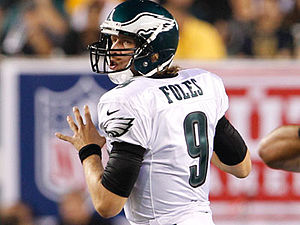
I have seen the future quarterback of the Eagles, and his name is Nick Foles.

If you don’t want to go there – at least not yet – saying you need to “see more consistency,” that’s your right.

You have a right to be wrong.

Just don’t join me on my Smart Car-sized bandwagon when this starts to bear itself out in the long-term. Don’t be like one of those people who say you saw Bruce Springsteen at the Main Point in Bryn Mawr, before he hit it big, when it was physically possible.

I am getting out in front of it now.

And I seem to be a lone wolf, which is fine.

In two of his last three starts, Foles has not only played well, but well enough to win NFC Offensive Player of the Week.

Let that sink in: Two out of three starts. Sounds pretty consistent to me. At least more than Michael Vick since his comeback dream season of 2010.

This season, Foles has also come off the bench after a Vick injury to procure a victory – on the road – against the New York Giants (those stats are not included the Daily News’ “obscure” fact, as they came in relief).

One has to think that a lot of the Foles antagonism – or outright bashing – stems from what has really been his only dismal outing. It came against Dallas in Week 7, in front of charged-up crowd at the Linc anxious for an overdue home win and a taste of “first place” in the NFC Least.

He had the ball, and he fumbled it, no doubt. That failure to rise up to the challenge was really a team effort – from top to bottom. That’s the way I felt walking out of the stadium.

The level of venom I heard toward Foles after was shocking, and showed a lack of football knowledge. While Foles missed open receivers, he found at least a good half-dozen others who dropped the ball. A few of those catches may have gotten the offense, and Foles, into the much-needed groove that high-speed offense needs to start rolling.

The whole game plan from coach Chip Kelly seemed out-of-sync. A week after running the ball effectively against a stout Tampa Bay defense, there was almost zero commitment to the run – even with the league’s leading rusher, LeSean McCoy, lining up behind Foles.

While the defense held Dallas and its high-powered offense to 17 points, keep in mind that the Cowboys were missing some players – including running back DeMarco Murray – and that the Eagles still couldn’t get off the field on some critical third downs.

Most importantly, and most forgotten or forgiven, was the horrid play of the offensive line that day. It was the unit’s worst outing of the year. Foles took some early hits, and I wouldn’t be surprised if he suffered a mild to moderate concussion early, and that set him for the more severe one he absorbed later.

For all these reasons, my conclusion in that the Dallas game was the exception and not the norm for Foles.

He was just not himself.

Foles, for all his perceived limitations, in terms of not running like Vick or throwing the deep ball with the velocity of Joe Namath, was always accurate and decisive.

That’s what I have seen from watching him in college, in two preseasons, the end of last season while playing in conditions that Johnny Unitas couldn’t have made work and in appearances leading up to Dallas.

And keep in mind, for all intents and purposes, it would be fair to call him a rookie. Until he starts his 17th game as a pro, that is what he is. Yes, he has two preseasons under his belt, but it was with two coaches with two diverse systems, neither of which he ran in college at Arizona.

I know you are antsy out there, people. I get it. I am, too. But let’s see the forest through the trees here.

What I see is a guy – if not run out of town for every rare errant throw or sack he takes because he is not an Olympic sprinter – who can be a starter in the mold of, say, Joe Flacco.

And you saw what Flacco and the Baltimore Ravens did last season.

I’m not all Folesed-up because I’m still riding the high of his seven-touchdown performance last Sunday in Oakland, an outing – complete with a perfect quarterback rating of 158.3 – that made him one of seven quarterbacks to throw that many touchdowns in a game.

I am still on a bit of a buzz from it, but what long-suffering fan wouldn’t be?

Truth is, I have always been in his corner.

I am just amazed that I have had to become like a publicist during the week after he turned in the kind of game he did in Oakland.

Immediately, detractors – most with hidden agendas, either from being Vick supporters on the run or in lust with the current bumper crop of college quarterbacks playing in systems designed to make them look like prodigies – sought to degrade the performance.

We need to address some of these skewed views of perceived reality before they drive me into a padded cell.

For one, Oakland is not “bad” team. The Raiders were 3-4, and were playing at home. They had a defense ranked in the top half of the league in most categories, and most of us expected a low-scoring game.

As for the fact that some Oakland defenders slipped on some of Foles’ touchdown throws, you just reveal your own ignorance. Defenders slip all the time. And quarterbacks, including many who have played here over the years (and had their numbers retired), still don’t take advantage. Moreover, when an offense is clicking the way the Eagles’ were last Sunday, situations like defenders getting twisted and turned around – and losing his footing – start to happen. It is part and parcel of having your opponent staggered and delivering a knockout out blow.

The question posed to me before the Oakland game was if we were going to see the Nick Foles from the Tampa game or the Nick Foles from the Dallas game.

My response was that it we were going to see the Nick Foles closer to the one we saw against Tampa – and in relief against the Giants – because that’s who he is.

After a game for the ages, the absurd question has pervaded talk-radio and newspaper columnists, above whether we are going to see the Nick Foles we saw against Oakland or the one against Dallas.

Given the totality of his performances this season, it’s a question so silly that it doesn’t even deserve an answer.

The more realistic question: is there any reason, any at all, to see Michael Vick on the field again?

No, none.

Foles should at least start until the bye week, two games away. In the unlikely event that he struggles badly and both games are lost, leaving the Eagles at 4-7 with five to go, maybe we think about Matt Barkley getting an audition like the one Foles got at the end of last season.

But I can’t see that happening.

The Eagles may not win their next two games, the ones leading up to the bye, but it’s highly unlikely it will be because of poor play from Foles.

It will be because of other shortcomings on a roster in need of a facelift next offseason. Drafting a quarterback in the first round? It would mean going through a learning curve with that quarterback while the rest of the offense gets one more year longer in the tooth while mediocre players line up on defense. It would be like digging for fool’s gold.

The fact that there is a bumper crop of college quarterbacks is still a good thing for the Eagles. It will leave other players – like a legitimate do-it-all outside linebacker, a head-hunting safety, impact nose tackle or interior offensive linemen – on the shelf at a better value.

They already have their quarterback.

He is tall, at 6-6. He may not be Fran Tarkenton, but he is more athletic than he is given credit for and can buy time in the pocket. He sees the whole field, makes good reads, has a quick release, is accurate and doesn’t throw a lot of interceptions.

His name is Nick Foles.

Sunday in Green Bay is only his 10th start, so there will be ups and downs, but I am confident it will be worth the ride.

I know it’s not easy, but try to put away your cynicism and enjoy it.

This column also appeared at http://www.phillyphanatics.com

‘The Answer’ Needed A Question

Image

By GORDON GLANTZ

Gordonglantz50@gmail.com

@Managing2Edit

GORDONVILLE – Independent filmmakers and recording artists will tell you they are content where they are, but most are in violation of the commandment about bearing false witness (lying).

They’d rather be recognized at the Academy Awards than the Sundance Film Festival, or be on a major label playing big venues than singing for their supper.

The same could be said about the vast majority of sports writers who claim inner peace without ever covering big-time collegiate or professional sports.

I should know, because I was one – for 13 of my 25 years in newspapers.

My first assignments were Little League, followed by high school events in all sorts of weather conditions or in packed gymnasiums with little to no elbow room to think or breathe.

If you want accurate statistics, you have to keep them yourself. If you want quotes from both teams, when a school bus already has the motor running for the visiting team, you best get to stepping.

The fuel that keeps your half-empty tank going is that it will all lead to something more allegedly glamorous one day. For me, that day came in 1997, when I was assigned to cover the Philadelphia 76ers.

Truth be told, it would have been a distant third on my list of pro beats, but I wasn’t about to complain.

I expect a major culture shock, going from scholastic sports to the pros, but the real shock is that I was still dealing with a lot of immature athletes who lacked the power of consequential thinking.

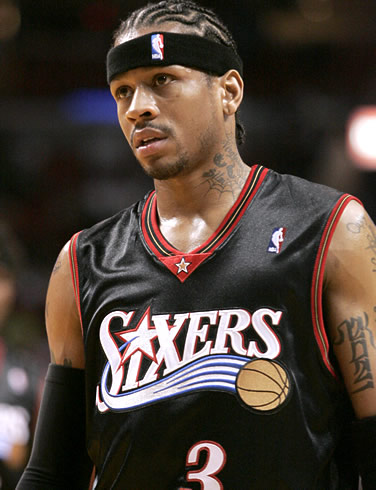
No one epitomized this more than Allen Iverson, who officially retired on Wednesday – and then watched from a box as the Sixers stunned the world champion Miami Heat – a few years after his playing career was prematurely put on life support.

Iverson was contrite and tearful when he made his announcement, and I don’t doubt his veracity.

He always wore his heart on his sleeve, and no naysayer can take that away.

On the court, a small player among giants, it worked to his advantage. Off the court, where he was as hard to handle as an errant pass against a full-court press, the opposite was often true.

The Allen Iverson I came in contact with in 1997 was an angry young man who blew off interviews and could be heard saying he “(expletive) hated (expletive) reporters” on occasion, while seeking high fives from whichever teammate was willing to play the role of temporary sycophant.

After his junior year of high school, he had been incarcerated – seemingly unjustly – and perhaps blamed the media, more so than the justice system, for that scenario.

The beat writers, though, weren’t trying to get him convicted on appeal. We just wanted a coherent quote after a game or at practice, and we ran with any morsel he grudgingly gifted for us like a pre-epiphany Ebenezer Scrooge.

I remember one guy coming all the way from Japan, for that country’s equivalent of Sports Illustrated, and staying two weeks waiting for an interview that never came.

All the Sixers employees could do was gingerly approach Iverson and ask if they had time for the guy. The answer was always no.

We weren’t asking for inner most thoughts on the meaning of life and death, just something simple from the players who just dropped 30 points in a dramatic win. Quotes from the more approachable teammates – Eric Snow, Aaron McKie, George Lynch, etc. – were nice, but when the three maybe had 12 points between them, it was not ideal.

If Iverson got out of bed on the right side and actually spoke at practice, some of my cohorts would actually go up to him the next day and thank him for talking to them like people with jobs to do.

I wasn’t playing that game. And I wasn’t long for the beat.

After my second season, the strike-shortened 1998 campaign that saw the team turn a corner and reach the second round of the playoffs behind the play of Iverson and coaching of Larry Brown, the landscape – as is apt to happen in the roller-coaster world of journalism – changed.

I was covering college hoops and keeping a keen eye, one now blessed with an insider’s insight, on the Sixers as they climbed Iverson’s shoulders to the summit of his time here. The Sixers reached the finals in 2001, falling to the Lakers in five games.

Even then, I didn’t miss the beat.

There was only one time when I did yearn to be back in that press room with Iverson at the podium, which was during the infamous press conference in April of 2002. That’s when Iverson said “practice, we’re talkin’ about practice” in a confrontational and derisive tone that, as he pointed out recently, made for a nice sound bite.

Another question arose about his conditioning, and he wondered why he needed to get “all swolled up” by lifting weights.

And no one asked the obvious follow-up question – at least not on camera. It was that working out would and should and could extend his career, or at least extend his prime.

No one was saying he had to be Charles Atlas – let alone Vinnie Johnson – but he owed it to himself, if not his employer and adoring fans, to put in the same effort in the gym that he did
playing more than 40 minutes a night for 82 games on the court.

But Iverson, like those high school athletes I covered, thought he was invincible.

He thought wrong.

Give me a vote for the Hall of Fame, and I put all personal feelings aside and put him in there with the other greats of the game.

An 11-time NBA All-Star (a two-time MVP of the all-star game), Iverson was the Rookie of Year (1996-97) and the league MVP (2000-01). Known as “The Answer,” he led the league in scoring four times and in steals three times.

What would keep him out? Beyond not winning a title, there is a legacy sullied by the clumsy way it ended.

Iverson’s lack of dedication off the court came back to haunt him in later years. He turned into a nomad faster than you can say “air ball.”

After averaging 26.4 points per game in 82 games for Denver in 2007-08, his production took a precipitous and permanent dip after being dealt to Detroit the following season. After three games in Memphis, he returned back to the Sixers for 25 games (averaging 13.9 points for an
atrocious team) in 2009-10.

He was never seen in the league again, and only played for pay just 10 more times – during an ignominious 10-game stint in Turkey, hoops hot bed that it isn’t.

There were no offers to play other than, in January of this year, from the Texas Legends of the NBA’s Developmental League.

Look up adding insult to injury in the dictionary, and there it is.

All careers end, and all superstars see their skills erode, but Iverson didn’t help himself with a head that was more “all swolled up” than his body.

And the media he despised didn’t do him any favors by not asking “The Answer” a simple question about the consequences of his actions.

And that’s no lie.

This column can also be found at http://www.phillyphanatics.com

Nose Dive

Image


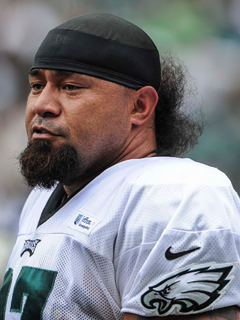
“Isaac Sopoaga — aka “Soap” — we hardly knew ye (or saw ye, for that matter. Thanks for memories, bra.”

-In case you missed, nose tackle Isaac Sopoaga was traded to New England at yesterday’s deadline for a fifth round pick in 2014 and a bag of jock straps in 2017.

Clearing Another Hurdle: Norristown’s Culbreath to enter MCCHOF

Image

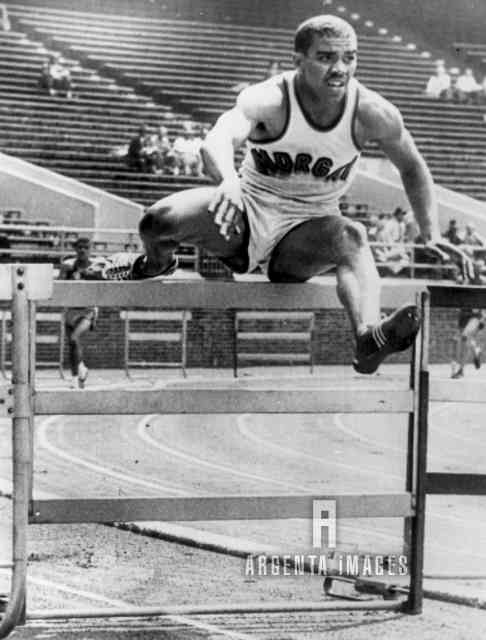
Josh Culbreath, above, clears a hurdle while running for Morgan State at the Penn Relays. The Norristown native will be inducted in the Montgomery County Coaches Hall of Fame Nov. 26. Dinner tickets are $60 (tables of 8 are $440).  Mail checks to: Montgomery Coaches Hall of Fame; 803 Northview Blvd., Norristown, Pa., 19401. For more information, call 610-279-9220 or e-mail Gordonglantz50@gmail.com or tleodora@aol.com.

By GORDON GLANTZ

Gordonglantz50@gmail.com

@Managing2Edit

When Josh Culbreath came out for the Norristown High track team as a sophomore, he faced a bit of a conundrum.

The spikes needed to run on the cinder track at Roosevelt Field were property of the school and only handed out to those already on the team.

Any hopeful for legendary coach Pete Lewis’ squad had the challenge of out-pacing an existing letterman while wearing the familiar Converse basketball sneakers that many in the working class community bought at a local pawn shop.

He walked away, in silent protest, vowing to clear the figurative hurdle being laid in his path.

In 11th grade, Culbreath – after already running for track glory in middle school events at the Penn Relays – decided to take matters into his own hands.

Or feet, that is.

He decided to run barefoot on the cinders.

Culbreath – who also played basketball and football at Norristown High — made the team, and the rest is track and field history.

“I knew I was capable,” said the 81-year-young North Wales resident. “I paid the price, but I proved my point.”

The hardware in Culbreath’s trophy case includes a bronze medal from the 1956 Melbourne Olympics and two goal medals from the Pan American games.

On Nov. 26 — at Westover GC in West Norrition, Pa. (ticket information at bottom of article)  – Culbreath will be inducted in the Montgomery County Coaches Hall of Fame, just miles from where it all began on the East End of Norristown.

Along the way, he always remaining a fierce but friendly competitor. Well-traveled and interested in other cultures, Culbreath would speak to foreign rivals in their own tongue and then say “I’m gonna whip your butt” in English, while they still smiled and nodded.

And he continued to fight injustice in his own way.

Sometimes he paid the price, but he kept on proving his point.

Such was the case when he was summoned from the campus of Morgan State in Baltimore for the 1955 Pan American Games in Mexico and met up with the team in Houston.

Culbreath and his fellow black teammates were not allowed to stay in a fancy hotel, instead being put up on a local Army base.

When the same hotel arranged for the athletes at the to have steak dinners brought in, Culbreath refused.

“They said, ‘Oh no, you can’t do that,’ … I said, ‘Oh, yes I can, and you don’t what to get me started,’” he recalled, shaking his head from side to side, still displaying  a combination of disbelief in the scenario and pride in his stance.

“And they didn’t,” he added. “They knew better.”

When he went on to win gold in Mexico City, pictures of him collapsing after crossing the finish line prompted him to enroll in law school at the University of Colorado so he could train in high altitude.

He paid the price once, this time for not being prepared enough to win with dignity.

He was going to prove his point the next time around.

That chance came in 1959, taking gold again at the Pan American Games in Chicago.

Before scoring a scholarship to Morgan State, Culbreath was hoping against hope to use athletics as a springboard to a college education, but was prepared to follow his older brother into the Navy.

Culbreath did serve in the Marines after college, where he was a three-time national champion, and was the first active-duty Marine duty to both participate – and win a medal – in the Olympics.

He taught and coached in the Norristown School District, getting a Masters’ degree in education from Temple University, often using unconventional methods to get across to students labeled unteachable.

He moved on instruct young people around the world in track and field.

In 1988, Culbreath took the job as head track and field coach — for men and women — at Central State in Ohio.

Winning 10 NAIA titles – men and women, indoor and outdoor – had him and his team at the White House Rose Garden, being honored by President Bill Clinton.

Again, like that high school junior running barefoot on a cinder track, Culbreath was willing to stay true to himself.

Known as “Pop” to his athletes, he was willing to pay the price to prove a point.

When Deon Hemmings, a female runner from Jamaica, said she didn’t want to run anymore at practice, Culbreath offered to help her to pack her bags.

She stayed, and went on to win a gold medal at the 1996 Atlanta Olympics (where three of his other athletes also competed) and two silver medals at the 2000 Sydney Games.

A male runner with Olympic pedigree, Neal de Silva of Trinidad and Tobago, was actually sent home but welcomed back when he “became a man.”

De Silva, who placed seventh at the 1992 Barcelona Olympics, paid the price.

Culbreath, his coach, proved a point.

Yet again.

Dinner tickets are $60 (tables of 8 are $440).  Mail checks to: Montgomery Coaches Hall of Fame; 803 Northview Blvd., Norristown, Pa., 19401. For more information, call 610-279-9220 or e-mail Gordonglantz50@gmail.com or tleodora@aol.com.

A Real Bad Trip, Man

Image

By GORDON GLANTZ

Gordonglantz50@gmail.com

@Managing2Edit

GORDONVILLE — What do we all have in common?

Aside from being mere mortals, we all like pizza and we bleed when we are cut by sharp objects.

And if we are normal – or at least semi-normal – and are able to hear, we at least appreciate the music of The Beatles.

And we all have our favorite songs and albums. My Fab Four favorites – despite 50 percent hearing in my left ear – tend to come from the Rubber Soul, Revolver and Magical Mystery Tour albums.

But, top to bottom, I consider their best album to be what is known as The White Album (actual title is The Beatles). A double-album, it includes the likes of “While My Guitar Gently Weeps,” “Revolution 1” and “Dear Prudence.”

There are so many others – “Blackbird” and “Mother Nature’s Sun” and “Sexy Sadie” – that I don’t know where to stop myself.

But you can’t argue this point: The White Album is without a dud.

Well, almost.

There is this pesky “song” – lasts 8 minutes and 22 seconds – that comes second to last amid the long and winding sequence of classics. It is called “Revolution 9.”

Not only is “Revolution 9” my least favorite song on my favorite Beatles album, but it is my least favorite Beatles song.

Heck, it might be my least favorite song, period.

Basically, it is a bunch of noise – with the line “number nine, number nine, number nine …” repeated endlessly – that is passed off as an “experimental sound collage” that reveals the influence that Yoko Ono was unfortunately having on John Lennon (even though George Harrison, who penned some of the albums best tunes, was reportedly roped into helping create it).

As forgettable as it may be, “Revolution 9” was kind of stuck in my head at, of all places, a football game last Sunday – about 45 years after it was released.

While the Philadelphia Eagles played as if the turf at Lincoln Financial Field were quicksand and the end zone they were pursuing was protected by a mystical force field, preventing one of the league’s top rated offenses from threatening to score against one of its worst defenses, that irksome phrase began ringing in my ears.

Number Nine.

Number Nine.

Number Nine.

It was like a bad trip, man.

Paul wasn’t dead.

Forget about 6-6-6.

Turn it upside for the real pre-Halloween fright.

The Eagles were, for the ninth straight home game, coming out on the losing end, this time against the rival Dallas Cowboys, 17-3.

And the quarterback, with a chance to be anointed the successor to the throne, was performing like the song “Helter Skelter” was blaring in his helmet instead of the plays from the sideline.

That quarterback, second-year man Nick Foles, happens to wear what number uniform?

You got it.

Number nine.

Number nine.

Number nine.

While it was not fair to deem Foles the face of the franchise based on winning one game in relief and another as a starter against two teams with one win between them, it is not fair to send him packing to the Arena Football League after last Sunday.

Nonetheless, when asked if the Eagles had a worse quarterback performance in a single game, I could only think of one: Pat Ryan.

What was his jersey number during that ill-fated stint of four games, netting a QB rating of 10.3 (for real)?

Not No. 9, but No. 10.

Whether or not you believe in numerology, it is a reminder that it can only get more dismal.

If the Eagles lose again this week, the well-worn “Rocky” movie clips on the big screen might have to give way to the movie “10.”

Instead of piping in all the AC/DC and Rocky soundtrack songs into the Linc, they ought to use “Revolution 9”until further notice.

It would be odd, but you reap what you sow.

The repeated “number nine” would be reminder of the torture the Eagles are putting their fans through with this ongoing home-field disadvantage, and also encouragement that a “Revolution” ought to be in order.

I am a season-ticket holder. I am not a big fan of a lot of the fans, to be brutally honest. Too many seem more interested in drinking in the parking lot than thinking about the game on the field, but I almost can condone cheers drowned by beers.

It has been more than a calendar year since the Eagles prevailed at home. It is the worst example of at-home futility in professional sports, and the worst in the team’s rather sordid history since the 1930s.

Even the Temple football team, which also calls the Linc home, has won a few times there during this span. And the Owls are not exactly the Crimson Tide of Alabama.

How and why is this happening?

A fluke? A byproduct of a team that was terrible last year and has only played three games at home this season, one which hangs perilously in the balance between contending and pretending with nine – yes, there is that number again – games left of a 16-outing slate?

We could get into the Xs and Os, but it is about a suddenly lost culture where coming into town to play a Philadelphia team – particularly the Eagles – once carried some level of mystique.

The feeling is gone and we just can’t seem to get it back.

It might be time to look for rational reasons, beyond the paranormal.

Philadelphia is a sports town, for all its teams. The Phillies are beloved, the Flyers have a cult following and the Sixers get what they give whenever they decide to be good. Even the Union, the soccer team, is developing a loyal base.

But it’s all about the Eagles, first and foremost.

This is a football town.

Sociologists can research the reasons, pointing to Philly’s blue-collar proletariat work ethic, but it can’t be that complicated.

It goes back to 1960 – the year The Beatles started making their mark in Hamburg, Germany.

That is when the Eagles last won the NFL title.

To put it in perspective, that’s more than half a decade before the league champion was crowned after the Super Bowl. It was just called “the championship game” and the players wore crew cuts.

It has been 53 years, and one look around The Linc on game day reveals beer-guzzlers who were not even born in 1960 and might have a hard time naming five Beatles songs, let alone five stars from the last team to put a meaningful banner up in the rafters.

The Phillies are professional franchise with the most losses in the history of American sport, but this is a “what have you done for me lately?” society. They won the World Series in 2008 and also 1980. The Sixers won in recent memory, going all the way in 1983. The Flyers captured the Stanley Cup twice, in 1974 and 1975 and have been in the finals six times since.

The Eagles? Two Super Bowl losses, and a whole lot of ups and downs, since 1960.

That puts them under the microscope; in a fish bowl.

In other cities, where the desperation does not run as deep, a team can play loose in front of a crowd that is not clapping and cheering with clenched fists and teeth.

And during this nine-game swoon at home, the common denominator is a roster with a talent level that needs that added pressure like former coach Andy Reid – whose current 7-0 record in Kansas City includes a win here –  needs another doughnut.

It could be said that the Linc lacks something that Veterans Stadium had, in terms of intimidation, and that might be true. But the saccharine environment can turn sweet in a hurry with a win against another rival, the one-win New York Giants, this Sunday.

Or even more bitter with another loss.

What song will come to mind?

“Ten” by Jewel?

“Ten Little Indians,” the nursery rhyme, or the versions by the Yardbirds or Nilsson?

“Ten Thousand Fists,” by the Disturbed? Probably a little too disturbing.

“Ten With A Two,” by Kenny Chesney? Uh, no. Sore subject in that stadium.

“Ten Times Crazier,” by Blake Shelton, keeping it country, without touching a nerve?

Sounds like we got a winner, assuming we get another loser.

This column originally appeared at http://www.phillyphanatics.com

Fear The Reaper, Flyer Nation

sniderfeature
By GORDON GLANTZ
Gordonglantz50@gmail.com
@Managing2Edit


GORDONVILLE — On Oct. 8, 2011, the sports world lost an iconic figure.

Al Davis, whose “just win, baby!” approach made the Oakland Raiders – the team for which he was the principal owner and general manager – a one-time powerhouse in the old American Football League and then the merged NFL, died at age 82.

But perhaps he did not die.

Perhaps his spirit morphed into that of another man with a similar background and similar story, that being one Edward M. Snider.

Although not internationally recognized, like Davis, Snider is well-known as the chairman of our Philadelphia Flyers.

Like Davis, Snider’s guidance and achievements with the Flyers have earned him a pass – at least locally – during tough stretches and regrettable missteps. After all, he brought a winner to a town that had become used to losing and booing away the angst.

And winning became addictive for Snider. It remains his primary objective.

Like Davis in the NFL, Snider is not exactly Mr. Popularity around the NHL. Like Davis, he not only doesn’t care how he is perceived, but enjoys it. And that scores more endearment points here.

But the parallel, unfortunately, is taking a more ominous turn.

Davis, toward the end of his storybook run with the Raiders, had pretty much written the textbook on how and why impulse decisions beget more of the same in a business where the opposite is needed. He left the Raiders in a shambles, hiring and firing coaches and front-office types as if it were a Burger King.

Snider, with a vice-like grip on the Flyers, seems to be doing the same.

At the end of last season, one shortened by a lockout, Snider and Co. gave a tepid vote of confidence to head coach Peter Laviolette.

After a one-win preseason, which included some silly team-bonding shenanigans in Lake Placid, N.Y., the Flyers seemed to be hoping for their own miracle on ice when the rubber hit the ice for real. Instead, they remained cold as ice, dropping their first three games with an anemic offense and defense lacking the necessary cohesion.

And then, in a move ripped the playbook of the latter years of Al Davis’ reign – one which morphed from terror to error – Laviolette was axed, only to be replaced by assistant coach Craig Berube.

The move may have sent shockwaves through the league, but the necessary culture shock within the “organ-I-zation” was not felt.

There’s no “just win, baby!” when you put a coach on a learning curve. Berube, a 17-year NHL enforcer, is being set up to fail, but the turnstiles at the Wells Fargo center keep on churning.

It doesn’t even trickle across the goal line as a short-term fix.

How is a guy who sat in coaches’ meetings with Laviolette – plotting flawed strategies and square-peg-in-a-round-hole system – going to kick-start this team?

We got our answer.

No honeymoon period here.

Berube has one win – 2-1 over the Florida Panthers, not to be confused with the Wayne Gretzky-led Edmonton Oilers of yore – and that was only because goalie Steve Mason, one of the few bright spots this season, practically stood on his head to secure the lone highlight of the season. Beyond that, it has been more of the same.

The Flyers, who were granted a week’s reprieve by the league’s schedule-makers, enter action again Thursday against the New York Rangers with a 1-7 record.

It has gotten so bad that this respite is being billed as time to replenish and begin anew, but seven losses in the first eight games can haunt you in the quest for a playoff berth as much seven losses in the last eight.

It has gotten so bad that they come away from losses feeling like they are just about to turn the corner.

Bottom line: That’s loser talk, and that’s the culture now bred in the Flyers’ locker room.

And the water is carried from that poisoned well to the public by the team’s beat writers, who are taking spin control to a new low.

It took media outside of that small circle of friends to hit Snider with the necessary hard question – the elephant in the room – after Laviolette was canned.

It was about the propensity to hire from within – to the point of it being a sports equivalent to incest – considering that Berube spent a chunk of his 17-year “playing” career in orange and black.

The culture, and the need to change it, was called into question.

Snider snapped, responding that the team has been to the finals repeatedly – six times – since winning Stanley Cups to cap off the 1973-74 and 1974-75 seasons.

It sounded good.

It had that “wow, he told him” feel to it.

But Snider – like a later-era, cartoonish Davis – has lost his mojo. He just came across like a grumpy old man.

The fact is that in those six trips to the finals, which puts the Flyers atop the list of active teams in major sports in the area of futility when comes to the final showdown in the town square, reveals a different picture.

In 1975-76, when the Flyers came up short in their bid for a hat trick, Fred Shero was still at the helm. The next time, 1979-80, the coach was Pat Quinn. He had played over 600 games in his NHL career, but not one in a Flyers’ uniform. He became an assistant under Shero, apprenticed in the AHL and ascended to the top job during the 1978-79 season.

The next trip, again ending without champagne, was the 1984-85 season. The coach, Mike Keenan, was a fresh face from the Canadian collegiate ranks, replacing an “organ-I-zational” hack, Bob McCammon. They got there again under Keenan, in 1986-87, and came
agonizingly close to the Holy Grail, falling in seven games to that Gretzky-led Oiler juggernaut.

The next time, sigh, was in 1996-97. The coach was Terry Murray, who spent most of career as a NHL/AHL tweener with the “organ-I-zation,” but cut coaching teeth for five seasons behind the bench in Washington before “coming home.” After taking the Flyers from their franchise low point to the finals in his third year, Murray was fired and made a scout before resuming his coaching career.

There was no improvement.

It wouldn’t be until 2009-10, with Laviolette running the team, that the Flyers would make a wacky run to the finals before losing in six games to Chicago. He came here with no ties, a fresh perspective and a Stanley Cup (2005-06) on his resume.

Maybe it was time for Laviolette to go, as the spring of 2010 playoff run was really the peak of his time here. But shouldn’t that move have been after last season when there were seasoned coaches – other than an untested assistant – out there for the taking?

Impulse decisions beget more of the same. In the world of sports, the results are 1-7 starts.

Just win, baby?

Ghost of a chance, Ed – courtesy of Al Davis.

Happy Halloween, Flyers Nation.

A Fair Prayer

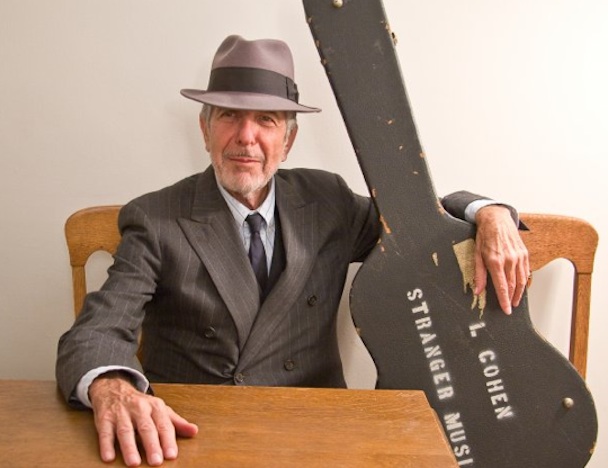
Leonard-Cohen

“You say I took the name in vain
I don’t even know the name
But if I did, well, really, what’s it to you?
There’s a blaze of light in every word
It doesn’t matter which you heard
The holy or the broken …”

Leonard Cohen

Hallelujah

The Mourning After

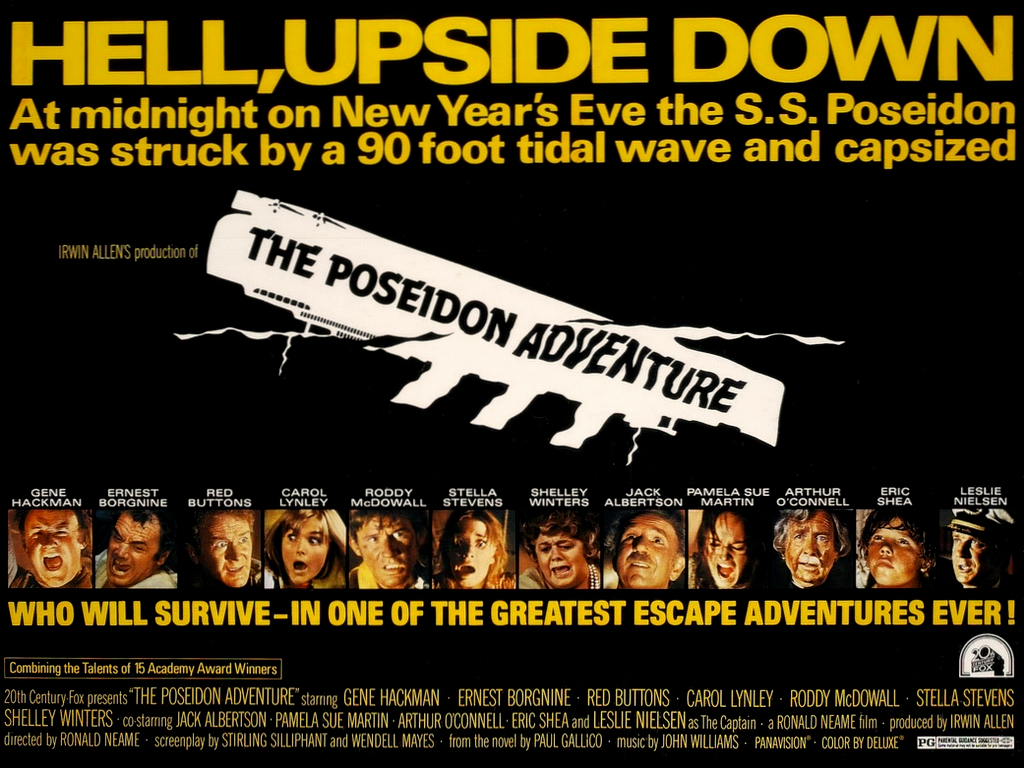
the-poseidon-adventure-wallpapers_26483_1024x768

By GORDON GLANTZ

Gordonglantz50@gmail.com

@Managing2Edit

GORDONVILLE — Perfectly slotted between when Sofia came home from school and when she had to leave for dance was “The Poseidon Adventure” — the original from 1972, not the remake (a practice that should be illegal in Hollywood without written permission from the Gordonville high court).

At age 7, just about six months older than my little princess is now, I saw this action-adventure flick — cut from the cloth of “Airplane” and “Towering Inferno” made during the era of shag carpets and man-perms — I saw this in a movie theater (no Net Flix back then).

Sofia came into the room at the pinnacle scene, when Gene Hackman‘s character — the heroic Rev. Scott — plummeted to his death after making the rescue possible for the other survivors (Come on! It was 41 years ago, putting me a year beyond the statute of limitations on spoiler alerts, so I don’t want to hear it.).

I warned her that it was “just pretend” and that I could prove to her by showing her one of the other 98 movies starring Hackman (not an exaggeration, he has 99 credited roles), but she was a soldier undaunted anyway.

“When is he going to come back?” she asked, as the cast of mostly “B” actors (save Hackman and Ernest Borgnine, whose interaction were a highlight) were being blow-torched out and spirited away in a helicopter as the credits began to roll.

For those who say that history doesn’t repeat, those were the same thoughts running through my young head in 1972, when the song “The Morning After” from this movie topped by the charts (who can name the singer without cheating on Google or IMDB?).

It was the first time I saw a bittersweet ending, at least to my knowledge; the first time a protagonist gave the ultimate sacrifice.

Likely the same for Sofia.

It was meaningful, in a weird way, to share it together.

And maybe it was the nostalgia, but they don’t make them like they used to, do they?

Bringing us back to the mourning after.

I’m not a real big fan of this type of movie. I haven’t been for a long time. Maybe it is because I saw the classics, and got them out of my system, at a young and impressionable age (even though it took today’s viewing to realize some tawdry tricks, like having Pamela Sue Martin and the other actresses, other than Shelley Winters, strip down to nothing early on under the guise of needing to shed clothing to climb a Christmas tree out of the dining area).

It made an impression then and now.

For all the times I click through all 678 channels and find nothing to watch, this was right on time.

At the perfect time.

Home Cookin’

halloates

“High and dry, out of the rain
It’s so easy to hurt others when you can’t feel pain
And don’t you know that a love can’t grow
‘Cause there’s too much to give, ’cause you’d rather live
For the thrill of it all”

Hall and Oates

-Rich Girl