Author Archives: gordonglantz

Mock Draft 3.0: Reality Check

Pederson Roseman

By GORDON GLANTZ

GORDONVILLE – It’s easy to sit here and write all about who I would take in the NFL Draft – which begins next Thursday night (first round), then Friday (second and third rounds) and concludes Saturday (Rounds 4-7).

It’s equally easier to give the people – that’s all of “yews” – what they want as well.

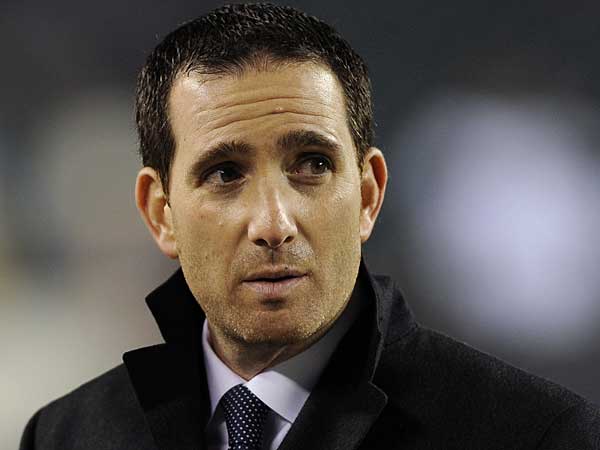
But, if history as taught us anything, it is that de facto GM Howie Roseman and Co. are going to do what they are going to do without our input. It is likely to involve names we didn’t even kick around all this time in quarantine, while not even following the same thought process in terms of addressing needs.

Does that mean the brass is sometimes overthinking? Absolutely. Does it also mean we have no clue what is going on behind closed doors, in terms of which veteran players could be on the move or could be dealing with injury issues not known to the public? Hell, yeah. We also don’t know which players have caught their eye – at the combine and on film.

While my Mock Draft 1.0 featured an unrealistic overflow of receivers, specifically to quiet those of “yews” worried about that need, Mock Draft 2.0 had some trade scenarios that are impossible to predict. Now, for Mock Draft 3.0, it’s going to be a projection of what they very well may do that leaves us scratching our heads – at least until we get the “spin control” afterward.

Here we go:

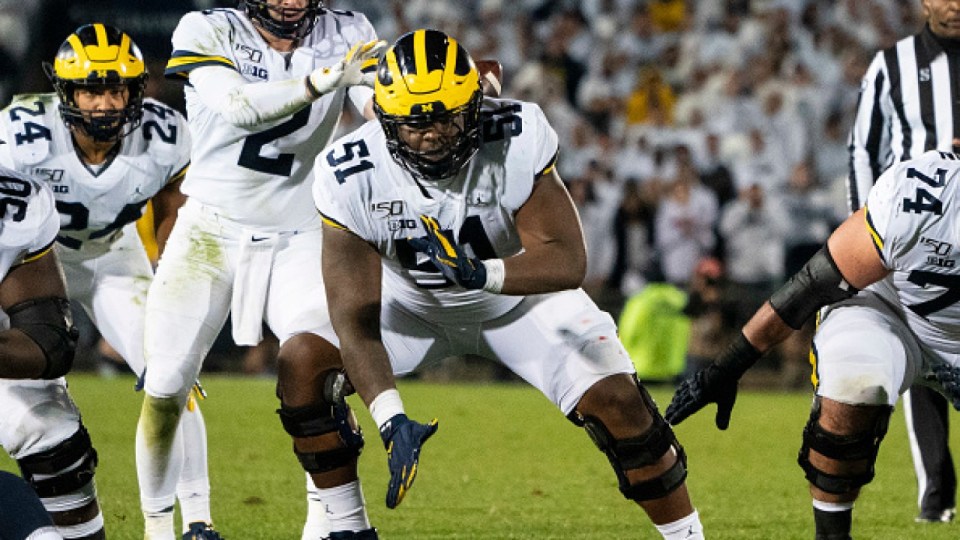
Round 1 (Pick 21): Cesar Ruiz, C-G, Michigan, 6-3, 315

The Spin: It’s year to year with Jason Kelce, and center has become crucial to the offense because of his play. Ruiz is the best center prospect to come out in years, so they will say, so it’s best to grab him now and let him learn behind the All-Pro. How will Kelce take this? I don’t know. He might be offended, but he could also be relieved, as he has hinted at retirement for a while now. Also, it’s not like Isaac Seumalo is a burgeoning All-Pro at left guard. Ruiz could probably take that job and push Seumalo into the more comfortable role of a versatile sixth lineman. Moreover, the outcry over not taking a receiver – “we looked at it but the asking price was too high,” Roseman will say – will be mitigated by feel-good stories about Ruiz (pictured below) being a Camden native who always dreamed of playing for the Eagles.\
Ruiz3

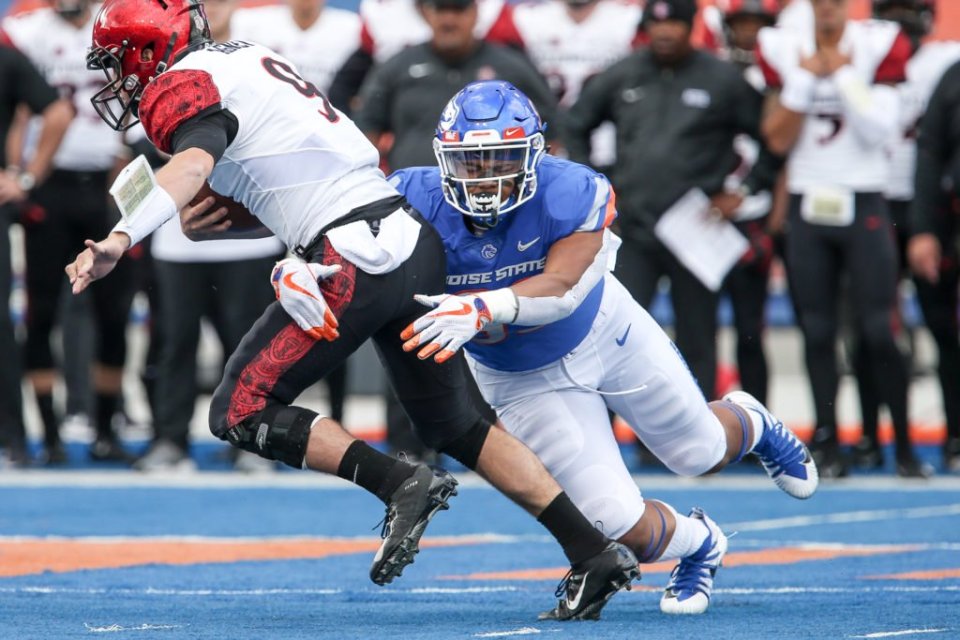
Round 2 (Pick 53): Curtis Weaver, Edge, Boise State, 6-3, 265

The Spin: Like Kelce, Brandon Graham isn’t getting any younger. Meanwhile, the long-term impact of recent DE picks – Derrick Barnett, Josh Sweat and Shareef Miller — remains uncertain. There will likely still be enticing receivers on the board, but they will say this is the guy they wanted all along and that they even considered him in the first round (eye roll). And, really, drafting an edge player is a springtime rite of passage going back to when Roseman went on coffee runs. May as well get it over with, right? Weaver (pictured below) may never be an every down player, but he has pass rushing specialist written all over him, as he had 13.5 of his 34 career sacks just last season.
Weaver3

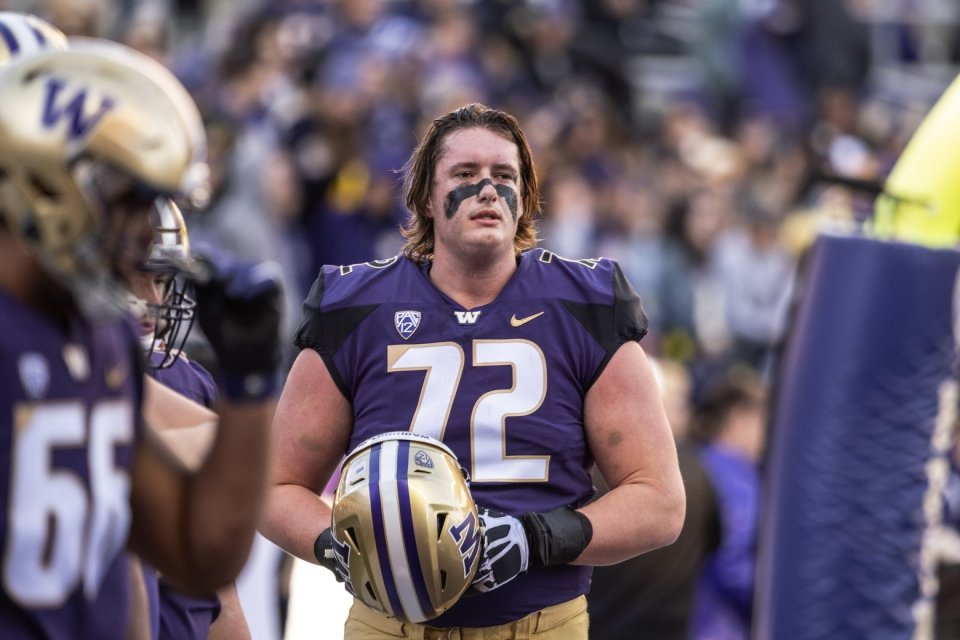
Round 3 (Pick 103): Trey Adams, OL, Washington, 6-8, 306

The Spin: Those second-tier receivers that were still there? Guess what? They were all gone, with 10 picks to spare, with pick 103 came around. They stayed true to their board here, saying the game is won upfront and that you can’t have enough offensive linemen. Even though Adams is a solid prospect with upside, this will be the head-scratcher – at least on the surface. The reality, though, is that the tackle position is as rich in talent this year as wide receiver. It’s just not as glamorous. In another year, this starter of 45 straight games at left tackle would be a Top 50-75 pick. Because he has some serious injuries, which stoically battled through, he fell to the Eagles. Adams (pictured below) could be viewed as a hedge against last year’s first-rounder, Andre Dillard, or a top-end third tackle who could use a good 15-20 pounds on his frame and some technical work.
Adams2

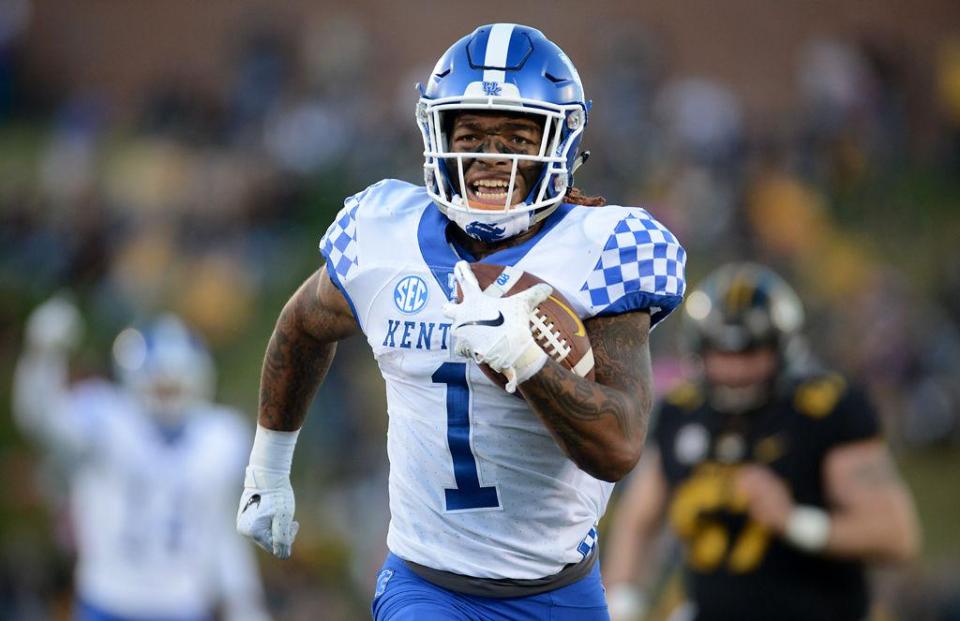
Round 4 (Pick 127):  Lynn Bowden, WR, Kentucky, 6-1, 200

The Spin: They are going say they are lucky this under-the-radar guy fell to them, and it won’t be a lie. As is the case with Adams in the third round, depth at the position pushed Bowden into the Eagles’ lap. Bowden (pictured below) was forced to play quarterback for the depleted Wildcats, a selfless move which showed a lot of character. While going 6-2 as a starter under center, it also hurt his draft stock a bit by stunting his growth into being a Day 2 pick as a receiver. Still, Bowden has good speed (4.5ish), reliable hands and some return game skills. For the Eagles, assuming that DeSean Jackson and Alshon Jeffery are back health – and that Greg Ward picks up where he left off in the slot (while J.J. Arcega Whiteside theoretically evolves) – they can let a guy like Bowden be a bit of a wildcard.
Better Bowden

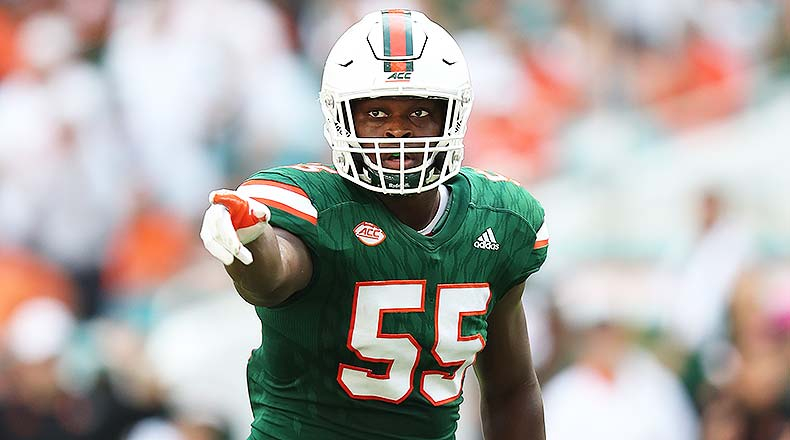
Round 4 (Pick 145): Shaquille Quarterman, ILB, Miami (Fla.), 6-0, 240

The Spin: Position of need (although they won’t admit that), and will be portrayed as an excellent value pick – even though this is just about where Quarterman (pictured below) is slotted by most so-called experts. Saved his best for last, earning All-ACC honors with 51 of 107 tackles being of the solo variety. Looks the part of a NFL inside linebacker, but the fear is that he may miss as many plays as he makes, which is a no-no that get you benched fast.
ShaquilleQuarterman_2017_13

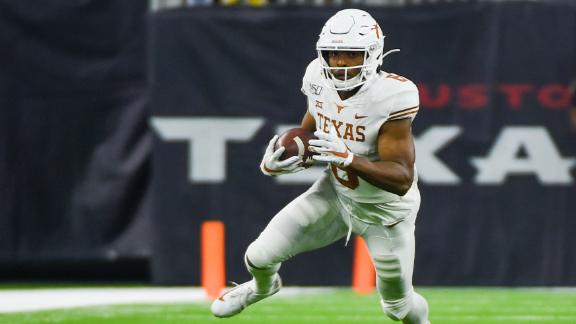
Round 4 (Pick 146): Devin Duvernay, WR, Texas, 5-11, 210

The Spin: They still got two receivers who were stellar college players while staying true to their board and addressing needs on Days 1 and 2. Duvernay (pictured below) had almost 1,400 receiving yards last season, and he runs a 4.4 40. Why, then, did he last this long? Although he could take the top of a defense in college, he is projected as just a one-trick pony — a slot receiver — in the big leagues. That doesn’t bode well for Ward’s long-term future, but it bolsters the overall depth in the stable for now. Duvernay, a sprint champion in high school, also has some return game experience.
Duvernay

Round 5 (Pick 170): James Morgan, QB, Florida International, 6-4, 225

The Spin: With the long-term future of backup quarterback uncertain beyond this year (Nate Sudfeld has a one-year deal and there seems to be no real interest on either side to make the relationship last beyond that), the door is open for another to be developed alongside of – or instead of – practice squad holdover Kyle Lauletta. Morgan (pictured below) had some impressive workouts before the lockouts, and he may have put himself into the draft – as opposed to being a priority UDFA – as a result. While the upside is there, as he can make the requisite throws, it is still raw.

James Morgan

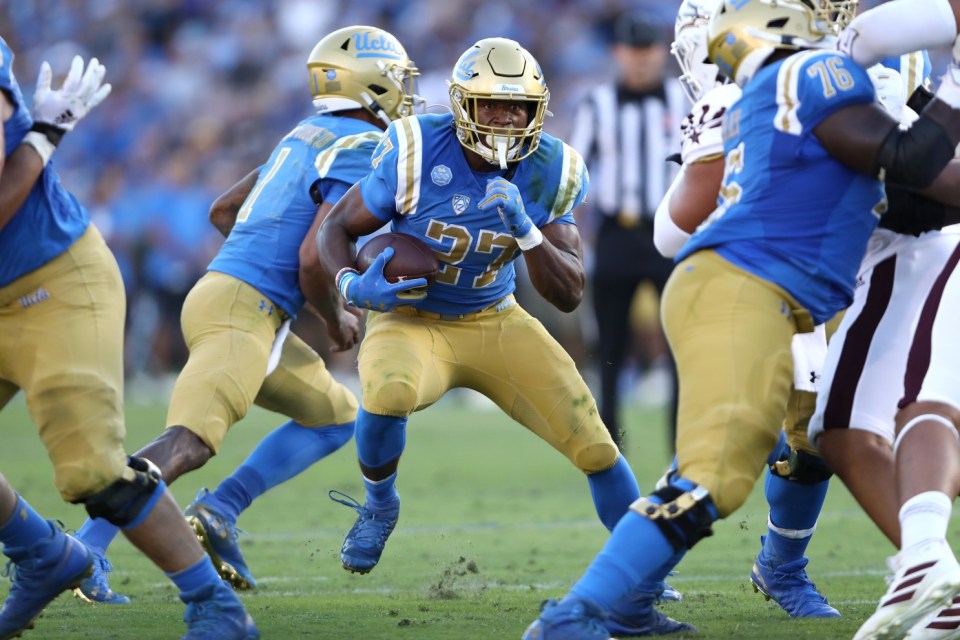
Round 6 (Pick 190): Joshua Kelley, RB, UCLA, 5-11, 210

The Spin: Kelley (pictured below) was a productive workhorse in college, not only for the Bruins, but at FBS level at Cal Davis before transferring.  This may have worked against him as a prospect, as NFL teams like running backs with less tread on their tires and a little bit more mystique. His highlight reel won’t wow anyone on YouTube, but Kelley’s style may translate better than scat backs who won’t be able to run away from anyone in the pros much anyway. While not really a dynamic runner, his meat-and-potatoes style – one that produced games like the one he had against rival USC (40 carries, 289 yards) – might make him a nice short-yardage fit with Miles Sanders as the go-to back and Boston Scott and the change-of-pace back. In addition to his production – two 1,000-yard seniors at UCLA – he has some kick return experience.
Kelley

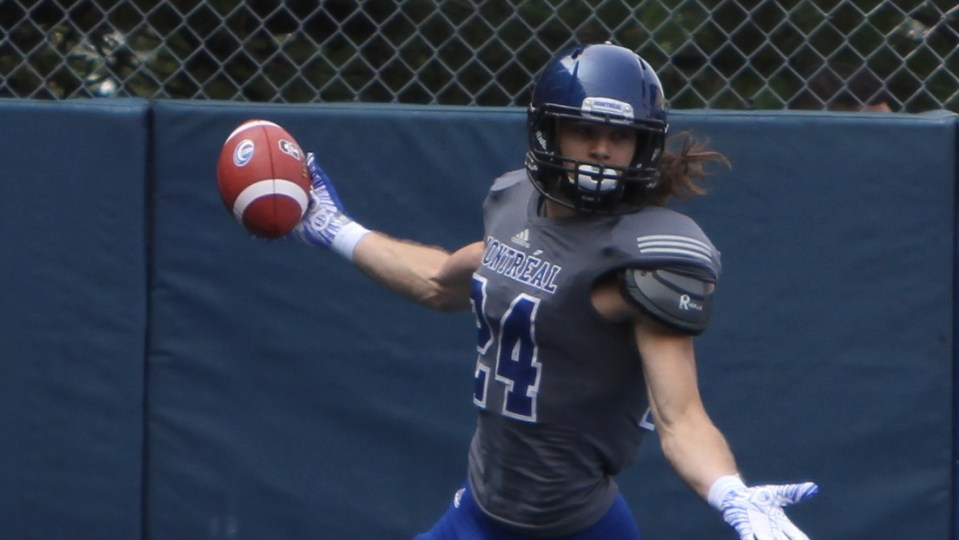
Summary: The first question will be about safety, and Roseman will say there were some they liked, but they stayed true to their board. And, with that, there will be the announcement that Avonte Maddox will get reps at safety. He will also tout the fact that he signed athletic freak Marc Antoine-Dequoy (pictured below) of Montreal (not a misprint), who is sure to become a folk hero (look at his hair) and could actually stick as a special teams guy while learning to play safety. While I fully expect more picks to be found, via trade, maybe by dumping one of the back-to-back picks at the end of the fourth round for two later on, most boxes were checked off. “Yews” will be a bit ticked off that, in a year of stud wideouts, we came away with guys who don’t float many boats. Time will tell on that one, as receiver remains one of the most difficult positions to project in the last decade. It very well could be that a Day 3 receiver, or someone signed after the draft, matches or exceeds the play of a big-name guy from a big-time program anyway. What will be unspoken – and unasked by the press hoard – is that they successfully navigated around taking a Temple player for yet another year.
MAM


Hearing in the Covid-19 Age

Kim

By KIM FISHMAN

MINNEAPOLIS — We are all starting to walk around with face-masks to protect us from this horrible Coronavirus. The Coronavirus does kill people who are infected although not always but enough. So the entire world is shutting down businesses, socializing  and  going out.  We are protecting one another by wearing face-masks and distancing one another from each other.

While walking through a grocery store the other day, someone with a face-mask said something to me and I had no idea what he said.   Then I was texting with a friend who has a severe hearing loss and I suggested we go for a walk while socially distancing and wearing face-masks.  I joked and said “that will be a lot of fun Lucy, because you won’t hear a word I say”.   She actually said she could hear from 6′ but if I wore a face-mask it would be nearly impossible to communicate.

If you can’t understand people wearing a face-mask and at a distance, please don’t worry that your hearing  is getting worse.   Below are the reasons why you are having more trouble hearing and some suggestions to help you.

  1. Talking from a distance–  the mics on the hearing aids do better and pick up sound more clearly when you are within 6′ of the sound source.  If you are more than 6′ away you lose the soft sounds that don’t travel to your microphones, especially those high frequencies.

Solution:  This is an easy solution; if we have to social distance for much longer, one solution for 6′ conversations is the remote mics.  Almost all new hearing aids and some older ones have a remote microphone you can buy.  Talk to me or other audiologists to inquire.

2. Listening to Someone with a Covered Mouth – When you are talking to someone where you can’t see their lips then you can’t read their lips either.  You say you aren’t good at lipreading?   Even if you are not good at lipreading, you actually do get  some  information from people’s lips and mouth.  You can see on the mouth some formations to tell if they had used a “p” from a “s” for example.  You can also tell if the person is smiling while saying what they are saying or serious, which can change the inflection and meaning.  For instance they could say “I am fine” with a smile or “I am fine” with a serious scared look.

Ultimately, this can affect your speech intelligibility and speech understanding.  A solution for this is to ask another question to confirm what you thought you heard.  You could say “did you say you were fine and are you really feeling OK?”  This is always a nice response when you are really listening to what they say.  If you say “did you say”.. and were wrong, then the person will repeat for you what they said.

You could also let the person know that you have a hearing loss and you didn’t understand what they had just said.  Perhaps they will lift up there mask for one second and repeat, while taking a step back. 🙂

3Wearing a face-mask can muffle one’s speech – If you are listening to someone with a face-mask, just be aware that the speech can also be muffled.   Truly muffled speech is hard for anyone to understand, even people who have normal hearing.  Muffled speech is not clear and if you wear a hearing aid, it isn’t because your hearing is muffling the speech, it is because of the face mask.  The face mask isn’t allowing the words to get projected and the cloth muffles the sound.

A second reason for muffled speech is that the person who is talking behind the mask may not be able to open their mouth enough and articulate.  Poor articulation along with lack of projection muffles the speech and is hard for anyone to understand what is being said.

Solution for the muffled speech:  This is a tough situation as I said for anyone listening to this type of speech.  I would go with the direct approach and just let the person know I can’t understand what they are saying.  Let them know it is hard to understand people with a face-mask on, just in case they don’t know that and secondly let them know you have a hearing loss.  Again know that people with normal hearing will also have a hard time.

These are really tough times.  We have to wear masks and we have to stay a social distance away from one another to #FlattenTheCurve.  It is important for our lives and others.  It is better that you stay at home, call a friend on the phone with your Bluetooth streaming, set up your TV streamer and watch a good movie, read a book, listening to music, go for a walk, do yoga or some other exercise on YouTube, Facebook, or do something like play a game with your household family member than getting out talking to others anyway.   Go easy on yourself and of course be kind to others.

Looking forward to seeing you all when Covid 19 times are lightened up.  Can’t wait!

Mock Draft 2.0: The Trade Edition

DP1

By GORDON GLANTZ

GORDONVILLE — The last time we met, my Mock Draft 1.0, was an exercise in suicide prevention for all those who thought the Eagles had no hope at receiver. To prove a point, more than anything else, I took four receivers. Although I think it’s likely they take more than one – probably two, if I were laying a bet – we know four was not only a stretch of the imagination but a chance for us to stretch our thinking to what could be possible.

While I generally don’t adhere to mock drafting with trades, this coronavirus thing has allowed me another shot – in Mock Draft 2.0 – before getting down to business with 3.0.

So, for today – as was the case with 1.0 – we are going work outside the margins a but and throw in some trades.

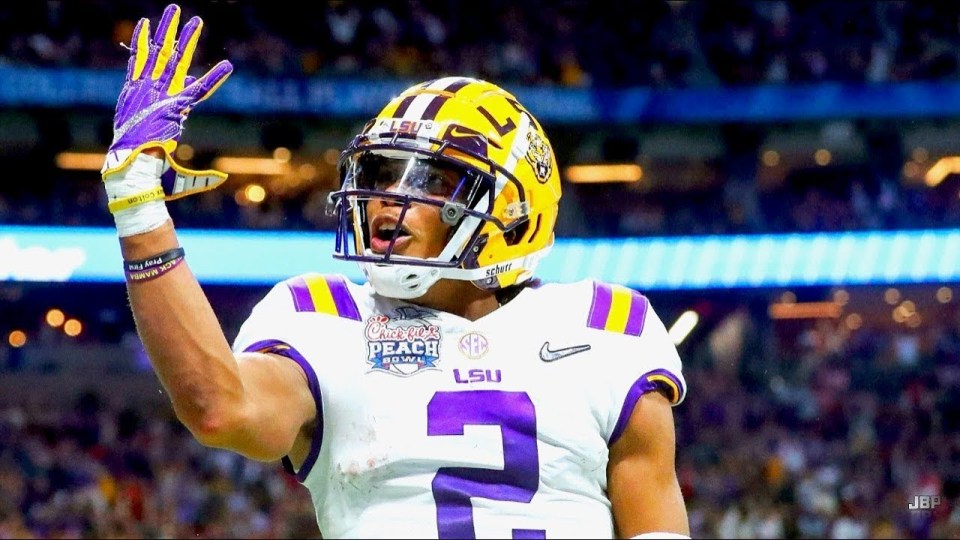
Last time around, I had the Eagles taking LSU receiver Justin Jefferson at No. 21. Today, for this drill, I’m trading down for a later first and a second. Perfect world, we go to, say, Miami at 26 and also get No. 39 in the second round, which would probably be too much for Miami to give up to just to move up five spots. So, I’m looking more at Green Bay at No. 30, which might be looking to get in front of the Saints (No. 24) to snatch Jefferson. Green Bay, in this deal, also sends us its second-round pick, 62nd overall.

Now, I get on the horn with the Jaguars and offer No. 30, as well as our third-rounder and cornerback Rasul Douglas for coveted defensive end Yannick Ngakoue, their second-round pick (42nd overall) and their second of two fourth-round picks (137th overall).

This puts the Eagles out of the first round in what it is an uncertain draft year anyway, but leaves them with three – instead of one – second round picks. There is no longer a third-round pick but four (127, 137, 145 and 146) instead of three, in the fourth – going along with one in the fifth (168) and another in the sixth (190).

My trading will conclude by sending Alshon Jeffery to either the Colts (familiarity with Frank Reich) or Bears (past success with Nick Foles, who will be their quarterback by midseason), but there is no hurry there. The return will future considerations (i.e. a Day Three pick in the year 2525).

So, with the reshuffled deck, here we go:

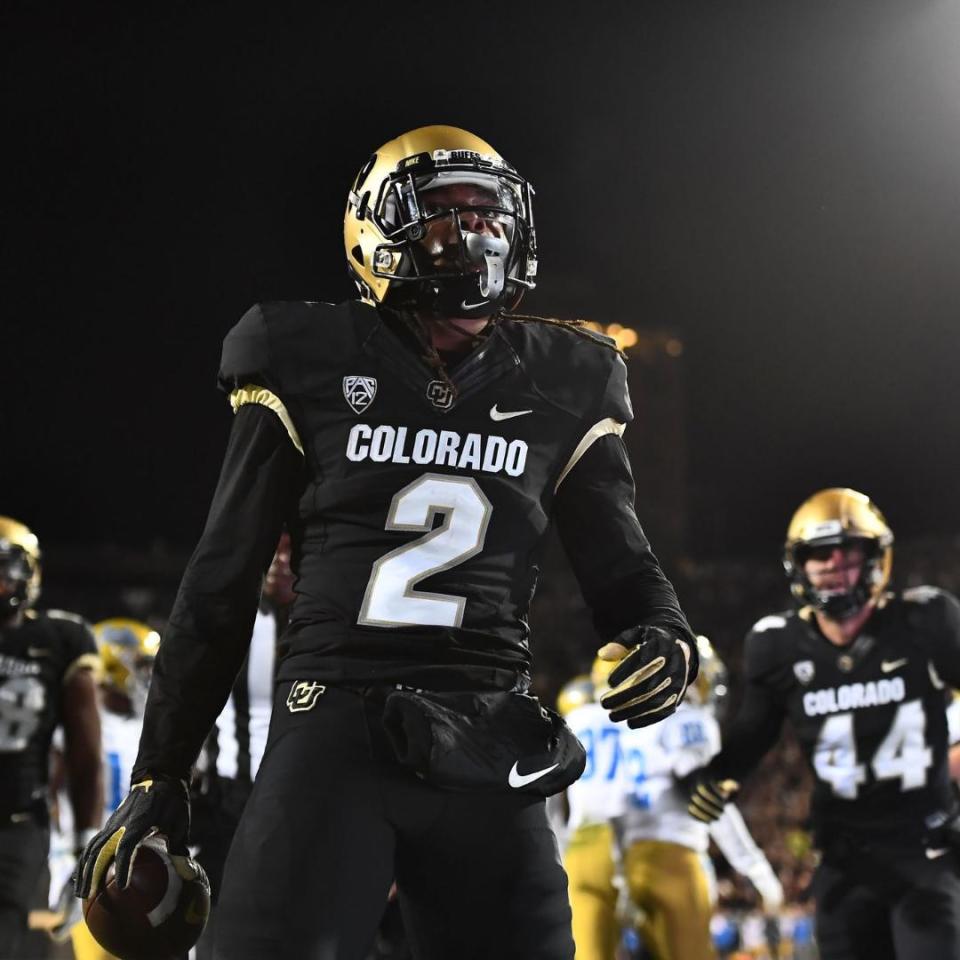
Round 2 (Pick 42, Acquired – theoretically — from Jackonsville): Laviska Shenault, Jr., WR, Colorado, 6-2 215

Rationale: Without a chance to visit teams in the flesh, there is no way to know where this wunderkind is, physically. On talent alone, he might be right there with the three receivers expected to go in the first half of the first round. Unlike two of them – Jerry Jeudy and Henry Ruggs III of Alabama — Shenault was not part of a three-headed monster (Alabama has another receiver likely to go in the first round next year) with a stud quarterback, Tua Tagovailoa, throwing them the ball. With Colorado, opponents knew Shenault was the focal point of the offense and he still made plays. He has the size of a running back (see above) and runs in the 4.5 range. Considered still a raw product, Sheanault draws favorable comparisons to J.J. Smith-Schuster.

Plan B: There is a chance, though, Shenault may not be left at No. 42. When you drop down from 21 to 30 to 42, while picking up a stud defensive end, it is the risk you run. The feeling here is that, if he isn’t there, Denzel Mims of Baylor will be. Although also raw, Mims is 6-3 and 215 pounds and runs a sub-4.5 40. Come away with one or the other, and we’re doing fine (as long as J.J. Arcega-Whiteside improves).

DP2

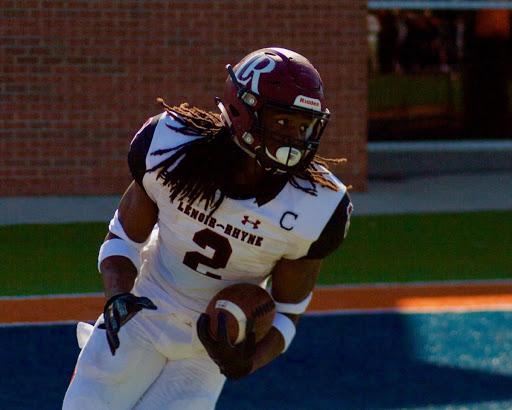
Round 2 (Pick 53, our own): Kyle Dugger, DB, Lenoir-Ryne, 6-0, 210

Rationale: A little bit risky here, as some other receivers could be on the board, but Dugger is a hot commodity right now after proving the pro scouts that his college dominance at a lower level of competition was not a fluke. Dugger is a hitter and runs just over 4.55. A free safety and return man in college, he could eventually play a Malcolm Jenkins role in the Eagles defense, as he has the ability to line up anywhere from outside corner to slot corner to linebacker to safety. It may take a year to learn those nuances, but he would be a maniac on special teams, and maybe even a return-game option, as a rookie. With the moves made in the secondary in the offseason, there is no immediate rush. However, there will likely be new holes and roles to fill in 2021 and, by then, he’ll be shovel-ready.

Plan B: As is the case above, there is no guarantee Dugger lasts this long. If not, and considering that I traded Douglas to Jacksonville, I’m going to stay in the defensive backfield with my backup option and take Noah Igbinoghene, a pure corner from Auburn. The son of two Nigerian Olympians, he checks in a 5-11, 200 pounds. He runs a 4.4 40 that carries over, unlike others, to the playing field. His closing speed is considered to be, perhaps, the best in the draft crop. He probably wouldn’t play much defense as a rookie, but would be a surreal gunner on punt coverage while learning the fine points.

DP3

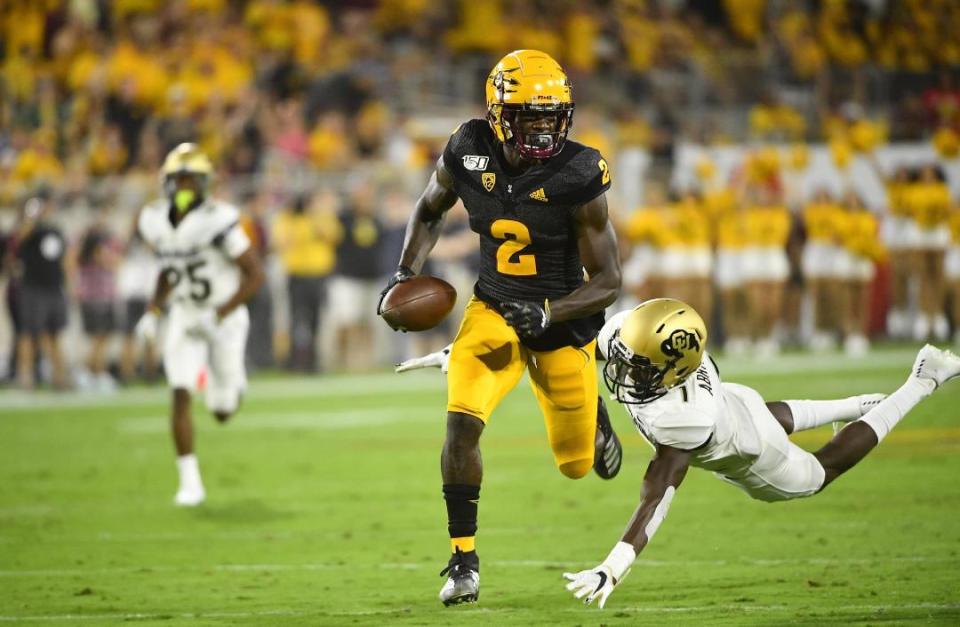
Round 2 (Pick 62, Acquired – theoretically — from Green Bay): Brandon Ayiuk, WR, Arizona, 5-11, 190

Rationale: This is where I rolled the dice, as this undersized college game-breaker, who would add immediate juice to the return game, could go anywhere from the late first round to middle of the third. Projections are all over the map (one has the Eagles taking him at No. 21, for example), as some scouts see another Tyreek Hill while others just a part-time receiver and return man. Many teams aren’t going to spend first- or second-round draft capital on that. For the Eagles, where DeSean Jackson can hold down the deep threat role for at least a year – while Greg Ward can be more and adequate in the slot, should that be Ayiuk’s eventual place in a NFL offense – he is a long-term good fit (as long as too much isn’t expected too soon).

Plan B/C: There is a 50-50 shot he isn’t there, so I would hope that a similar player, Penn State’s K.J. Hamler is still on the board. If both are gone, I’d be fine with checking off my mandatory two-receiver 2020 “Need” box with someone like TCU speedster Jalen Reagor, whose projections are also all over the map, or Ohio State’s K.J. Hill, who was highly productive in a big-time offense and should definitely be available.

DP4

Round 4 (Pick 127): Logan Wilson, ILB Wyoming, 6-2, 240

Rationale: Word on the street – if anyone were out in the street to hear the word – is that the Eagles are high on the tackling machine with a classic frame. Wilson started four years, an achievement that is tempered a bit by the fact that it was at a lower level of competition. However, like Dugger, our second-round pick, he was a can’t-miss playmaker on the field. What likely has the Eagles enthralled is that, in high school, Wilson was a two-way starter – at wide receiver and defensive back. He hit the weight room in college to become a beast at the next level.

DP5

Round 4 (Pick 137 – Acquired – theoretically – from Jacksonville): Tony Pride, Jr., CB, Notre Dame, 5-11, 193

Rationale: He runs a 4.35 40. Do you need more rationale beyond that? Yes, there are reasons he drifted into the fourth round. He doesn’t always play “up” his athletic gifts and could stand to be a bit more physical. Because he might be relegated to the slot, he may need more aggressiveness to excel. Still, he runs a 4.35 40. We can work with that, as the Eagles talked a lot about improving their team speed after last year.
DP9

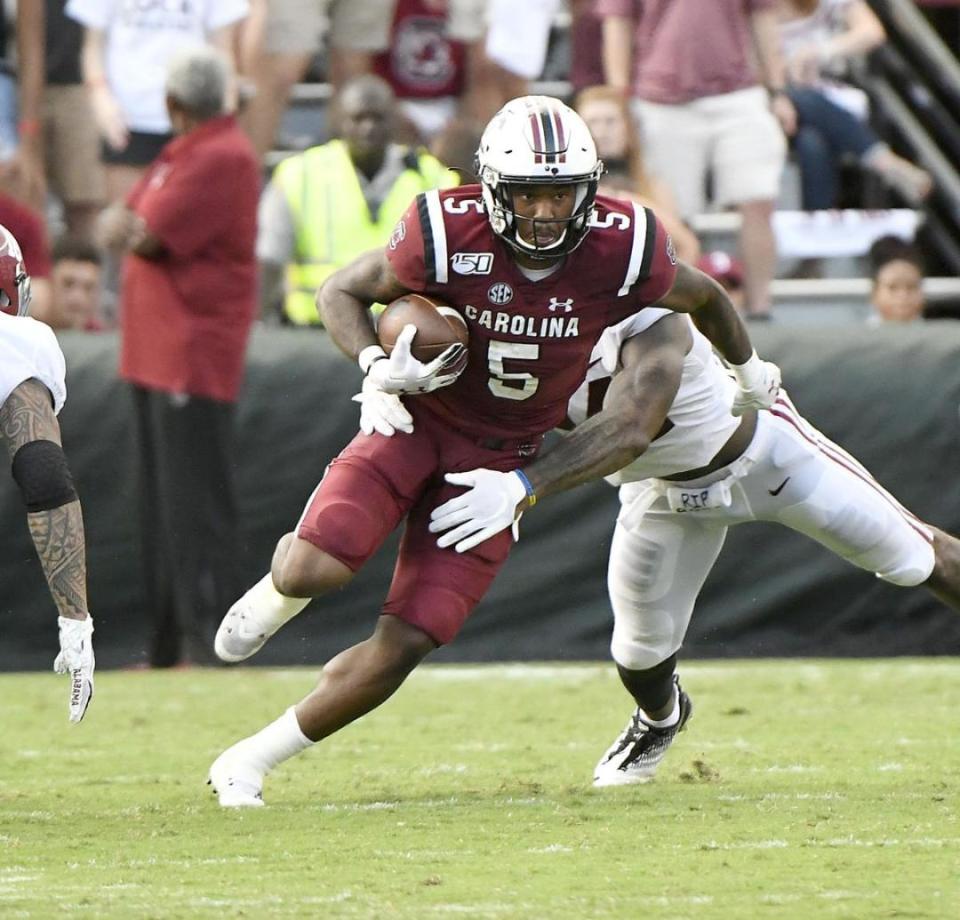
Round 4 (Pick 145): Rico Dowdle, RB, South Carolina, 5-11, 214

Rationale: There are a litany of other backs expected to drafted on Day 2 of the draft, and one or two will likely slide into the Eagles’ laps early on Day 3. That aside, they could do worse than Dowdle, whose main knock is the time spent on the trainer’s table throughout his career. However, he fought as hard as could to get on the field, starting 29 of 39 possible games in a productive career (2,167 rushing yards with 16 touchdowns and 483 receiving yards). In terms of skill set – one that includes a 4.50 time in the 40 – he checks off a lot of the requisite boxes for a NFL back: quick first step, ability to make defenders miss in tight spaces, yards after contact and nice hands on screens.

DP6

Round 4 (Pick 146): Akeem Davis-Gaither, OLB, Appalachian State, 6-1, 219

Rationale: The Sun Belt Conference Defensive Player of the Year is one of the most intriguing prospects in the draft, having been insanely productive over the span of his 55-game career (258 tackles, 28 for a loss, 8 sacks, 18 passes defended, two forced fumbles and so on). However, his size – or lack thereof – is hard to ignore. As such, he becomes a classic boom-or-bust prospect. This late in the draft, if he is still on the board, the risk is mitigated. At the least, you are looking at a guy who will bring his fierce compete level to special teams and some sub-packages as a hybrid linebacker/safety.

DP10

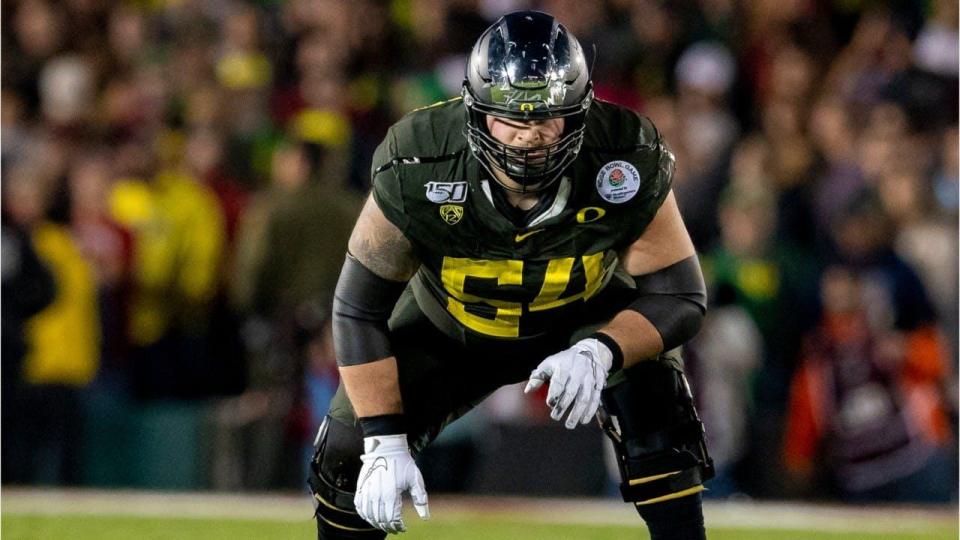
Round 5 (Pick 168): Calvin Throckmorton, OL, Oregon, 6-5, 310

Rationale: Versatility. He can play anyway on the line, but the question is if he can play anywhere – full-time – at the next level. The only spot Throckmorton hasn’t started at for the Ducks was at left guard, meaning the Eagles will likely try to force feed him there when they try to convert Isaac Seumalo to center if and when Jason Kelce hangs them up. That, plus his name and the fact that he played at Oregon (though too young to have been a Chip Kelley recruit), make him the classic boom or bust prospect destined for Philly.

DP8

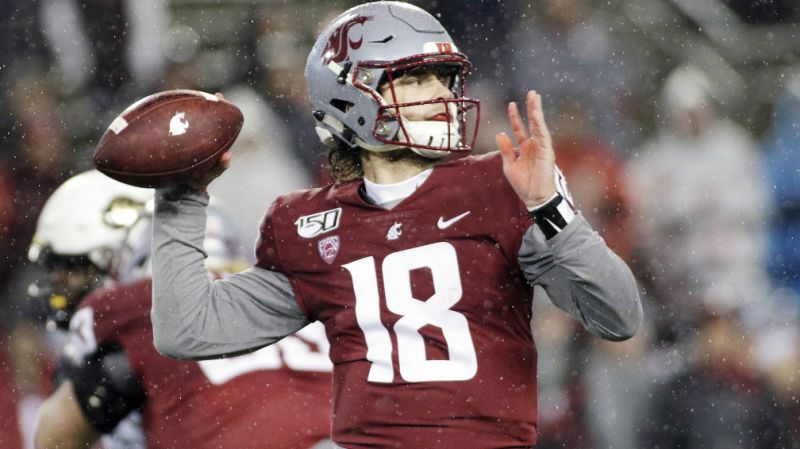
Round 6 (Pick 190): Anthony Gordon, QB, Washington State, 6-2, 210

Rationale: Listen up, all ye knuckleheads on social media, the Eagles are not going to somewhow get Nick Foles back (maybe someday, but not this year). Forget Cam Newton or Jameis Winston, and don’t start with the Colin Kaepernick stuff. Nate Sudfeld is your No. 2, with Josh McCown likely on speed dial again. A year from now, though, it will look different. Sudfeld only signed for one more year, and will likely look to move on. McCown will be one year closer to collecting social security. The third quarterback on the roster is Kyle Lauletta, who they liked enough to carry over from last year’s practice squad. Another developmental arm is likely. Gordon fits the bill, as he has the requisite arm strength and gunslinger mentality. Nobody is going to draft him high because, with his height and lack of mobility, he doesn’t look the part of a franchise quarterback. That doesn’t mean he can’t make his way as a quality backup. He will need coaching on what is reportedly horrendous footwork. The staff is in place for that here, so the opportunity exists as well.

Anothy Gordon

Summary: Remember, this is a mock draft with trades. Again, this was a mock draft with trades. It is theoretical – as in theory. I’m trying to type as slowly as some of you dimwits who might be reading this.

I do believe that No. 21 could be a bit of a No Man’s Land for the Eagles. They don’t have the picks to move up, unless they want to dip into next year’s stash.

Instead, in this scenario, we moved back – to No. 30 and then into the second round – but picked up the coveted Ngakoue to make the defensive end rotation – with Brandon Graham, Derek Barnett and Josh Sweat – as lethal as that of the one inside (Fletcher Cox, Javon Hargrave, Malik Jackson, Hassan Ridgeway).

I guarantee two receivers out of Shenault, Mims, Ayiuk, Hamler, Reagor or Hill and a defensive back – Dugger or Igbinoghene.

Other needs – linebacker, running back, offensive line, secondary depth and developmental quarterback — were met on Day 3, and don’t forget that, while Howie Roseman takes heat for draft misses, his record with UDFAs is pretty strong.

Roseman


All-Time Team Mulligan: Special Teams

Picard

By GORDON GLANTZ

GORDONVILLE – If you want to win in the National Football League, there are many things you need a lot to go right – a perfect storm.

Mixed in, you need your need your special teams to be special. For our Philadelphia Eagles, we have surely seen our share of ups and downs in this category, but some real standouts over the years.

The 75th Anniversary Team, as voted on by the fans in 2008, was somewhat predictable. The years have passed, a Super Bowl was won and the time has come to set the record straight.

I do this at great personal risk, but let the bullets fly:

Kick Returner

75th Team: Tim Brown

Mulligan Team: Tim Brown

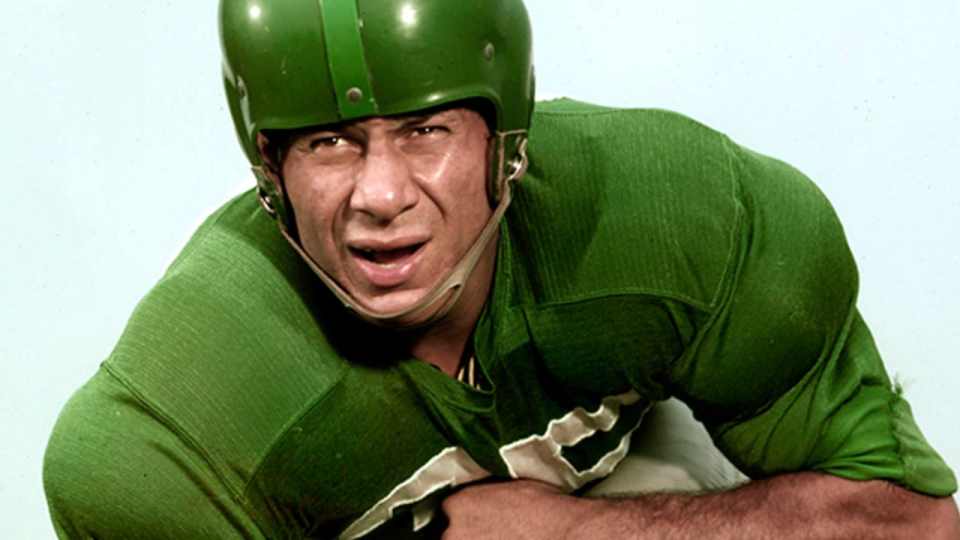
Say What?: Before my time, but I listen to my elders, and they all confirm he was Brian Westbrook before there was Brian Westbrook. They also say his sudden retirement in 1967 (returning briefly to win a second championship with the Baltimore Colts in 1968) to be a B-movie star helped keep the Birds from taking flight. When I started following the team in the early 1970s, he was still talked about lovingly and longingly. I guess when you return two kickoffs for touchdowns in one game, like he did against Dallas in 1966, your place in franchise folklore is cemented. His all-purpose skills sent him to three Pro Bowls. Ironically, Brown began his career out of Ball State with the Green Bay Packers, playing one game in 1959 before helping to beat the Packers in the 1960 championship game.

Timmy Brown

Punt Returner

75th Team: Brian Westbrook

Mulligan Team: Darren Sproles

Say What?: Me? Pick a guy I have complained about, Sproles, over one of my all-time favorite Birds in Westbrook. Yep. Cue the theme from the “Twilight Zone.” My issue with Sproles was that he shouldn’t have been handed a roster spot the last two years, and then force-fed into the offense with what seemed like mandatory touches to push him up the NFL’s all-purpose yardage list. It seemed as if the Eagles were trying to hang on to him long enough that, as a possible Hall of Famer, he would go in as an Eagle. That goal was achieved, even at the expense of the product on the field. Either it was that nefarious of a plot, or they missed the memo that they won the Super Bowl without him – and left tackle Jason Peters, who was seemingly kept around for the same reasons – on the field (Peters missed the second half of the year while Sproles missed almost the whole thing). However, prior to that season the sun, Sproles did something he did not do with his two other employers – the Chargers and the Saints – by being selected to the Pro Bowl three consecutive years – 2014-16 — as the return specialist. He was also a two-time All-Pro (2015-16). Since he had it practically written into his contract that he didn’t want to return kicks, ironically after setting up the game-winning points to beat the Eagles with a kick return in the playoffs the season prior to his arrival here, these accolades were based on what he had done as a punt returner. Before he was a shell of himself the last years, Sproles was a threat on every punt – and smart about when to call for a fair catch and when to let a punt bounce (skills that also eroded). Westbrook was surely the popular choice in 2008, as his punt return late in a game in one of the Miracle of the Meadowlands sequels was fresh in a lot of minds. However, as he became more a part of the offense, the need was less. DeSean Jackson, whose walkoff punt return in the Meadowland remains etched in our souls, went to a Pro Bowl as returner and receiver that same season (2010) At the time, they said he was the first Eagles punt returner to be so honored, which was incorrect. Wally Henry, unfortunately remembered for two bad fumbles in a home playoff game in 1981, was not only a Pro Bowl choice in 1979, but actually took one to the house in Honolulu.

Sproles

Kicker

75th Team: David Akers                                                              

Mulligan Team: David Akers

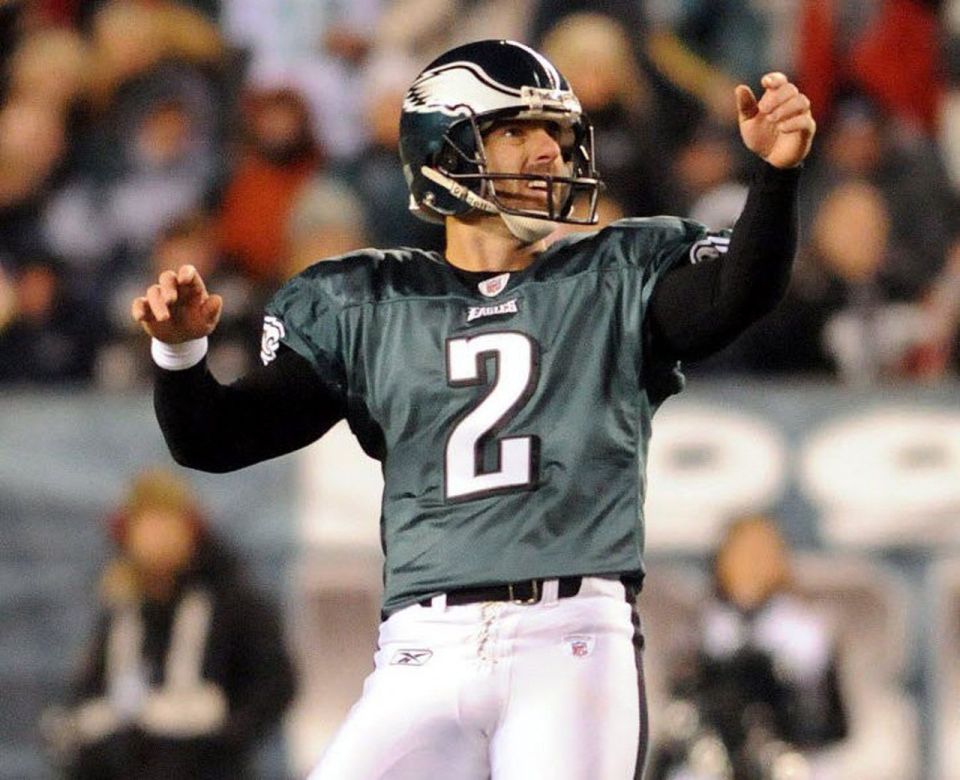
Say What?: Really hard not to go with Akers, the franchise’s all-time leading scorer, even though he was not as money in the clutch as current kicker Jake Elliott has been – so far. He was selected to six Bowls, five of which were as an Eagle. He was first- or second-team All-Pro six times, five of which were as an Eagle. The Eagles have had some other Pro Bowl kickers – Bobby Walston, Sam Baker and Cody Parkey of double-doink infamy. They have had memorable ones with half a foot, recent coronavirus victim Tom Dempsey, and two that kicked barefoot (Tony Franklin, Paul McFadden). They have also had some so hideous – Happy Feller, Horst Muhlmann, etc. — that having had Akers, and Elliott now, should make us all grateful.

David Akers

Punter

75th Team: Sean Landeta                                                                

Mulligan Team: King Hill

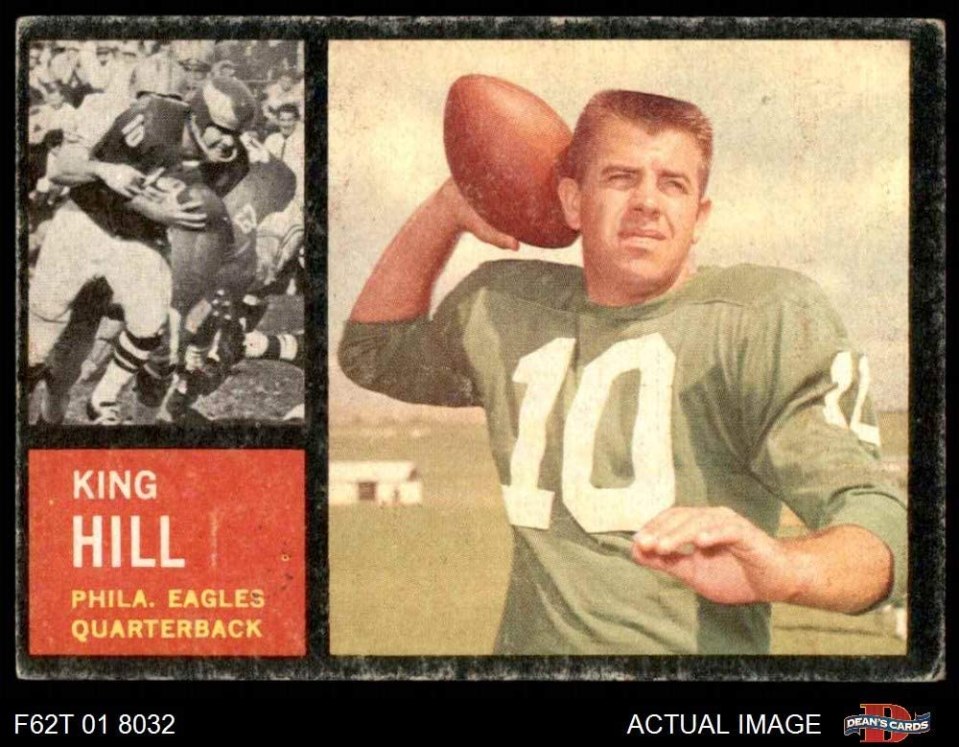
Say What?: I know, I know … Landeta is considered, possibly, the second best punter of all time behind Ray Guy. He is the punter, and rightfully so, on both the 1980s and 1990s All-Decade teams. However, of his 22 seasons in the league, five of them – at the tail end of his career – were spent here. He was good, maybe even the best we had seen here, but his years of greatness were behind him. Once discounted for my Mulligan here, the search for a replacement was on. Donnie Jones, of the Super Bowl team, is in a similar situation. Current punter, Cameron Johnston, has a chance to maybe be the best. Going back into recent history, there were some others – Max Runager, John Teltschick, Tom Hutton — who were OK, but not OK enough to be keep beyond a few years. That put me back in time, and the best I could do to at least hold a place for Johnston was Hill. Much hyped coming out of Rice, Hill never lived up to expectations as a quarterback. He landed here as a backup in 1961 and made himself useful also serving a punter for most of the decade. His average was just under 43 yards per punt, and he never had one blocked. For now, we’ll go with it.

King Hill

Specialist

75th Team: Vince Papale                                                      

Mulligan Team: Bob Picard

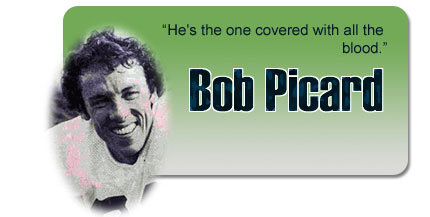
Say What?: If I am going to remain unpopular, let me do it in style. I’m accused of heresy for my All-Time Defense, so why not add to the charges. I plead guilty. Unlike above, there is no need to go back in time and look at numbers. A special teamer going to the Pro Bowl, and being named All-Pro, is a 21st century thing. No one kept track of special teams tackles in the bad old days – at least not on the official docket. I have been watching the Eagles since my first game at Franklin Field at 1970. There have been many outstanding special teams players, even on bad teams, and Papale is among them. Others include the likes of Ike Reese, who went to the Pro Bowl as a special teams choice, and three who got Super Bowl rings – Chris Maragos, Bryan Braman and Mack Hollins. However, two stood out to me the most, and neither had a movie made about them. They were Colt Anderson, who was on a Pro Bowl – possibly All-Pro – trajectory when he tore his ACL in the 9th game of the 2011 season (he joined the team in 2010). He never played here again, and was out of the league a few years later. That leaves Picard, who was Papale before there was Papale (ironically wearing No. 82 while Papale wore No. 83). For three seasons here before being selected in the expansion draft by the Seattle Seahawks, who were obviously aware of his special teams acumen (despite zero career catches as a receiver). The opening for someone like Picard set the stage for Papale, but Picard actually set the mold. At Veterans Stadium in the early 1970s, with little else to cheer for, he became a bit of a folk hero with homemade signs hung from the rafters. One some teams not known for hustle, Picard often had mud and blood on his body and uniform. Wrote a scribe at the time: “Of all the Philadelphia Eagles, the easiest one to find in the locker room is Bobby Picard. He’s the one covered with all the blood. Number 82 in your program, but No. 1 in the kamikaze ranks. The guy who looks like a walking transfusion.”

Bob Picard

Long Snapper

75th Team: N/A                                                 

Mulligan Team: Rick Lovato

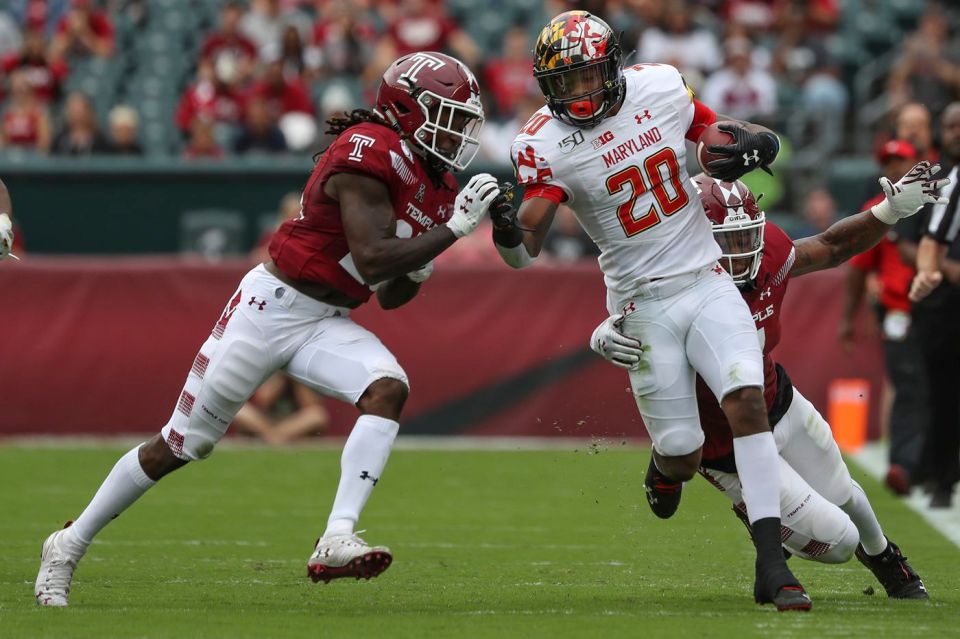
Say What?: I have been watching the game long enough that it was almost always the backup center serving as the long snapper. For a while, teams would turn to the third tight ends – like Mike Bartrum in the Andy Reid era – but it was become so specialized that guys whose athletic ability wouldn’t even otherwise put them on a roster, are carried for this highly specialized task. You don’t really notice the long snapper until there is a bad one. Never been a real concern here over the years, with the likes of Bartrum and Jon Dorenbos (two Pro Bowls as an Eagle), but it is Lovato who has triggered some of the most important long snaps in team history with aplomb. A pleasant surprise on the coverge units, with some solo tackles, he was also selected to the Pro Bowl this year.
Lovato

Holder

75th Team: N/A                                                              

Mulligan Team: Bill Bradley

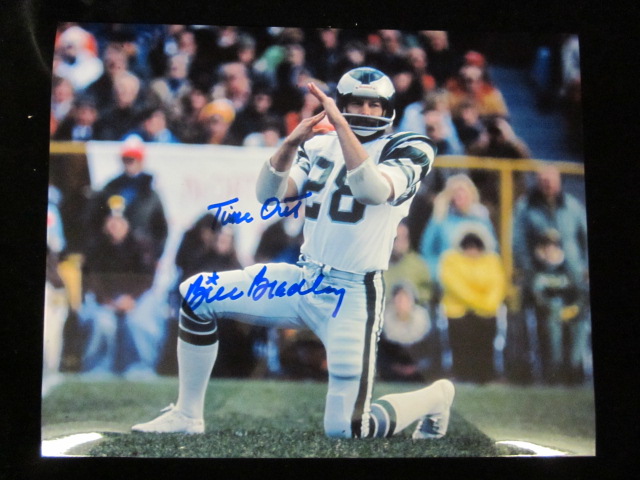
Say What?: Am I getting weird here? Yeah, maybe a bit. With as much of a pathway to the all-time defense at safety as Bernie Sanders to the Democratic party’s presidential nomination, I feel like there is a place somewhere for my first favorite Eagle. Bradley, a college quarterback, was a bright spot on some hideous Eagles teams. A free safety in the NFL, he twice led the league in interceptions with 11 in 1971 and nine the following year. He went to three Pro Bowls (1971, 72 and 73) and was an All-Pro in 1971-72. What is also of note is that Bradley was called upon to punt, return punts and hold on placekicks (as he was likely doing here when the Eagles probably didn’t have enough, or too many, men on the field). I wanted to find him a place to honor his overshadowed service, so here he is.

Bill Bradley


Never Can Say Goodbye … to 1971

First 1971

By GORDON GLANTZ

GORDONVILLE – I’m told I was repeatedly played Civil Rights anthems like “We Shall Overcome” and “Blowin’ In The Wind” — after my earthly debut two days into spring of 1965.

Knowing my mother’s penchant for tall tales and exaggerations, I’m not 100 percent convinced of the accuracy of this folklore, but I think there could be a strain of truth it.

I can say, for sure, that I never had time for nursery rhymes.

My grandparents, a more reliable source of information, said I was fully captivated by the song “Georgy Girl” by the New Seekers, which was released in late 1966 and continued its heavy air play and chart climb in 1967.

I have vague recollections of being called “Georgy” because of this, so I’ll buy it.

I was just learning to walk, but I had an ear on the Top 40.

Fast forward to the holiday season of 1970, and I was totally hooked on “Rose Garden” by Lynn Anderson.

From there, well, there was no looking back.

If there was a time to fall in love with music, 1971 was it.

I was 6, but I could have been 16.

The feel of the breeze, the smell in the air, the feel of drizzle — they all collide as first-time memories with amazing music coming from anywhere and everywhere.

I guess it was car radios (some with 8-track machines), the turntables of my older cousins and stepsisters, or just piped in somehow from the skies above.

There was Carole King’s groundbreaking Tapestry album – featuring “It’s Too Late” and “I Feel The Earth Move” and “So Far Away” – and “You’ve Got A Friend” by James Taylor (written by King, and a deep track on “Tapestry”).

King Taylor

The Beatles were just breaking through with solo careers, with George Harrison hitting my heart with “My Sweet Lord.”

By the middle of the decade, no one was taking a piano lesson without learning “Colour My World” by Chicago or “If” by Bread – both 1971 megahits.

You also had “Wild World” by Cat Stevens, “Mercy Mercy Me (The Ecology” and “What’s Going On” by Marvin Gaye, “I Am … I Said” by Neil Diamond, “Mr. Bojangles” by the Nitty Gritty Dirt Band and “Rainy Days And Mondays” and “For All We Know” by The Carpenters.

There is my all-time favorite of the year, Gordon Lightfoot’s “If You Could Read My Mind,” which had nothing to do with his first name (although I was pumped to find out once I was hooked on the song).

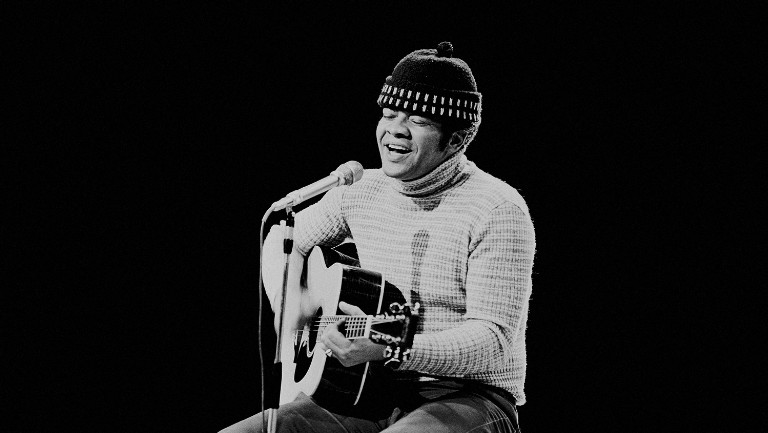
And there was the song that prompted this trip back in time, “Ain’t No Sunshine,” by Bill Withers (pictured below), who sadly became the latest to join so many of these artists in leaving us in body but not in how they touched us with their music (“Lean On Me,” though not from 1971, has quickly become the theme song in this current national crisis).

bill-withers-1972-feature-billboard-1500-1585946742-768x433

I could go on, but I’m actually getting emotional – with serious goose bumps – by scratching the surface here with this list that doesn’t even go into a lot of the classic rock that I discovered down the road.

I just turned 55, meaning it’s almost the golden anniversary of that year in music.

A lot has happened since 1971, that’s for sure.

Richard Nixon wasn’t yet impeached, Russia was still the Soviet Union, the Flyers had to yet to become bullies and win two Stanley Cups, the concepts of AIDS and 9/11 seemed surrealistic, Barack Obama had not be elected president and there was no such thing as the coronavirus to make us all freeze in place and, if we’re lucky, think back to simpler times.

“Godfather” and “Rocky” weren’t movies, and the concept of cable TV and original programming – bringing “The Sopranos” and others – seemed as far-fetched as home computers and microwave ovens.

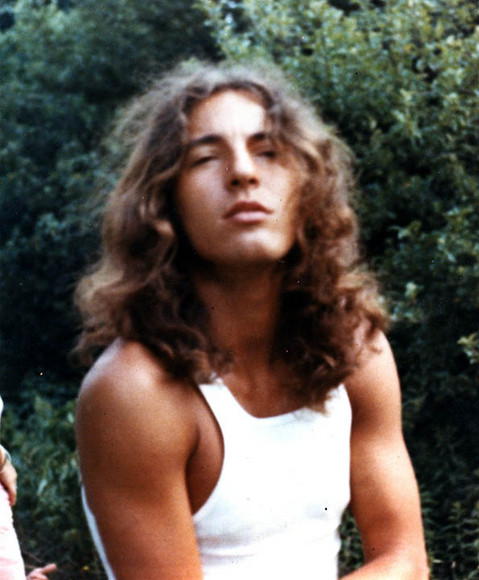
A scruffy kid from New Jersey named Bruce Springsteen (pictured below in 1970) was a year away from releasing his first album.

1970 Bruce

Just like I had no latency period with music, I didn’t with the fairer sex.

I liked girls enough to propose to one in the schoolyard that first-grade year (maybe it was the music), but it would take another three decades until I got down on one knee and asked a woman to be my bride.

And then, in 2007, my daughter was born, becoming the rightful center of our universe.

It’s no surprise that she also caught the music bug early. A ballet dancer/softball catcher, it is the acoustic guitar that is her spirit device (see below). Her musical tastes are not the same as mine, but 1971 was not her time to fall in love with music.

It was mine.

One more song from that year, “Never Can Say Goodbye” by The Jackson 5, sums it up the best.

As deep as I’ve gotten into other kinds of popular music, including that of the 1960s leading up to it, I will never say goodbye to the songs of 1971.

Sofia Guitar


All-Time Team Mulligan: The Offense

Pihos

By GORDON GLANTZ

GORDONVILLE — His name was Wade Key.

And don’t be asking me who that is, please.

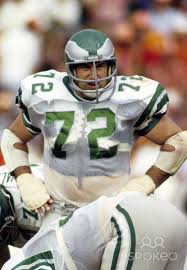
He played for the Eagles from 1970 to 1978 – with his career taking a uptick after the hiring of Dick Vermeil in 1976, as Key started 39 of 40 games and appeared in a grand total of 121 games as an offensive lineman before being waved before the 1980 season that would culminate with a 27-10 thud against the Oakland Raiders in Super Bowl XV.

I must have thought enough of No. 72 to seek out his autograph during an annual excursion to training camp to Widener University, as I’m starring at it right now – as it shares a place on the same sheet of paper as Vince Papale’s John Hancock.

When the axe fell, Key was the longest-tenured Bird on the team.

He should have a rightful place in team history, with the fanfare it does – or does not – deserve.

But, through no fault of his own, that is not the case.

After the 2007 season, despite never having appeared in a Pro Bowl, Key was elected as a starting guard on the Eagles’ all-time 75th anniversary team.

Technically, he was the left guard, and maybe that threw off the more than 600,000 voters, but my vote would be for the voters to have taken IQ and sobriety tests first.

Hard to say how that happened, other than that this is what happens when people are allowed to vote before having all the facts and figures laid out before them.

On the surface, given the fact that Philly loves underdogs almost as much as soft pretzels with mustard, the votes for Key make some sense.

But, as one weaned in the Wade Key era (my semi-arthritic fingers froze just typing that), I don’t recall him ever being a beloved figure. Never once saw a No. 72 jersey at Franklin Field or the Vet – let alone The Linc.

Ever.

Drafted in a round in a round (13th) that no longer exists (it went from 17 to 12 to seven) and having played at a college, Southwest Texas State University, that doesn’t even go by the same name (it’s now just Texas State), Key was cut as a rookie in 1969.

He played for the famed Pottstown Firebirds that won the Atlantic Coast Football League title, and came back to the nest to spend time on what was then called the taxi squad (more or less since resurrected as what we now know as the practice squad) before moving into the lineup as the starting left tackle on teams from 1970-72 that won a grand total of 11 games in three seasons before moving inside to guard.

Somewhat undersized – a college tight end, he was listed at 6-5 and 245 pounds – Key played through a plethora of injuries and had a reputation of coming back, whether it helped or hindered the team, sooner than projected.

Wade Key2

Drafted in a round in a round (13th) that no longer exists (it went from 17 to 12 to seven) and having played at a college, Southwest Texas State University, that doesn’t even go by the same name (it’s now just Texas State), Key was cut as a rookie in 1969,

He played for the famed Pottstown Firebirds that won the Atlantic Coast Football League title, and came back to the nest to spend time on what was then called the taxi squad (more or less since resurrected as what we now know as the practice squad) before moving into the lineup as the starting left tackle on teams from 1970-72 that won a grand total of 11 games in three seasons before moving inside to guard.

Somewhat undersized – a college tight end, he was listed at 6-5 and 245 pounds – Key played through a plethora of injuries and had a reputation of coming back, whether it helped or hindered the team, sooner than projected.

Admirable, but … not quite worthy of all-time anything status.

From 1979 to 2007, there had been plenty of guards – including the starters in Super Bowls XV (Woody Peoples and Petey Perot) and XXXIX (Artis Hicks and Jermane Mayberry, who was an All-Pro in 2002 and was, drum roll, the left guard) – more distinguished.

And from the franchise’s inception to Key’s arrival, there had to be one more worthy, right?

The team did win titles in 1948, 1949 and 1960.

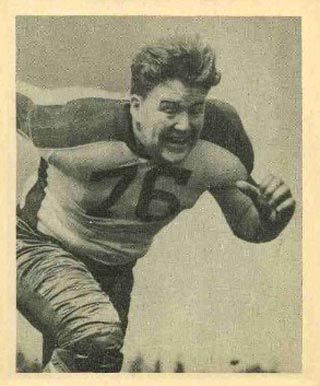
From those 1948 and 1949 teams, for example, there was Bucko Kilroy. A three-time Pro Bowler, the Port Richmond native played at since-defunct Northeast Catholic and Temple and was considered the one of the dirtiest players ever to play the game (back when you got penalized for not putting your hands to the face of an opponent).

How “Philly” can you get, right?

Despite coaching with the Eagles after retiring, Kilroy was a scout from 1965-70 for the Cowboys. To 700-level voters, this is a sin that equates to the Comey memo and Access Hollywood taps all wrapped up into one.

Blame it on memories not going back that far?

Choices such as tight end Pete Pihos (1947-55), center/linebacker Alex Wojciehowicz (1946-50), kick returner Timmy Brown (1960-67) – along with legends like linebacker Chuck Bednarik (1949-62), wide receiver Tommy McDonald (1957-63) and running back Steve Van Buren (1944-51) – suggest that homework was done.

This is all not meant to single out and pick on poor Wade Key. We are not going to blame it on voter fraud, collusion with the Russians or the Electoral College.

He is far from the only curious choice on the 75th anniversary team, leaving us with only one choice.

Let’s just take a Mulligan.

With the Eagles having just won their first title in the Super Bowl era, and with 10 additional seasons now under our belt, we can right the wrongs of the past and heading into this new era of being on top of the world with a new view of the all-time All-Eagles team. For this session, my pupils, we’ll start with the offense:

75th Team                                                                            Mulligan Team

QB – Donovan McNabb                                                 QB – Nick Foles

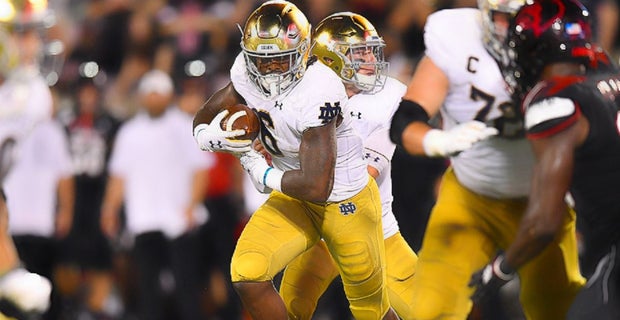
Say What?:  Well, we have only won one Super Bowl, right. Guess which guy literally threw up on the field and which one was cool as a cucumber, winning MVP? And Foles, in his first stint with the Eagles, has the single greatest QB season in team history on his resume. For an encore to the Super Bowl season, he ignited a fire under the team after Carson Wentz went down and led the Birds to road win in the famed “Double Doink” game in Chicago (and nearly pulled a rabbit out of his hat again the following week in New Orleans).  Barring more injuries to Wentz, this place is just temporary, but we’ll let Foles keep the seat war. He can start a big game for me over McNabb anytime. I’d put the other championship quarterbacks – Tommy Thompson (two titles, 48 and 49, with legal vision in one eye) and 1960 quarterback Norm Van Brocklin ahead of McNabb as well. You could make a case for Ron Jaworski, who also got the Birds to a Super Bowl before throwing three perfect strikes to the opposition.  The Ultimate Weapon, Randall Cunningham, would also be in the conversation, as would 1950’s big arms Bobby Thomason (three Pro Bowls) and Adrian Burk (two Pro Bowls). And no, it didn’t help that McNabb was the one visible ex-Bird who seemed more embittered than elated by the recent championship.
Nick-Foles-2

RB – Steve Van Buren                                                                     RB – Steve Van Buren

Say What?: The fans got this right the first time. I grew up with Wilbert Montgomery, an all-time personal favorite whose replica jersey I wore on Super Bowl Sunday and whose number should rightfully be retired, and there are a litany of other standout backs to have played here, but Van Buren was the best. Period.

FB – Keith Byars                                                                                FB – Keith Byars

Say What?: Like Mayberry, who was drafted in the first round as a tackle before finding a home at guard, Byars had to diversify to find his niche. Really more of a Swiss Army knife than a pure fullback, Byars still gets the slight nod over Tom Woodeshick (1963-71), who ran for more than 3,500 yards and went to one Pro Bowl — at — fullback in 1968.

WR – Harold Carmichael, Tommy McDonald      WR – Harold Carmichael, Mike Quick

Say What?: Tough call here, knocking McDonald out. The franchise has been blessed with plenty of standout receivers over the years, although some (Terrell Owens, Irving Fryar, Cris Carter, etc.) spent most of their careers elsewhere. The reality is that McDonald, though well-liked and having had made a terrific touchdown catch in the 1960 title game, was only here for part of his career. Quick was not blessed with having played on too many winning teams, but he was the best Eagles receiver these eyes have seen since 1970. Put him on the 49ers instead of Jerry Rice, and he’s Jerry Rice. Well, at least John Taylor.
TE – Pete Pihos                                                                                 TE – Pete Pihos

Say What?: Hard to knock what Pihos accomplished in his career, but he better not get too comfortable. Zach Ertz was clutch in the Super Bowl, catching the winning touchdown (and dropping no passes all that season). It shouldn’t be about one game, and it’s not. He holds the league record to receptions in a season for a tight end and was a big reason for the success of both Wentz and Foles, and I’m buying some stock in the future by saying he will go down in history as the greatest tight end in a franchise that has had its share – Pete Retzlaff (5 Pro Bowls), Charle Young (3), Chad Lewis (3) and Keith Jackson (3). And then there’s Brent Celek.

T – Tra Thomas, Jon Runyan                                                 T – Jason Peters, Lane Johnson

Say What?: At the time of the voting, it was hard to argue against Thomas (although the starting tackles in Super Bowl XV, Stan Walters and Jerry Sisemore, were top-notch as well). Runyan was a bit dubious, especially considering that his one Pro Bowl appearance was as a fourth alternate. There could have been a legit case for Bob Brown at left tackle (instead of Thomas). The outspoken Brown’s Hall of Fame career began with the Eagles after being drafted second overall in 1964 and winning Rookie of the Year before being name to Pro Bowls in 1965 and 1966. However, voters who remembered him may have also remember that he demanded a trade after five seasons here. Brown played two seasons with the Rams and played three with the Raiders on a famed line with four other Hall of Famers. Peters, though, is Brown is reverse. He came here from the Bills and cemented his Hall of Fame legacy in Eagle green. Johnson, right now, is considered the best right tackle in the game and, in some circles, the best tackle overall.

G – Wade Key, Shawn Andrews                                     G – Bucko Kilroy, Brandon Brooks

Say What?: Well, you know Key was locked out, right? Andrews could have been an all-time great but his career took a dark turn after being named All-Pro in 2006 and to a pair of Pro Bowls leading up to the voting of the 75th anniversary team. The following training camp, he vanished without a trace, only to send text messages to reporters citing personal issues later revealed to be depression. He spent most of that season, and the following season, out of the lineup (with the Eagles suffered with his brother, Stacy, on the roster). He never played here again, and only played briefly for the rival Giants. Brooks is Andrews in reverse, having overcome anxiety issues to play like a man possessed receive the accompanying postseason accolades. He gets the nod here, slightly, over Evan Mathis. As for Kilroy (pictured below), it’s hard to know where he played on those classic teams of the late 1940s. I studied grainy film of those championship games and it appeared his lined up all over the offensive line at every spot but center. Although he mysteriously had not appeared on the Eagles Wall of Fame, he lands on the all-time team here.

Bucko_Kilroy_-_1948_Bowman

C – Chuck Bednarik                                                                         C – Chuck Bendarik

Say What?: Don’t think this was as easy as it sounds, especially with Concrete Charlie already a lock on the defensive side of the ball. There were plenty of All-Pro and Pro Bowl centers before Jason Kelce, with the most notable being Jim Ringo (three Pro Bowls in the mid-1960s), but it is important to note that Bednarik was named to the 1950s NFL All-Decade Team at center and not linebacker. Case closed … for now.


The Race To Save America

McGrath Turtle

By GORDON GLANTZ

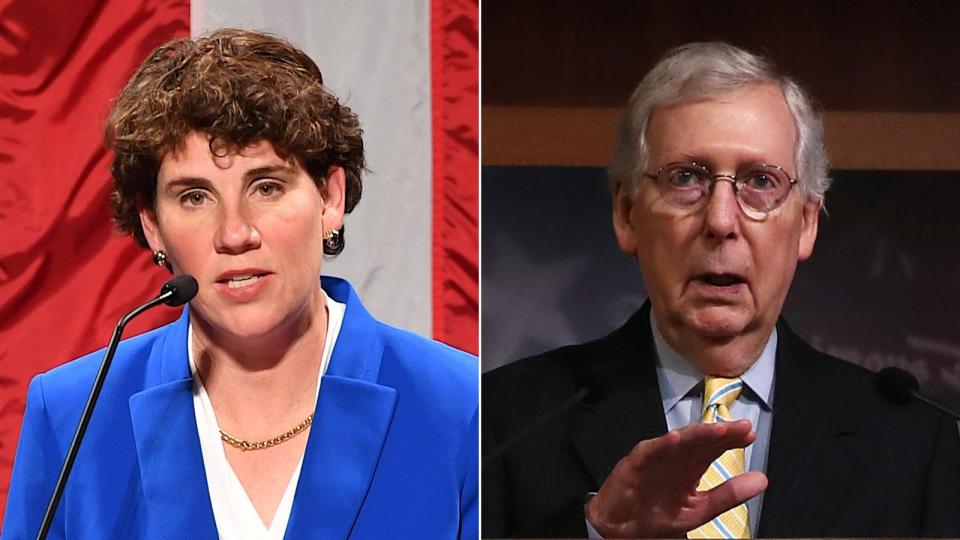
GORDONVILLE — If Amy McGrath were running for public office in more liberal parts of the country, she would only be able to keep a straight face by a being a right of center Republican.

Sane-minded Republicans, the few that have yet to be tarred and feathered for thinking for themselves, will eat up her unprecedented military service. Free of bone spurs, McGrath flew 89 combat missions during her 20 years in the Marines, breaking the that branch’s gender barrier.

Heavily decorated for her service, Lt. Col McGrath, a Naval Academy graduate, then entered politics – as a Democrat – in 2017 (even though her husband is a Republican).

Her stances on key issues – like supporting the second amendment with some baby steps with background checks — place put her firmly into the center lane, where she is careful not to make a dangerous move, lest she commit career suicide in home state of Kentucky.

Concerning your president (not mine), McGrath has stated: “I want to do what’s best for Kentucky,” adding she will support him when he has good ideas. “To me it’s not about your political party, it’s not about wearing a red jersey or blue jersey.”

In a state where it would be a shock if a referendum on going back to white and colored water fountains would not shock me, she has to walk that tightrope like a Wallenda.

She accepts climate change as fact, but with a keen eye toward what substantial legislation would mean for the coal regions of eastern Kentucky.

Not to be confused with Bernie Sanders, she is firmly behind Obamacare as is and against free college tuition.

And yet, Amy McGrath is my favorite politician right now.

Of her combat missions, what she faces now may be her most important.

With no more need to donate my $27 to the Sanders campaign for mugs and bumper stickers, I may just send some that way.

And, if you want to save the Union, you should feel the same.

She is running for senate in Kentucky against none other than Mitch McConnell, who struggles for a 20 percent approval rating nationally but is around 50 percent in the home state he rarely even graces with his presence (and allows for eastern Kentucky to remain in squalor while overwhelmingly grabbing votes there).

Your president (not mine) can’t help the fact that he is who he is, as we all knew he was who was before too many of you (not me) gave a sociopath his ultimate playroom.

It is his enablers, both in the House (before the 2018 midterms) and still in the Senate, that have collectively failed to give him his rabies vaccine.

Some know better, speaking in hushed tones under condition anonymity about how they’d like to vote for sanity, if they only could, on draconian policies.

But they fear retribution so much that they follow the lead of McConnell, the Senate majority leader, who would probably block aid to starving kittens if his lord and master – not to mention special interest groups – told him so.

I have engaged with many other concerned lefties about other contests — from Arizona and Colorado to Maine and Iowa — that could help tilt the Senate back to a place of sanity and humanity.

McGrath is currently being given a 45 percent chance of winning, suggesting a waste of money and effort, as compared to those. I get it, but the whole landscape could continue to change with what is going on currently with the coronavirus and the economy.

My argument with throwing unmitigated support behind McGrath is that a victory, seen as difficult but not impossible, would kill the proverbial two birds with one stone.

It would knock McConnell off his perch of power, and send his butt bhome.

The fact that she has built a nice war chest already, which is driving McConnell bonkers, shows that I am not alone.

Why is this so important?

Let’s recount the ways, using the book “Un-Trumping America: A Plan to make America a Democracy Again” by Dan Pfeiffer, the cohost of the podcast “Pod Save America.”

Quickly establishing that your president (not mine) is nothing but a petulant child who can’t help himself, he begins getting to root of the matter, with the scourge he calls “McConnellism” by page 13.

It boils down, as he breaks it down, to a cultural Civil War between Yes We Can vs. Because We Can.

In his position of power, he led blockades against President Barack Obama without showing any willingness to compromise, as he lone stated agenda was for him to be a single-term president

As much as the Russians and the poor timing of James Comey, he set the table for your president (not mine) to place our democracy in peril.

McConnell does nothing because it is or is not the right thing to do in his mind. That would mean he has a belief system and a moral compass in the first place.

He will hold up a stop sign simply because he can.

Pfeiffer flat-out dubs McConnell as “the worst person in American politics.”

And that’s saying something, since we have the worst president in modern American history in the Oval Office.

So here we are, with Amy McGrath.  Her bid to unseat McConnell, and turn McConnellism to ash, may be just as important – if not more so – than the presidential race.

She’s all we have, and the best we can hope for in a state like Kentucky, so let’s do all we can to make it happen.


History Will Reveal The True Winner

Bernie4Blog

By GORDON GLANTZ

GORDONVILLE — Stop asking, will ya?

Yes, I’ve accepted the sad fact that Bernie Sanders will not be president of the United States.

Some of that is on him, I must admit. He was fantastic with laying out the broad strokes of all that ails our ailing nation, he had a hard time when quizzed on the minutiae.

What a pity.

The details were there. They just could not be captured in a sound bite on the debate stage or even in an interview with Rachel Maddow.

And saying “go to the website,” while helpful for we the diligent few, amounts to bad optics.

In both 2015-16, and again in 2019-20, Sanders was grilled on how he was going to pay for his ambitious plans to level the playing field and he could never quite get a piece of that hittable curve ball.

And here we are. It took a pandemic on the level of the Black Plague and the 1918 Spanish Flu (even though Spain had nothing to do with it) to prove him right.

Locked up in our homes like the “Man in the Iron Mask,” with the economy at a standstill – an irony of all ironies, since your president (not mine) is like a savant who only sees life in dollars and cents without any common sense – the House and Senate voted on a stimulus package in an attempt to do an end run around a pending depression.

The price tag? Try $2 trillion.

For all those who asked Sanders how he was going to pay for it, guess what? You just did.

And at an amount well above his wildest dreams of free college tuition, health care and combat against climate change.

You can argue that it took a so-called act of God – coronavirus — to create the need for the elected leaders, grudgingly in a troubling number of cases, to meet the need in a one-time payment.

Sanders, and backers like myself, will respond that the human crisis was always there. It was just always neatly tucked away, out of view, while the mainstream media didn’t venture too far from the center lane to unearth the underlying issues that made us more prone to a scourge. It was a storm without a name.

People were dying of hunger, because of lack of health care and going broke just to keep roof over their heads.

The coronavirus is easy to talk about in its own narrow context, but not in a broader one. People are going to work, defying orders, because they have no choice. They have preexisting conditions, weakening their immune systems, making them more susceptible. This are issues all in Sanders’ longstanding, and unwavering, wheelhouse.

They are most vulnerable, and the most vulnerable now to the threat of a spread of the virus. It might interest some of you to note that, while I still get e-mails from the Sanders campaign, they are no longer asking for donations to it.

Instead, they are asking for donations to several organizations seeking to help working families, whether it is restaurant workers or Amazon workers or those who won’t be able to make their next month’s rent.

That’s what he has been all about for decades, and that’s what he is all about today.  How and why he didn’t receive more black support (other than from, maybe, those in the middle class) and from seniors will keep historians occupied for decades.

I can’t help but mention that polls suggested Sanders might have fared better in the 2016 general election than did Hillary Clinton, who was more palatable for dyed in the wool Democrats but not enough with swayable people in the street.

What would that have meant now? It would have not have stopped the coronavirus, and no one should suggest anyone would, but a less archaic and nearly criminal healthcare system would have been in place to provide resistance.

Proactive testing — like in Iceland or Germany – would have happened sooner. People would have been able to shelter in place by late February or early March without fear of surviving, as a President Sanders (or Clinton, to be fair) would not have been in a state of denial.

But, while reality has now endorsed Bernie Sanders for president after all, he was a victim of his own inability to full articulate what he wanted to implement.

We – the so-called Bernie Bros. – always got it, but doubters needed more and never got enough candy in their trick-or-trick bags to wipe the masked smirks off their faces.

When they cried socialism – conveniently dropping “Democratic” from in front of it – he should have said “Nordic Model.” Instead, he repeatedly just copped to the charge and threw himself at the mercy of the court of common opinion.

And he never realized that the term “Medicare for All” scared the bleep out of too many people, especially seniors. He should have just said “universal health care” and left it at that.

As I age – I just reached a new demographic of “55 and over” – I have come to reach the conclusion that your legacy is all you have.

It equates to the fairy tale of ascending to heaven, just as a negative legacy equates to going to hell and no legacy to speak of equates to purgatory.

And Bernie Sanders, when history is written, will have a legacy that will prove him to have been a man a good decade ahead of his time. He will go down as the father of the modern progressive movement that may save this country from itself.

And one day, when someone like Alexendaria Ocasio-Cortez becomes president, his name will be fondly evoked.

Because of his age, he may or may not be alive to see it.

Let’s hope that we are.

Mock Draft 1.0: Love The GM You’re With

Roseman

By GORDON GLANTZ

GORDONVILLE – Healthier than quitting smoking is quitting Eagles fan pages on Facebook, where vitriol for Howie Roseman for not getting every single superstar on the open market – regardless of who is on the roster and the salary ramifications – runs amok.

While Disneyland is closed due to coronavirus. Dingusland is open for business, as it is clear that as soon as Roseman descended from the podium after the Super Bowl parade in February of 2018 that went right back onto the hot seat in the eyes of too many.

The City of Brotherly Love, at least in some segments of the Eagle Nation, remains the City of Brotherly Howie Hate.

The largest concern among the unwashed masses is at wide receiver, but it is not as if Roseman is wearing blinders.

The situation is this: DeSean Jackson returns as the deep threat with health questions after fans took his jersey out of moth balls only to see him limited to three games (9 catches for a 17.7 average, 2 TDs).

Alshon Jeffery, in addition to not being best buds with franchise quarterback Carson Wentz, finished last season on the shelf with a foot injury after 10 games (43 catches for an underwhelming 11.4 average, 4 TDs) and may not be ready for the start of this season.

If anyone is disliked and mistrusted more than Roseman, it is Jeffery — despite his name being spelled about 22 different ways in Facebook diatribes.

The slot receiver looks to be Greg Ward (28 catches down the stretch), the converted quarterback who broke out of the bondage of the practice squad to be more than productive. For this team, in the short term, he fits. With the double threat of Zach Ertz and Dallas Goedert at tight end (a combined 146 catches, 11 TDs), Ward can be a more cost-effective option than the dearly departed Nelson Agholor (signed with the Raiders for way too much money). Additionally, Ward provides the peace of mind as an emergency quarterback.

The only other receiver the brass will feel obliged to keep on the payroll is J.J. Arcega-Whiteside (10 catches, 16.9 averages, 1 TD, several bad drops at key times), as he cost a second-round pick out of Stanford. The reality is that Arega-Whiteside could surprise as a sophomore. He was not a reach when drafted and had an promising preseason (12 catches, TD) before not being able to adjust to the speed of the game once the regular season began. While he wouldn’t be the first bust at receiver in team history (Kenny Jackson, Mike Bellamy), he wouldn’t be the first to blossom after a tough initial transition to the NFL (Harold Carmichael, Mike Quick).

Nonetheless, I’ve heard the cries of the Iggles Idiots on the Facebook pages. As such, I’ve gone into overkill with the following mock draft. You want receivers? You got them here. There have been no projected trades, although we all know there will be. I also did something you know the Eagles won’t do, and drafted two players out of Temple.

OK, here we go:

Round 1 (pick 21) – Justin Jefferson, WR, LSU, 6-3, 192

Rationale: As tempting as it is to think about trading up for one of the top three receivers – Jerry Jeudy and Henry Ruggs III, both of Alabama, or Oklahoma’s CeDee Lamb – in a loaded class, the wildly productive Jefferson (111 catches, 1,540 yards, 18 TDs just last season) could be the most shovel-ready of the crop. Not a burner, he uses every bit of his 4.53 speed without wasting motion and can line up anywhere — outside, inside and in motion. He is compared by scouts to Michael Thomas of the Saints. We’d take that, right? What’s more, I’ll put forward another theory. Jefferson was productive at LSU before projected No. 1 overall pick Joe Burrow “came out of nowhere.” Perhaps, it was a case of the receiver – Jefferson – making the quarterback look better than he was, as opposed to the other way around.

Justin Jefferson

Round 2 (pick 53) – K.J. Hamler, WR, Penn State, 5-9, 176

Rationale: The Nittany Lion with 4.37 speed and electrifying athletic ability will immediately add juice to w moribund return game. Talent-wise, he would go in the late first or early second round if not for his stature. Will size matter in the NFL? If used properly, perhaps as a Desean Jackson protégé, it shouldn’t. High end? Think Tyreek Hill of the Chiefs.

Round 3 (pick 103) – Collin Johnson, WR, Texas, 6-6, 220

Rationale: If the draft  were not a virtual event this year, the Eagles would run this card to the podium (and may not have taken Hamler in the second round if they had known he’d be there). Johnson’s family tree is made out of pigskin. His father (Johnnie) and uncle (Ron) played in the NFL, while his brother played college football. His speed (4.55) won’t wow anyone, but he brings precise in his routes and has good hands – especially on contested catches. Johnson doesn’t just have impressive size and an insane wingspan,  as he knows how to use it. Some scouts see, with time, another Kenny Golladay in the making.

Round 4 (pick 127): Matt Hennessey, C, Temple, 6-3, 295

Rationale: While we are not rushing Jason Kelce out the door, he has hinted at retirement the last few years. Eventually, he will say what he said at the Super Bowl parade and retire with his body intact. A replacement needs to be groomed. Hennessey has all the tools as a natural scheme fit, as he has the light feet (4.95 speed) – like Kelce – to get to the second level. Only issue is that the Eagles seem to have a strict policy against drafting Temple players (the last was safety Jaiquawn Jarrett in the second round in 2011). The last undrafted Owl they had in camp was Adam DiMechele, a fourth quarterback, in … 2009. This is of note because ratings on Hennessey, largely because of medical issues, are all over the map. Another team without an allergy to Owls might jump on him as early as the second round.

Round 4 (pick 145): Joe Bachie, Michigan State, MLB, 6-1, 238

Rationale: Eagles fans will love this guy, if only because his last name is pronounced “Bocce,” like the sport. A tackling machine in college, he would likely have been drafted higher if not for a failed PED test, which may give him a chip on his shoulder entering the league. Although a two-down linebacker at the NFL level,  the Birds rotate linebackers, based on situaton, anyway. At the least, he will also add much-needed grit to a special teams unit that hasn’t been special for a while. Pro comparison? How about a guy the Eagles should have drafted in 2016 — Temple’s Tyler Matakevich  (instead of Joe Walker, who is out of football).

Round 4 (Pick 146): Harrison Hand, Temple, 6-0, 192

Rationale: Two Temple guys? The NovaCare Comlex might have to be fumigated. The brass can at least cajole themselves with Hand, since he transferred to Temple for his final year after following Matt Rhule to Baylor (after being recruited to Temple originally). The Cherry Hill West alum is considered by some the best tackling corner in the draft, which may be attributed to him having some safety experience (and he could end up there in the NFL). Hand also has been timed at 4.40. With recent acquisitions on the back end, he can be eased into the secondary while joining Bachie in immediately bolstering the coverage units.

Harrison Hand

Round 5 (pick 168) – Ben Bartch, G, St. John’s, 6-6, 308

Rationale: The Eagles will likely be looking for interior line help – while likely opting for a street veteran that shakes loose from another pro roster to be the third tackle – and this class is seen as slightly above average. With that being the case, why not cast their line in a small pond to pull out a big fish with raw potential. A converted tight end, Bartch lined up in a two-point stance at left tackle in a spread offense at the Division III level. He projects to guard in the big leagues, but that is not assured (he won’t be on the active roster as a rookie anyway, so there would be time to figure it out).

Ben Bartch

Round 6 (pick 190): Kalija Lipscomb, WR, Vanderbilt, 6-1, 201

Rationale: His average size is not helped by average speed, but he was productive – particularly as a junior (87 catches, 9 TDs). As a senior, in a difficult situation with the 3-9 Commodores his production dipped (47 catches, 3 TDs). Why would the Eagles draft a fourth receiver who may slip out of the draft entirely? Because new wide receivers coach Aaron Moorhead coached him at Vanderbilt, and he likely vouched for his ability to pick up the playbook quickly, which is considered his greatest asset.

Summary: This is somewhat fantasy, I admit. While multiple receivers are likely, two may be the actual limit. There would be no way they take four, but this was an exercise to show it could be done and the corps would be well-fortified for the future. There were no trades here. At No. 21, the Eagles are in a bit of a No Man’s Land at receiver. The brass could easily opt to go back, maybe to Miami at 26 or Green By 30, but they would likely lose Jefferson to New Orleans at No. 24. That would still leave tempting options like Denzel Mims (Baylor), Laviska Shenault, Jr. (Colorado) or Jealon Reagor (TCU) and an extra second round pick with which to work. I didn’t take an edge rusher, which is an annual rite of passage – usually with middling results – for the Birds. I also didn’t take a running back, although the third spot behind Miles Sanders and Boston Scott is likely to go to a familiar face (LeSean McCoy or Corey Clement), with an undrafted guy or two – i.e. Antonio Gibson (Memphis), JaMychal Hasty (Baylor), Tony Jones, Jr. (Notre Dame, picture below), Rodney Smith (Minnesota) — brought in to battle it out for the fourth spot. And, of course, there is no way they would draft two Temple guys.

Tony Jones


Dying With The Consequences

Coronavirus

By GORDON GLANTZ

GORDONVILLE — So there I was, a nice (well, sometimes) Jewish boy from Northeast Philly, sitting at a Catholic Mass while Sofia (raised Catholic, in deference to her mother) did her altar service.

The priest went through that portion of the Mass (I’m getting to know the routine) where the assembled flock is asked to pray for certain specific people and situations.

Included was a plea to pray for those – patients, medical professionals, etc. – dealing with coronavirus.

Given the fact that this was several weeks back, you have to give the priest props for being well in front of the curve on what has quickly turned into a pandemic that has left us sheltering in place until further notice.

Which brings me to the point of my Sunday sermon: You can’t pray this away.

This is basically what your president (not mine) was doing when he put your vice president (not mine) in charge of combating and containing it before it invaded our “great again” shores.

But it came anyway, like the invasion on the beaches of Normandy.

No, we can’t blame them for the disease itself, but we can for the sheer lack of leadership that has been clear since before this administration was selected.

Those of us with foresight asked real questions about how a circus master and his lackey would handle any crisis, and we were told to stop being such “snowflakes.”

As you battle for half-cartons of eggs and loaves of bread at the store, and then sit inside your home, scared literally to death of something we can’t see, we are all snowflakes now, are we not?

There are silver linings to almost anything, and there are here.

Families are spending time together. I have learned to live without sports on TV. Sofia, as I type in this mad fury, is taking her guitar lesson via Skype or Zoom or some such thing.

School districts have developed extensive learning plans that will come in handy on snow days or in other unforeseen scenarios.

We have all had sudden graduate-level lessons in hygiene.

The list goes on.

And topping it is that enough people – maybe, hopefully, finally — see that your president (not mine) is unfit to serve.

If Charlottesville and Puerto Rico weren’t horrifying enough, they were harbingers of what was to come.

It’s no longer about politics, to vote him out. It’s about the future health and well-being of your children and your children’s children.

Right-wing pundits like Rush Limbaugh and politicians like Rep. Matt Gaetz (R, Fla.) led the propaganda parade against coronavirus.

Ironically, Gaetz donned a gas mask to mock the hysteria before having to self-quarantine after a constituent died. Now, he is asking for the same paid sick leave he voted against as a dutiful Mitch McConnell stooge.

Limbaugh, the racist talk-show host who got a Medal of Freedom from your president (not mine) during Black History Month – and with a Tuskegee Airman in attendance – is dying of cancer and among the most vulnerable to coronavirus.

Pundits are public figures, and have an extra sense of responsibility with medals around their necks.

Politicians are, by definition, leaders.

At times such as these, we need responsibility and leadership.

The failure to take it seriously – and leaving an immediate science-based crisis to a second banana who doesn’t believe that cigarettes cause cancer or that climate change is real – put every single one of us at risk.

The bitter irony here is that many of of the respiratory issues relating to smoking  put people more at risk for coronavirus, not the mention that global warming is a mother ship for infectious diseases.

Pence

It was done while keeping one eye on the stock market and the other on the golf course. That left no hands on the wheel, and a serious crash on the side of the road.

The attitude from the top went from predicting we will have “zero” cases of coronavirus to that it is no worse than the flu to being summoned from some Fantasy Island to chopper back to the real world.

You wonder why he is not my president? This is why.

And, after this fiasco, there is no reason why he should be yours, either.

As fate would have it, there is a decent chance that coronavirus will be handled – not conquered, but handled – by the fall.

Again, it will still be there – just like AIDS, the threat of terrorism, etc. — but not to the point where we can’t live our daily lives.

This will be fodder for your president (not mine) to spike the ball in the end zone and do a touchdown dance at a red state rally.

He will pound his chest at debates and claim that he, like Neanderthals before him, hit coronavirus over the head with a rock and dragged it back to his cave to be cooked and devoured over an open fire he started by rubbing two sticks together.

Be on guard for such talk. While it is the fuel of a classic sociopath/narcissist, you don’t have to let it fill your tank.

You know it’s not true.

You know better.

I don’t say this lightly, but it is a matter of life and death.

And we need – we deserve – a president we can all call our own (even if he is not from same political party or supports all the same policies.)

And if you need to pray on it before reaching the same obvious conclusion, please do.

This column ran in The Times Herald on March 22, 2020