Category Archives: Slice of Life

Rockin’ The Vote (while rockin’ the boat)

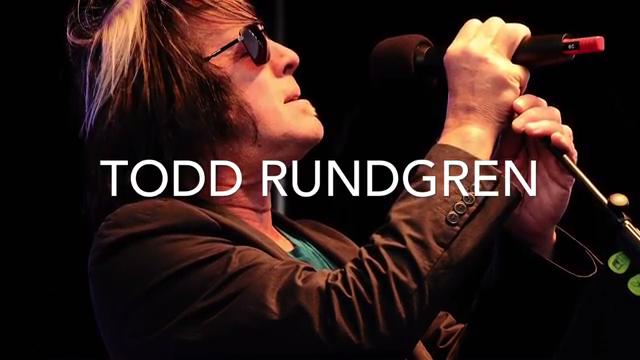
Rundgren

By GORDON GLANTZ

GORDONVILLE — I voted.

I not only voted today, but yesterday and the day before that and the day before that and the day before that.

And I’ll do it again tomorrow — and will continue until I can’t anymore.

These votes, which are allowed on repeat (and hopefully without Russian interference), are cast online for the Rock and Roll Hall of Fame.

The Hall got over itself and allowed fan voting to become part of the process, and that led to some overdue inductions (Rush, Journey, The Cars) but inherent injustices remain because the playing field is still made uneven by a self-righteous group of know-it-alls creating the ballot.

The 2020 induction nominees include some who just became eligible (25 years since their first release, some who have been eligible but have not been on the ballot and others who are repeat nominees).

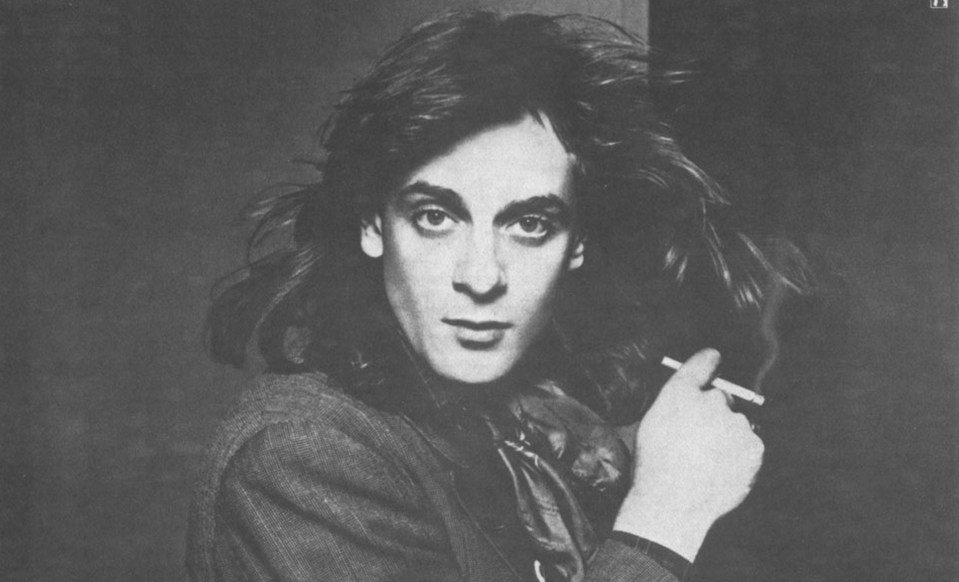
The list (in alphabetical order, with those I have repeatedly voted for in bold) includes: Pat Benatar; Dave Matthews Band; Depeche Mode; The Doobie Brothers; Whitney Houston; Judas Priest; Kraftwerk; MC5; Motörhead; Nine Inch Nails; The Notorious B.I.G.; Rufus featuring Chaka Khan; Todd Rundgren; Soundgarden; T.Rex and Thin Lizzy.

My first reaction to the ballot was one of both joy and disgust. I was excited to see Benatar, Rundgren and T.Rex but some of the others – Whitney Houston, The Notorious B.I.G., Rufus featuring Chaka Khan, Depeche Mode and MC5 – continue to cause me angst.
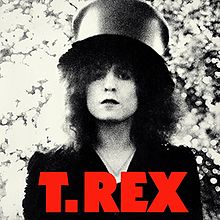
T_Rex_The_Slider

Over the years, the Hall has defined and redefined what is and isn’t Rock so many times that it is enough to make a statue dizzy.

Considering the varied genres that merged into some magical chemistry to make rock and roll what it became, it is understandable that some lines will get blurred.

But something stinks in the town of Cleveland, which is somehow home to the Rock and Roll Hall (should have been in Philly, but don’t get me started).

Either those who pull the strings from behind the curtain are tripping over themselves to be too inclusive, or something more subversive could be at play. They could be trying to monopolize all music outside of opera under one roof.

Since 1961, Nashville has been home to the Country Music Hall of Fame.

There is a Hip Hop Hall of Fame and Museum in New York City that was established in 1992.

There is a Rhythm & Blues Hall of Fame. Founded in 2010, it is currently a mobile museum with several cities bidding to be its permanent home.

Plans are afoot for an American Pop Hall of Fame in Western Pittsburgh and a Folk Music Hall of Fame with a broad vision and not many firm details.

Meanwhile, the R&R Hall continues to violate trespassing laws to fish in other ponds while ignoring many of its own.

There was not much criticism early on, as choices like Chuck Berry and Elvis Presley seemed rather obvious.

The shark was officially jumped in 2007, when The Dave Clark Five finished fifth in the voting, earning the final spot, but the spot was given away by self-appointed chairman Jann Wenner (publisher of Rolling Stone magazine) to Grandmaster Flash and the Furious Five because of a perceived dire need to include a rap act.

The curious ballots and omissions ever since have landed the entity in a world where it is not taken seriously.

Me? I’m still trying. That’s why I still vote.


I grew up listening to AOR (album-oriented rock), which was gargantuan from the late 1960s through to the arrival of the MTV era of the early 1980s.

A band could sell a zillion records and pack arenas without ever putting a song in the Top 40. Those were the days.

But many of the artists and acts of that era – Bad Company, Jethro Tull, Foreigner, Warren Zevon, Foghat, Supertramp, Boston, Styx, Peter Frampton, Kansas, ELP and those I voted for (Benatar, The Doobie Brothers, Judas Priest, Rundgren and T.Rex) – are annually spurned.

Badco

Ironically, there is a channel on Sirius Radio – Classic Vinyl – that broadcasts live from … The Rock and Roll Hall of Fame. You hear these bands, not past “pop” inductees like ABBA or Bee Gees, all the time.

And then there are the singer-songwriters that once owned the music scene. I’m talking about Gordon Lightfoot (pictured below), Harry Chapin, Jim Croce, Carole King (in the Hall as a writer but not a performer, despite her seminal “Tapestry” album that blazed a trail for female singer-songwriters for decades) and John Denver.

Lightfoot

And then we have the curious omissions of America and Seals and Crofts.

Not rock? That argument can only be made if The Eagles, Crosby, Stills & Nash, Simon & Garfunkel (and Paul Simon) and James Taylor were not among those inducted.

Music is subjective. I get it. But there can still be a measure of objectivity to it — just based on body of work and evidence and what fits the definition of rock in the most loose of terms.

This column ran in The Times Herald on Oct. 27.
Searching For A Lost America

CountryDiner

By GORDON GLANTZ

GORDONVILLE — If it is possible for a heathen to have a come to Jesus moment, I had one about 12 years ago when lost in the King of Prussia area.

It was in the dark days before GPS, and the directions we looked up practically had us driving off the road and into a ditch.

I did what was I taught to do – after learning reading, writing and arithmetic – and followed the long-held American right of pulling into a gas station to ask for directions.

No one there – not the cashier, mechanic or guy sitting behind the counter with his feet up – had a clue.

We barely found our way back home while feeling frustrated, having not showed up for a scheduled appointment, only to learn that we were a grand total of two turns and two minutes from the destination.

The tradition of getting directions at a gas station was clearly gone, as it was not the first time and not the last.

The type of full-service gas stations that guide you to the Yukon became an endangered species, going the way of using a phone book to call a movie theater on a pay phone for start times.

You can say it’s all a sign of progress, but we need to have progress with our souls intact, do we not?

While we have had the rise of a wonderful musical genre called Americana (an umbrella under which country, rock, folk, blues, blue grass – among others – can merge and mingle without the musicians feeling like traitors to their genres), many other forms of Americana are six feet under.

These deaths are not by a single stab wound, but by a thousand painful cuts.

Exhibit A: Sports.

What did we do as kids? We watched games on television, and then we went outside and mimicked what we saw until it was too dark (and sometimes when it was too dark).

Maybe we didn’t do everything fundamentally correct, but we played and played and played.

Sofia, now 12 ½, plays softball at the travel tournament level, and she has yet to ever watch one pitch of a game on television. We make semi-regular excursions to Reading Phillies games, but she doesn’t really pay attention there, either.

Everything she has done with the sport has been in a controlled environment with adults instructing her, either as coaches or individual mentors (or yours truly trying to act like one).

Truth is, though, she is a step ahead by putting down her phone long enough to put in the time.

Even if she did watch the Phillies and then looked to play outside – without adult supervision, leaving kids alone to develop skills such as conflict resolution – there would be no untouched open space anyway.

It seems every piece of suburban grass needs to have a house on it, lest western civilization turn into one big pumpkin by the pending stroke of midnight.

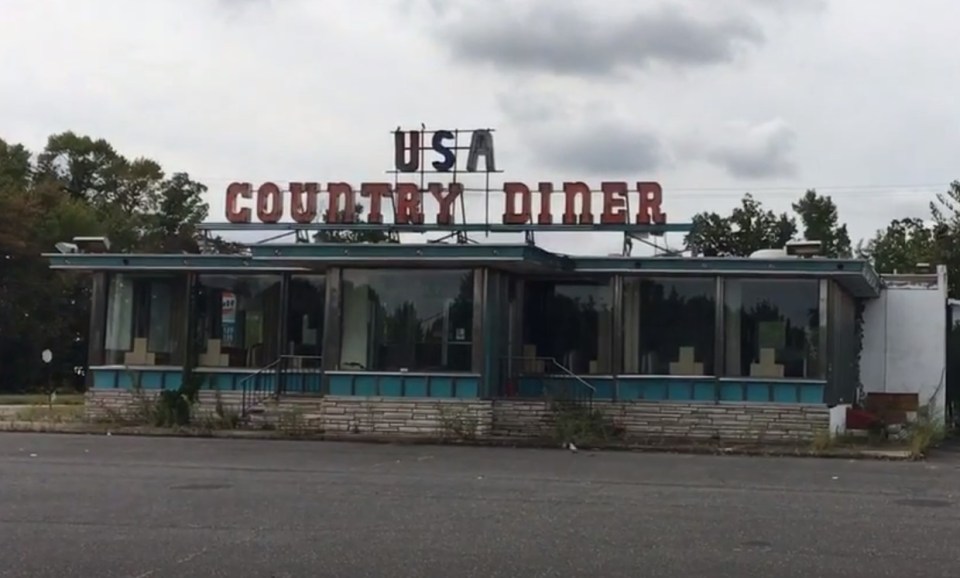
And then there is the sign of lost Americana, leaving me the most blue — the slow decline and gradual death of the neighborhood diner.

The operative word here is “neighborhood.”

I lamented this trend recently on a Facebook post, hoping my “friends” in that alternate universe would commiserate.

Some did, but others did not. Some suggested what I call coffee shops – places that open around 6 a.m. and close by the end of the lunch rush (2-2:30 p.m.) – which don’t qualify as a diner in my book (diners should technically be 24 hours, but that went by the wayside at the front end of the decline).

Others mentioned chain restaurants that are too big and impersonal – complete with elongated wait times – that don’t qualify.

Most fellow Facebookians chose to jolt me from my anger stage of the mourning process by letting me know of diners I could try out.

I was reminded of places in the city – South Philly, North Philly, Roxborough and my home ‘hood of the Northeast – that I already knew about.

No one mentioned New Jersey, where diner tradition is the next best thing it has going next to being the Bruce Springsteen state, but I’m not about to pay a toll and fight traffic just for a cheese omelet.

I also learned of diners in Pottstown, Reading, Collegeville, Warminster, Wyncote, Warrington, Wayne, Downingtown and even somewhere south of the Delaware River Gap.

That’s all fine and dandy. If I’m ever in any of those places, a diner will get my business 100 times before some chain joint.

It’s a way to soak up the local flavor, and get a feel for the community (often song fodder), as diners are – or were – a window into the soul of an area.

But I’m still a stranger in a strange land, and it often leaves me with an achy breaky heart (especially if the song is playing on the jukebox).

Every neighborhood should have at least one diner. It should actually be mandated by law – by the same municipal officials so quick to rubber stamp variances to overdevelop themselves into oblivion.

I know there are some diners around Norristown – in West Norriton, Audubon, etc. – but there is no way I can get there enough to be called “hun” by a waitress who already knows to bring me my decaf (caffeine kills) and large OJ.

I wouldn’t yearn for that so much if I didn’t have it, only to have it stripped away, one by one by one.

When we first moved to Blue Bell, there were so many diners within a five-mile radius that we practically kept a scorecard to make sure we were hitting each one fairly.

Once you achieve “regular” status, feeling like a regular on the cast of “Cheers,” you have a certain amount of responsibility to be a good customer.

And I was, tipping in the 25 percent range.

At least that’s what I believed while keeping faith in the dream of Americana more than the American dream itself.

This column appeared in The Times Herald on Oct. 13, 2019.

Blending In With The Scenery (Finally)

Brynner

By GORDON GLANTZ

GORDONVILLE — North of 50, actually nearly 55, my short-term memory is becoming seriously challenged.

Long-term, though? Forget about it – pardon the pun.

I remember the almost-frozen ice cream sandwiches on the beach in Atlantic City (this is before I became Lactose intolerant).

I remember drinking a coke from a seemingly bottomless bottle (this is before I developed a sensitivity to caffeine).
I remember going into the ocean (this is before I stopped wading in past my ankles after seeing “Jaws”).


And I remember going to a lot of movies (before there were video stores) and getting popcorn you didn’t have to butter yourself.

And the TV shows, with only three network channels and the UHF stations (no cable, no Netflix) that always needed rabbit ears for better reception.

When I loved a movie, I would see it multiple times. Being from a broken home – yeah, I am playing that card again – it was automatic that one I saw during the week could be seen again on the weekend to get out of the way of the missiles flying at my father’s home.

One movie that was a hit in Gordonville was “The Ten Commandments,” an epic drama about the exodus of the ancient Hebrews from bondage in Egypt.

Starring Charlton Heston as the protagonist, Moses, the plot of what now strikes me as embarrassingly hokey dialogue was stirred by Rameses II, the antagonist played by Yul Brynner.

What set Brynner apart — beyond an accent that was a mish-mash of Russian, Swiss and Mongolian – was his shaved head (with had some weird ponytail thing hanging out of it for a while).

The movie was made in 1959, six years before I was born, but it made the rounds again in theaters in the early seventies.

At a time when men had hair longer than a lot of women, it struck me as a bit unique.

On television, there were a plethora of classic detective shows that all 264 high-tech CSI shows combined could never match.

Savalas

A standout was the gritty “Kojak,” starring Telly Savalas.

In addition to his signature lollipop, the character had a shaved head.

Maybe shoulder-length hair of men had given way to the more “disco” blow-dry look (think John Travolta in “Saturday Night Fever”), but going all shaved was still way out of the norm.

Most bald men just went bald, usually with those awful fringes around the side that some would let grow out of proportion.

That horror hit close to home.

Clarke

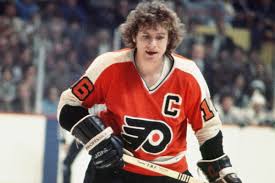
My father would go to a barber – the same guy who “styled” the hair of some of the Broad Street Bullies (he claimed he used the same scissors and comb on my hair as boyhood idol Bobby Clarke) – whose supposed specialty was covering bald spots.

My maternal grandfather used an at-home pullover approach that would never fly today.

The shame of it was so powerful that some resorted to hair pieces that were obnoxious.

Genetically, I was doomed to be bald.

A sad fate for someone who could never get it right.

One constant through my misbegotten youth was a lot of bad hair days trying to emulate either the rock stars or sports stars I so admired.

There was one respite from the madness. It came in fifth grade, when even older women in sixth grade, seemed to have crushes on me.

I got hitched to the adorable Barbara Padgett one day at recess (breaking many hearts in the process), and figured I’d be set as a playboy for life.

But an early onset of puberty was not kind.

By sixth, I was playing in the minor leagues.

My father would order the barber, the Flyers’ guy, to turn my Juan Epstein thing into a “camp cut” before going away to camp (thus assuring being turned down by the fairer sex for roller skating or dance at a record hop).

In protest, once back in the world, I let it grow out into an all-out Brillo pad atop my head.

I made matters worse by blow-drying it, because it seemed like the cool thing to do, as opposed to letting it dry naturally.

Daltrey

Giving up trying to look like Bobby Clarke – or some other hockey players (a guy named Ron Duguay from the New York Rangers had the ideal look) – it turned into an all-out quest in high school to nail the look of Roger Daltrey (lead singer of The Who).

On a good day, the best I could do was Neal Schon from Journey, and that was usually right after a shower.

I eventually went to the John Oates look in college, and got by enough to do OK with the opposite sex – and meet my eventual wife, who says I “grew on her like fungus” – but then genetics set in and I started losing hair.

Fortunately, and fortuitously, I noticed more and dudes on TV – from guest experts to law enforcement officials to aging rockers to athletes – doing away with those hideous fringes and either go closely shaved or all bald.

My cousin, Aimee, told me I could “rock that look” a few years ago, but I filed it away for future reference.

I took it slowly, but I recently instructed my barber – former Kennedy-Kenrick athlete Steve Devlin of Mike Devlin’s Barber Shop in Broad Axe – to shave it all the way down before our trip to Nova Scotia.

I was thrilled. Finally, I looked like everyone else.

Me now

We were north of the border, where people are nice to one another, for so long (2 weeks) that I was sick to my stomach when it grew in too fast.

I have been back twice since, within the span of a week.

Yul Brynner and Telly Savales have become the new Bobby Clarke and Roger Daltrey in Gordonville, and I couldn’t be happier.

This column ran in The Times Herald on Oct. 6, 2019.

Lost: Three ‘Rock’ Stars

Ocasek

By GORDON GLANTZ

GORDONVILLE — While it’s true the saying that “it comes in threes” can be easily debunked, as any three names can be plucked from recent obituary pages to make a case.

Nonetheless, three losses this week have placed the flags at half-staff here in the mystical town of Gordonville.

I am referencing, in order of their recent passings: Eddie Money (Sept. 13), Ric Ocasek (Sept. 15) and Cokie Roberts (Sept. 17).

And the empty world is a bit emptier as a result.

Money (real name Edward Mahoney) was born in Brooklyn, but also grew up – with a passion for music – in Queens and Long Island.

From a large Irish-Catholic family with a rich tradition of police officers, he enlisted as a police trainee in 1968 and found it was not in his heart.

If you can’t picture Eddie Money, our Eddie Money, as a police officer – neither could he.

“I couldn’t see myself in a police uniform for 20 years of my life, with short hair,” he was quoted as saying.

The NYPD’s loss was our gain.

Well, at least it was mine.

I’m not going to try to say that Money was one of my all-time favorites, but many of his songs – such as “Gimme Some Water” and “Baby, Hold On” – were among those that always resonated.

For lack of a better term, he falls in a category they (whoever “they” are) call blue-eyed soul (a cute term for white guys who can hang with the black singers).

Music was clearly in his soul, and that placed his heart on his sleeve. You believed every word, because that’s the way he delivered them.

I think we can all rip a page from that playbook, just in the way we deal with one another, no?

eddie-money-take-me-home-tonight

Ocasek (real name Richard Otcasek) was born in Baltimore on March 23, 1944 (same day, different year, as yours truly). The son of a NASA systems analyst, the family moved to Ohio when he was 16. He briefly tried college, at two different schools, but the music bug was too strong to be an academic.

He played in various bands in Ohio with bassist Benjamin Orr, and the pair took off for Boston, where there the multitude of college campuses created a vibrant scene that also produced the likes of classic bands like Aerosmith and Boston.

Several band carnations later, Ocasek and Orr formed a Boston-area super group – with Greg Hawkes on keyboards, Elliott Easton on lead guitar and David Robinson on drums – that the world would come to know as The Cars.

Ocasek (rhythm guitar) wrote the songs with thought-provoking lyrics and split the lead vocals with Orr.

This is when they came into my orbit, as they may have single-handedly rescued us all from the Disco-era with an eponymous debut album that featured the likes of “My Best Friend’s Girl” and “Just What I Needed” getting the most initial airplay.

In junior high (yeah, I’m too old to know of middle schools), I played the grooves out of this album, which had deep cuts like “All Mixed Up” and “Moving In Stereo” to give it the depth and breadth to make it an enduring classic.

That said, it was the next album by The Cars – Candy-O – that remains my personal favorite. People say they fell off after the first album, as people like to label bands as one-shot deals, but I’ll fight to death to say they’re wrong. The likes of “It’s All I Can Do” and “Dangerous Type” – and the title track – among others (“Let’s Go”) can’t be ignored by anyone with functioning eardrums.

Being a songwriter of sorts myself, I credit Ocasek as a strong secondary influence, particularly with the willingness to take chances with lyrics.

This was not the end of me going to war on behalf of The Cars, who I considered my favorite band as I crossed the threshold into Northeast High School from Wilson State Pen (I mean, Middle School). People said they weren’t good live, and they were right. The Cars weren’t good live. They were outstanding live, both at a Spectrum show my senior year of high school and at Live Aid.

I stayed in the ring on behalf of The Cars, as it was an abomination that they had to wait until 2018 for an induction into the enigmatic Rock and Roll Hall of Fame. It’s nice Ocasek lived to see it, but an abomination he didn’t enjoy it longer.

I can tell, from listening to Sofia’s bands, that the influence of The Cars – one of the alleged prerequisites of the R&R Hall’s know-it-alls – is alive and well.

This brings us to Roberts (real name … get this … Mary Martha Corinne Morrison Claiborne Boggs). Thanks to her brother, Tommy, she became known to us all as Cokie.

She had the good sense to marry a Jewish guy (wink), fellow journalist Steven V. Roberts, and became Cokie Roberts.

cokieroberts_custom-

She was born into a Louisiana family steeped in Southern Democratic political traditions. Just about her entire nuclear family ran for political office, but her passion was journalism.

While this seems a million miles away from the background of Money, who didn’t want to be a cop – or Ocasek, who spurned the high academic standards of his family – there is a common thread.

It goes to show how passion to follow your dreams can go a long way.

There isn’t a woman in journalism today, whether in print or television or somewhere in between, who doesn’t owe a debt of gratitude for the trail blazed by Roberts.

When Roberts passed, my first reaction was that, since it wasn’t a rock star, it didn’t count as part of the threes.

Upon further review, I was wrong.

She was a rock star, too.

And, sadly, it did come in threes.

Rough week.

This column first appeared in The Times Herald on Sept. 21. 2019

Eighteen Years Gone: Here We Are

Sepy 11

By GORDON GLANTZ

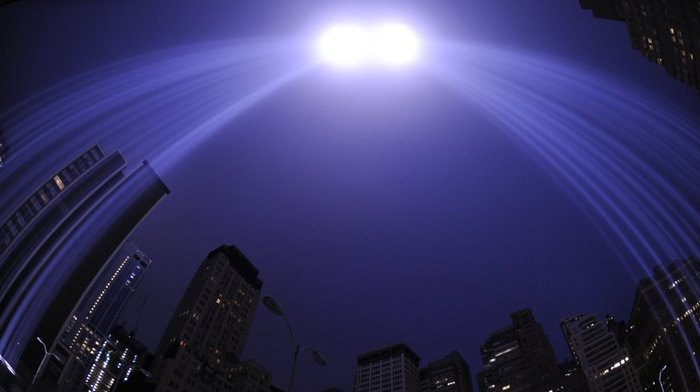
GORDONVILLE — I always resented what seemed like immediate parlor games of everyone sharing – usually on social threads – their boring yarns about how they were in the middle of this, that or the other thing when they heard about what was the worst attack on American soil.

Doing so 2-3 years after Sept. 11, 2001 — especially when the act led to a disingenuous rationale for a war in Iraq that quickly revealed itself as coming from Page 1 of the Vietnam playbook made these personal remembrances seem trivial.

I had what I thought was a more pertinent question: Where are you now?

But some time has since elapsed, and maybe it’s time to flip the script.

This past week, we commemorated 18 years since 9/11.

And Sofia is old enough – and intrigued by events that occurred more than five minutes ago – to share our own experiences, just like my father did with me about the JFK assassination (Oswald didn’t act alone, if at all, but that’s another column for another day) and the Japanese army (they acted alone) bombing Pearl Harbor.

I don’t know what makes me the final arbiter of when it is time to suddenly change lanes on the discussion. I just felt like it was too soon before and not so much now.

Where was I that day? I was just getting out of the shower in the Center City apartment I shared with my future wife (then fiancé). She worked in Wilmington at the time, and called with the news of a plane striking one of the twin towers. I had the TV on, but was pre-conditioned not to get too involved with the trivialities of Good Morning America, when it was clear something else was going on.

First reaction? It was terrorism, clearly, but it could be passed off as some sort of accident from air traffic control to avoid public panic (just like blaming the JFK assassination on a lone nut). But, after the second plane hit, which I watched as it happened, it was clear was going on. The whole nation could be under attack.

As the crime-beat reporter for The Times Herald, I drove into work that day while many others were scrambling to make it home from their jobs.

For all I knew, the nation could have been under total assault and this was only the start of it. But, like many Americans, I defined myself by my job back in those pre-Sofia years.

I was told by the editor at the time that I was a free agent, meaning stops at police stations to comb through blotter were out. The rest of it is a blur. I believe I had four or five bylines in the Sept. 12 edition, although I only recall two – from a bomb scare called into the Plymouth Township Community Center and from talking to congregants who came to pray at one of the historically black churches in Norristown.

I remember the sense of unity between a lot of scared people of all walks of life. While I was not a fan of the president who I thought stole the election, I felt he then had the nation in the palm of his hand.

Who knew how much he would blow it?

Eighteen years later, we are more divided than ever.

A new psychology emerged – a sort of acceptable narcissism — wherein we were inundated with a spate of reality television.

And the ultimate sociopath, who seemed to find a resting spot on reality TV after failing as a mogul, was elected as president.

The real patriotism we all felt in the aftermath of Sept. 11 has been subverted and perverted into a game of who is more patriotic than who, based on superficialities.

Mass shootings are now so commonplace that we aren’t even phased by them anymore.

Children drink water with lead in it, and we shrug it off.

Eighteen years later, that’s where we are.

Maybe that’s why it suddenly seems better to remember where we were, and get back to that place of temporary unity amid fear and chaos.

This column ran in The Times Herald on Sept.  15, 2019.

The Heart Of The Matter

healthyheart_0


By GORDON GLANTZ

GORDONVILLE — The year was 1969. The place was Northeast Philadelphia, in a small twin home right off of Roosevelt Boulevard.

A man, age 73, was having chest pains but was in denial that it was anything serious and went to take a nap on the couch with a vow to feel better when he woke up. His wife, though worried, went along with the plan.

At some point, a few hours later, he fell of the couch and couldn’t get up. His wife called her children, asking what to do.

They said to call an ambulance.

By the time it arrived and took him to the hospital, it was too late.

The man was Morris Glantz, my grandfather.

I only I knew him as Pop-Pop and have only faint recollections of him playing with me for hours on the floor when my father, recently divorced from my mother, would pick me up on Friday evenings and take me on the other side of the boulevard for dinner and playtime.

I missed a Friday, I remember that, and then went back the following week.

“Where’s Pop-Pop?” I asked, innocently.

“Pop-Pop died,” my father responded.

I didn’t know quite what that meant. I got a vision of him diving into a bottomless pit. I knew he wasn’t coming back.

The look on my face surely broke my father’s heart.

I was 4, and down a grandfather.

My grandmother, Mom-Mom, looked worn-out and not overly cheerful as she placed a plate of chicken in front of me.

It’s all a vague memory now, but it stuck with me enough that I know that it is better to be cautious than sorry.

I recently experienced sudden and severe chest pains. They felt more muscular and were emanating in the center of my chest and, when I tried to move or lay down, hurt more on the right side.

I knew the odds of a heart attack were slim, but slim and none live in two different universes.

Heart issues run rampant on my father’s side of the family, and I generally tend to inherit those genes, with my father needing a six-way bypass when he was just a year or two older than I am now.

I know he dawdled about going, even after a minor heart attack when he was a few years younger than I am now, but he made the decision to go for it.

Back then, in 1988, bypasses were not sure things. He was laid up for weeks (they didn’t throw patients out of hospitals 16 minutes later, either). While it was not his heart that took him two decades later, he paid the price by losing a lot of business as a self-employed lawyer.

Still, as he withstood the humiliation of credit cards being declined and bill collectors calling, he was able to see his kids married and grandchildren born (although Sofia was barely a year old went he left us).

His maternal grandfather died of a heart attack in his mid-fifties. His older brother, Uncle Oscar, who I am most similar to in appearance (he was the best looking) also died instantly of a heart attack in his late seventies.

Knowing all this, and aware that I don’t want Sofia to grow up without a father because of some “I’ll be OK” macho act, I woke up my wife at 3 a.m. in a bit of a panic.

After some fierce Googling, and the realization that the pain was coming from a raised area in the center of my chest, fears shifted to a blood clot or lung cancer (although I knew lung cancer doesn’t just show up out of nowhere).

After we tussled over what hospital to go to, we settled on Abington-Lansdale, and we had the ER to ourselves in the pre-dawn hours.

I’m not sure who all the people were fussing all over me – I’m guessing a RN, NP, PA and an orderly – but I was well on my way to readiness when the world’s friendliest ER doctor greeted us and seemed semi-confident it was nothing more than something external.

The news, as it turned out, was all good.

It was some sort of muscle strain (even though I still can’t put my finger on the time and place the injury occurred).

The raised area? Not a tumor or a blood clot. It was my breast bone. And everyone has one.

They gave me a shot of something, and I was feeling better within 30 minutes.

In the interim, I got the best news of all. My heart, they said, not only looked normal but “beyond normal.”

The EEG, EKG – whatever they call it – showed that it “couldn’t be better.”

Relieved, we hit one of our favorite haunts – Tiger’s Restaurant in Lansdale – right as it opened at 6 a.m.

As I ate with a new lease on life, I couldn’t help but think of the people who have something more serious going on and don’t go the ER.

I’m not sure why Pop-Pop didn’t go that night in 1969, but a lot of people these days don’t want to deal with the onerous co-pay just to find out it was a false alarm.

There is no way to get an actual number of those who decide against it, because many are not alive to tell the tale.

But I am.

The current healthcare system stinks. We know that. But the actual medical care in this country does not.

All I can say is to weigh the two when faced with the same situation.

And I’ll add this: While I don’t believe in angels smiling down on me and all that stuff, I feel like I honored the memory of the grandfather I never really got to know.

This column ran in The Times Herald on Sept. 8, 2019.

No More Grieving For Your ‘Loss’

Bruce

BY GORDON GLANTZ

GORDONVILLE — While there are some things worth fighting for, others just aren’t worth the time.

After going to the brink of World War III on the topic of Bruce Springsteen, I have come to the realization that it is simply not worth the spike in blood pressure.

Either you get it, or you don’t.

And if you don’t, you don’t.

I feel more pity for you than anything else.

I don’t get the entertainment value of NASCAR or professional wrestling – let alone more meaningful saving graces for others, such as organized religion or thinking the founding fathers were seers and mystics with all the answers.

Either you see the light – and are willing to be blinded by it – or you are mired in darkness.

And, yes, this is coming on the heels of seeing the movie inspired by the music of Springsteen, “Blinded By The Light.”

It’s actually not the first attempt to incorporate the impact of Springsteen’s music on film characters.

Early in the filmmaking career of indie icon John Sayles, a movie called “Baby, It’s you” (made in 1983 but set in Trenton, N.J., circa 1966) featured Springsteen’s music. Although the songs in that film, starring a young Rosanna Arquette, were anachronistic (Springsteen didn’t record his first album until 1972), they surely represented how it he felt as a New Jersey high school student in the 60s (and were ideal for the lead male character).

Unfortunately, this critically acclaimed flick was more arthouse fare, and not something for large audiences.

The movie “Mask” (1985), was the true story of a teen boy with a facial deformity who was inspired by the music of Springsteen. The original movie had four Springsteen songs in it that were cut out by studio executives, who thought a swap with Bob Seger songs wouldn’t matter.

The director’s cut of the film, which netted Cher a well-earned Oscar nomination, has since been released with the intended Springsteen music and some powerful additional scenes.

Unfortunately, the damage was done.

A good movie could have been great. As such, it is now semi-forgotten in time, as it is both uncomfortable for some to watch and not as effective as it could have been.

So, now we have “Blinded By The Light.” It is neither set in the familiar Springsteen terrain of 1960s New Jersey of “Baby, It’s You” nor the outlaw biker California lifestyle depicted in “Mask.”

It is a true story about someone who came of age as an outsider – a Pakistani Muslim immigrant in 1987 London (when lack of jobs caused a lot of intolerance) – and yet it rings as true as if the central character were from a traditional Springsteen hub on the U.S. East Coast.

Like, for example, myself in high school in Northeast Philadelphia.

As a 10-year-old, I bought Springsteen’s “Born To Run” album when it came out in 1975, so I was well aware of who he was for a long time.

When I entered high school in 10th grade, circa 1980, his album “The River” was all over the radio, but I have to admit that it wasn’t speaking to me.

I was more into Genesis, Pink Floyd, the aforementioned Seger, Tom Petty and The Cars.

Then came the mandatory heavy 1960s trip of The Doors and Jimi Hendrix, before coming to believe that the members of Led Zeppelin were living Gods.

But, as high school progressed, so did the natural feelings of alienation that almost all teens – from those in the Homecoming Court to the marching band to the delinquents catching a smoke between classes outside – felt.

All those bands had a place and stirred something inside me, but nothing spoke to my soul.

Not until I felt like taking a knife cutting the pain from my heart.

Not until I wanted to say that I wasn’t a boy, but a man.

Not until I talked about a dream and tried to make it real.

For the uneducated – and that’s OK – those are all paraphrased lines from Springsteen songs.

I don’t know who or where I’d be today – not that I’m anything anyway, but I can’t complain – without learning them like a seminary student learns to recite, and interpret, scripture.

I should have nothing in common with the main character of “Blinded By The Light,” but I actually related to Javed as much I have with any character in any movie I’ve ever seen.

I was semi-skeptical going in – I read they turned some songs in to Bollywood-style dance routines – but I knew pretty quickly that it was tailor-made when Javed, also a writer, first popped in a Springsteen cassette.

The song was “Dancing In The Dark.”

It was generally regarded by some of my Bruce brethren as just a frivolous pop song, while casual fans see it as a fun tune that doesn’t dig too deep and make them think too hard.

I never felt that way about “Dancing In The Dark.” From the moment it was released as a single in advance of the eponymous “Born In The U.S.A.” album that made Springsteen an international star, the lyrics – though set against non-threatening synthesizer chords and a steady beat that almost sounded electronic – came at me at a time in my life when I was transitioning from high school, where the music of Springsteen helped me find my niche, to college.

I was nothing but tired – tired and bored with myself.

I wanted to change my clothes, my hair, my face.

They said I had to stay hungry. I was just about starving.

I knew there was something happening somewhere.

And I knew – with the words of Bruce Springsteen – I’d find it.

And I did.

Just like many of you did.

Because you get it.

Some of you don’t.

If you don’t, you don’t.

All I can say is that I’m sorry.

I really am.

This column appeared in The Times Herald on Sept. 1, 2019.

Let It Be (And Other Thoughts)

No Wood

By GORDON GLANTZ

GORDONVILLE — It’s been a long time, perhaps too long.

Let’s press reset with another installment of “What Is And What Should Never Be” (named in honor of the Led Zeppelin Song).

If you don’t recall how it works, it won’t take long to catch on.

And we’re off:

What Is: We just celebrated the 50th anniversary of Woodstock, providing a chance to relive all the music and magic that took place (without getting caught in the rain and mud, let alone having to sleep outside). One of the most amazing aspects about the festival – beyond featuring a lineup of classic acts (The Who, Jimi Hendrix, Jefferson Airplane, etc.) that can only be duplicated by those who turned down invites (The Doors, Bob Dylan, Simon and Garfunkel) – is that it was as peaceful as advertised. There were two deaths – one from an insulin injection gone wrong and one when an attendee sleeping in a nearby field was run over by a tractor – and two births.

And What Should Never Be: Attempts to mark the anniversary with a reboot. A 50th anniversary try failed miserably, but at least the plug was pulled to avoid the type of chaos that occurred at the 25th anniversary attempt (although the Philly-area band Huffamoose, featuring some real talented guys I’ve worked with, played the first day – before it went haywire on the second). That should serve notice to anyone wanting to make a 55th, 60th, 75th or 100th. It was a once in a lifetime event. It was a historical event. History naturally repeats itself anyway – often tragically – so we need not spur it along because we can’t think outside the box. In my mind, there was another Woodstock. It was Live Aid in 1985. I was there, at old JFK Stadium. It was my Woodstock. I’m good, thanks.

Iowa

What Is: In the landscape of our country still struggling to reach its potential greatness, consider Iowa as Exhibit A.

And What Should Never Be: Iowa wielding the political power that it currently does in the flawed political system that ultimately leaves voters from the other 49 states – and the District of Columbia, which somehow isn’t its own state – holding their noses in voting booths and feeling like they are voting for the lesser of two evils. Consider Steve King, the Iowa Congressman, who has uttered so many hateful and absurd pronouncements that they are not worth repeating. Do we really want a state whose voters elected this sad individual to disproportionately control to fate of America the way it does?

colin_kaepernick_jan_rtr_img

What Is: As soon as Eagles backup quarterback Nate Sudfeld was lost for 6-8 weeks, which equates to a few weeks of the regular season, the chirping began for the Eagles to sign exiled Colin Kaepernick began. It only increased when the No. 3 quarterback, Cody Kessler, went down for the count with a concussion and the Eagles coaxed 40-year-old Josh McCown out of a short-lived retirement.

And What Should Never Be: Sorry. Not the case. This was a football move, period. To paraphrase “The Godfather” (greatest movie of all time), this is business and not personal. A commitment to Kaepernick would have been complicated. Other teams – most notably, Seattle in 2017 – have kicked those tires. His reported contract demands were unrealistic (immediate chance to start, at starter’s pay). In a league with a fixed salary cap, and considering the pending media circus, the choice against becomes more vivid. I have my own personal feelings on Kaepernick, and where he was and is coming from, but it wouldn’t be fair to put them out there with any proof. Let’s just say, as both an Eagles’ fan and a bleeding heart liberal (i.e. snowflake) who supported his right to protest under the First Amendment, I’m fine with how it went down. If Sudfeld were out for the season, different conversation. He’s not, so drop it.

Bibi

What Is: Israel banned two U.S. Congresswomen, Rashida Tlaib and Ilhan Omar, from visiting the West Bank, sparking such outrage on the left that Bernie Sanders – my Bernie Sanders, whose family fled the same Nazi persecution that help lead to the formation of Israel – called for an end to U.S. aid there.


And What Should Never Be: Hopping, skipping and jumping to the facts here. While it was wrong to not let elected officials visit, it’s also wrong to sweep with one broad brush about Israel. These are the actions of Prime Minister Benjamin Netanyahu (a graduate of Cheltenham High School right here in Montgomery County). Known as “Bibi,” he was elected by a narrow margin, with his Likud party eking out the more moderate Blue And White party of Benny Gantz. Sound familiar? It should. They are almost as polarized there about their leader, also working on his third marriage while operating under corruption charges, as we are with ours here. Just like many of us don’t want to be judged by the actions of your president (not mine) many there feel the same about their prime minister. When detractors quickly seek to punish “all Israelis,” I can’t help but think some other bells are going off in their heads.

Looop

What Is: John Hickenlooper, the former governor of Colorado, dropped out of a crowded Democratic presidential race that most average citizens didn’t even know he was in.

And What Should Never Be: I like to make fun of John Hickenlooper because, well, his name is John Hickenlooper. Worse yet, he actually looks like someone whose name is John Hickenlooper. However, to his credit, he did the right thing here. Not only is the herd thinned by one, but he is now going to run for a senate seat currently occupied by a vulnerable Republican. All he needs is a nickname. Go get ‘em, “Loop.”

This column appeared in Time Times Herald on Aug. 25

No Friction With Fiction

Anne with an E

By GORDON GLANTZ

GORDONVILLE — After nearly two weeks north of the border – in Halifax and Charlottetown in Prince Edward Island (that’s Nova Scotia, for those of you who can’t find Nebraska on a map) — it was interesting to see how long it takes for me to be impatient and brusque with people after consistently encountering the complete opposite.

And it will be interesting to note if I will ever want to see a lobster ever again or if I will now crave the best lobster on the planet.

Probably won’t take much more than some deplorable aggressive driving by a grunt in a pickup truck, but I digress.

Just about every elevator trip at both hotels involved friendly conversation.

And my Flyers tee-shirt was a key spark in the land where hockey was invented.

“Philly, eh?” I was asked.

Since the Flyers are pretty much struck in neutral and don’t inspire the same ire they once did from hockey purists, the conversation switched quickly to Philadelphia’s pride and joy.

Independence Hall?

Nope.

Liberty Bell?

Nada.

The Eagles?

If you saw what passes for football up there, you’d know better (although my Eagles’ shirt did get one passing thumbs-up).

Give up?

Try Rocky Balboa.

Rocky Raw Meat

It struck me as interesting that Philadelphia, known for being the alleged birthplace of the so-called liberty we enjoy, is universally noted for a fictional character.

Then again, Charlottetown was where the groundwork for Canada’s independence was first laid when members of the rest of the British Commonwealth gathered in 1864, for what became known as the Charlottetown Conference, to discuss how to break from the clutches of the Crown.

And yet, that is not why we – or most others – were there.

It was also for a fictional character that Sofia has come to adore after reading all the books about her.

That’s Anne Shirley, the semi-biographical alter ego of author L.M. (Lucy Maud) Montgomery.

At the time of my elevator encounter, during which the friendly chap said “Rocky” was his favorite movie because of the life lesson about taking a beating and not giving up, the better half and Sofia were seeing a stage play based on the series of “Anne” books.

We spent multiple days in Cavendish, where the life of the author is a literal cottage industry, and we saw a musical version of the character’s life (I survived by dozing off for a good portion of it).

So I guess you would say that the two historic places are better known for their fictional icons is kind of messed up, huh?

Three mass shootings in a week, including two in the span of 24 hours? That’s messed up.

A grown man in Montana fracturing the skull of a 13-year-old for not removing his cap during the national anthem? Messed up.

Fictional characters being larger than life? No way.

As much as I dig history, and think it should be studied thoroughly (we did a whole walking tour to learn the history part of Charlottetown), I have to say it’s kind of cool.

Two characters were created that were so sympathetic — and relatable — that they are the first thought for many outsiders of the home terrains upon which they were created.

Visitors from around the world making it the first order of business of running up the Art Museum steps to play the role of Rocky, the brainchild of a then-struggling actor named Sylvester Stallone, is not an anomaly.

In PEI (Prince Edward Island), there was an abundance of Japanese tourists. It didn’t strike me as odd until it was explained to me that a local woman once went to Japan to teach and, due to the lack of age-appropriate literature of the time, she introduced the series of “Anne” books to her students.

It reminded me of a conversation I had with a Swedish co-counselor at summer camp, who happened to be a 6-foot-4 Olympic swimming hopeful that I could never convince to play on the counselor hockey team. He related how the original “Rocky” was common viewing at places where athletes there trained, and added how the sequels (there were only a few at that time) were a disappointment.

It struck me how what seemed to be the experiences of Rocky Balboa on the streets of my hometown were not uniquely unique.

That is the power of art.

That what makes bitter reality easier to swallow.

This column appeared in The Times Herald on Aug. 11, 2018.

Time Is On Our Side

Snowy-School-Bus

By GORDON GLANTZ

GORDONVILLE — Often to my wife’s chagrin, Sofia and I are so much alike that is frightening.

If you ever wondered what the saying of two peas in a pod means, just observe us in our national habitat for a while.

But there is one area where we clearly differ.

I pride myself on being not only on time, but at least 15 minutes early.

And with the ongoing PennDOT conspiracy to road work in my path, I like to leave even extra travel time to get to where I need to be.

If we’re early, we’ll deal with it.

We can always sit in the car and chill with some tunes, until we don’t look too early, right?

I never want to hear the words “it’s about time” when I – or we – are late for wherever we need to be.

That vibe carries into the outside world, where I find myself saying “it’s about time” when enough red tape is cut for logical decisions to be made.

Today, I bring you some examples:

-Ana’s Corner Store, at Township Line and North Wales roads in East Norriton, was held hostage by road work for what seemed like a biblical 40 years. While I like to stop there on my way to make musical magic at Morningstar Studios, I have been avoiding it like the 11th plague that the scenario was. I feared for the survival of the privately owned business but, lo and behold, it has outlasted the road crews.

Instead of amen, let us bow our heads and say, “it’s about time.”

-Speaking of PennDOT –which has twice damaged my car with new road paint, but I digress — it announced that multiple police departments in Eastern Pennsylvania are launching a special aggressive driving enforcement campaign. It will last through the end of August.

Among the participating departments are Norristown, West Norriton, Upper Merion and Plymouth. They will be focusing on a host of aggressive driving behaviors (running red lights, tailgating, speeding, distracted driving, etc.)

I kind of sort of thought this was their job to begin with, and I also wonder what happens after August, when the initiative concludes (17 fatalities in Philadelphia’s five surrounding counties were the direct result of aggressive driving in 2017).

While my own temper is my own worst enemy, I have successfully tamed the beast within as I have mellowed with middle age. Still, nothing like a schmuck thinking the road belongs to him (and it’s usually a him, not a her) to get me angry.

It will be nice to know police will be out to curb this stupidity, which will protect me from myself as well.

Again, instead of amen, let us bow our heads and say “it’s about time.”

-Finally, we no longer have to hear about those a bit longer in the tooth than we are walking to school – 18 ½ miles, each way, in two feet of snow – and mocking us for calling off school before one flake hits the ground.

I guess it does seem a bit foolish, and there have been times when it has backfired, but it is better to be safe than sorry – especially with all those aggressive drivers out there who don’t respect the conditions.

As a kid, I loved snow days. The options were endless. Sledding, shoveling for do-re-mi, playing tackle football or – as it was often with me – sleeping in and then watching movies.

As the parent primarily responsible for Sofia’s transportation, I had quite a different view. There were a few times when the school attempted to stay open during a bad snow storm, and I had to pick up Sofia amid worsening conditions on a day when the school should have planned ahead.

It’s always a tough call, as school districts want to get in at least a half-day so that there won’t be makeups at the end of the year.

But extra buses on the road, with road crews trying to do their thing, make for an added mess.

Why mess with a messy situation?

Tom Wolf signed a bill (Senate Bill 440) this week that will allow the option for “cyber snow days.”

Translation: With computers, which have been around since Al Gore invented them, stay home and do your schoolwork – and still have a chance to be a kid in the snow.

“School districts need the added flexibility of ensuring their students’ continuity of education is not interrupted by the weather or any other unplanned school closure,” said State Sen. Kristen Phillips-Hill said in a statement.

Phillips-Hill, of York, was the sponsor of the bill that is open to all schools, public and private, for approved periods of three years.

To Phillips-Hill, we stand and applaud and say, “it about time.”

The following column ran in The Times Herald on July 15.