Category Archives: Sports

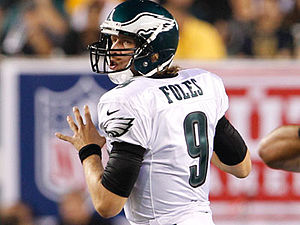
Eagles Should Stick With Nick

Nick-Foles-2

By GORDON GLANTZ

Gordonglantz50@gmail.com

@Managing2Edit

GORDONVILLE – How old am I?

Old enough that I went to junior high, not “middle school.”

And it was at that unforgiving rest stop between the bliss of grade school and the coming-of-age happenings of high school that I fell behind the pace in the sore subject of math.

Addition, subtraction, division, multiplication, percentages – heck, I can do those in my head, without a calculator, to this day.

The other stuff – the X, Y and Z of algebra and the virtual foreign language of geometry and anything beyond – remains such a haunting ghost on my psyche that I have recurring dreams about being back at school, trying to remember my locker combination because I have to pass math in order for everything that happened in my adult life to be valid.

Pretty scary stuff.

I credit the basic math prowess to being a sports fan at a young age, and learning the lost art of keeping a scorecard at games while keeping seasonal statistics for myself playing wiffle ball and street hockey and replaying seasons through Strat-O-Matic, (I’m so old that, yes, Strat-O-Matic was a sports board game).

That translated to a fascination with – and general success in – fantasy sports. (I’m so old that I remember when it was called “rotisserie” sports).

Favorite page in the sports section – and yes, I’m so old that I still read it – is the agate page. It is free of pontification from columnists that I think I know more than anyway, and give the cold and harsh truth of the sheer numbers.

There is one sports statistic – more of a formula, actually – that I could not figure out if the reward were no more of those dreams about going back to school to pass geometry.

Passer rating.

All I know is that it is pretty sophisticated, taking all of a quarterback’s relevant statistics – completion percentage, touchdown-interception ratio, yardage, etc. – and mixing them up in a blender to come up with a final number.

A perfect passer rating, which has been achieved in single games 61 times by 50 different quarterbacks (as of the end of the 2013 seasons) since 1948, is 158.3. For a season, it would be a super-human feat, as 100 over a full slate pretty much equates to an “A” on a report card.

Aaron Rodgers came into the season with the best career passer rating (105.2) – sure to improve, once the league’s actuaries adjust this season’s 112.2 mark – and best single-season passer rating (122.5).

Critics of the stat will argue that it doesn’t take into account many other factors, such as sacks taken and fumbles lost while it credits 8-yard completions on third-and-18 (Donovan McNabb’s version of the “tuck rule”).

Most of all, it doesn’t factor in winning, which is the reason for playing the game – even wiffle ball or street hockey (I’m so old that I played those game at a place called “outside”) – in the first place.

Quarterbacks, it can be successfully argued, can pad their numbers in games where their teams are trailing.

So, it would seem, the best form of evaluation would be quarterbacks who score well on the passer rating exam while passing the “is he a winner?” portion of the evaluation process.

This brings us to the current situation swirling around the Philadelphia Eagles, who matched last year’s record at 10-6 but missed out on the postseason.

Aside from a porous defense, a big reason the missed the playoffs this season was turnovers, mainly committed by the quarterbacks – Nick Foles and Mark Sanchez, who played the second half of the season after Foles broke his collarbone.

Foles has a year left on his rookie deal. As a third-round pick in 2012, he is making the league’s version of slave wages for at least one more season. Sanchez was signed, for a year, to back Foles up after his once-promising star crashed a burned with the New York Jets.

After the Eagles finished their season with a 34-26 win over the New York Giants, in the same stadium where Sanchez was witch-hunted out of town, the questions came hurling at Eagles’ coach Chip Kelly – and everyone else around the team, from owner Jeffrey Lurie to the water boys – about the quarterback situation.

For all the talk-show fantasies of the Eagles swinging some sort of magic deal to get the first pick in the draft and select Marcus Mariota (Kelly’s quarterback at Oregon and the Heisman Trophy winner), or maybe trading a bag of air for Colin Kaepernick, the reality is that the choice is really Foles or Sanchez.

The kind of quarterback who will be in the NFL recycling bin – Jake Locker, Michael Vick (he’ll be available), oft-injured Sam Bradford, etc. – would be of lesser talent and carry too much baggage.

In the wake of the season that went from carefree dance party to a funeral dirge, Kelly and Co. put the QB question off better than politicians on gun legislation after a school shooting, saying they would address it – after a period of thorough self-examination – in March.

There is a problem with that scenario.

My birthday is in March, and I’ll be 50 – yep, the big 5-0.

That’s how old I am.

And the Eagles remain the only Philadelphia team of consequence (although I admit to a soft spot for the Philadelphia Stars of the USFL, whom I just ordered up in a Strat-O-Matic retro set) that I have not seen win a title in my lifetime.

So they will have to excuse me if I take this a little personally.

I’ll save them the time and effort of waiting until my birthday month, and I do this as public service, so they can focus on the glaring holes on the defensive side of the football that really cost this team a playoff berth, with or without turnovers.

There is only one option at quarterback: Foles.

If Sanchez can be convinced to return as a backup, that would be ideal. It may be a tough sell, at least at first, but he may not have anyone beating down his door with the offer of starting job.

Why Foles?

Well, let’s go back to that passer rating thing, shall we?

During the 2013 season, Foles’ second in the league and first in Kelly’s unique system, he replaced an injured Vick and never relinquished the job.

He went 8-2 as a starter, tied a league record with seven touchdown passes in one game and threw 28 for the season. Largely based on a mere two interceptions, his quarterback rating was a league-best 119.2.

It was the third-best of all time, behind Rodgers and some Peyton Manning guy. If you throw that away based on some shoddy play this season under peculiar circumstances (including a new quarterbacks coach), Kelly and general manager Howie Roseman could and should be flagged for intentional grounding.

A year back, Foles played well enough in the playoffs against New Orleans to provide the Eagles with a lead that the special teams and defense combined to squander as time expired.

Then, to cap it all off, he went to the Pro Bowl as an alternate and was named the game’s Offensive MVP.

But he was still young, and young quarterbacks have learning curves. It is not uncommon for initial success to be met with a precipitous drop.

This year, while I suspect he was playing hurt long before absorbing his knockout blow in Week 7 against the Houston Texans, Foles was playing behind a pieced-together offensive line that was creating no holes in the running game and little prolonged pass protection.

Foles seemed to force throws, perhaps trying to take too much upon himself to make things happen. While among the league leaders in several categories, mainly yardage, his 13 touchdowns were marred by 10 interceptions.

While Sanchez had a better passer rating (padded in losses, like a humbling setback to Rodgers and Co. in Green Bay), his lack of a deep arm respected by opponents was apparent.

By contrast, Foles (81.4 passer rating, which is jaw-dropping after last year but far from hideous) was second to only Rodgers in completed passes of 50 yards or more. He had seven in just eight games (less considering he was injured during the game in Houston on Nov. 2).

And there is that winning thing. The Eagles were 6-2 in games he started, as opposed to 4-4 in games started by Sanchez.

I’ll do the math, thank you.

Foles is 14-4 as a starter under Kelly, meaning other quarterbacks – Vick and Sanchez – while more quotable and exotic, are 6-8.

Why does he win a lot? Because even in games where he doesn’t play well, he finds a way to make the throws he needs to make in crunch time.

The Quarterback Graveyard is littered with passers who had gaudy numbers and losing records.

If they want to dip into that box chocolates, and not know what they are going to get at the vital QB position, then maybe Kelly and Roseman aren’t as smart as they make themselves seem.

Given the lack of viable options, and Foles’ learning curve, it’s time for the heart and minds of the team’s decision-makers to give Foles a vote of confidence, and deploy a virtue geezer know as patience, or move on.

Using the passer rating as the barometer, there is a myriad of applicable scenarios where an investment in a quarterback’s psyche yielded a big-time payoff.

I could give you names like Drew Brees, Philip Rivers, Joe Flacco, Matthew Stafford and Eli Manning. Some had seasons that would make the one Foles had in half a year, with a makeshift line, look like John Elway material.

You can argue that some of those guys were first-round picks, meaning the commitment was almost guaranteed. You could counter that by saying that Foles, by not being a high pick, earned his chance for at least a one-year reprieve by actually showing what he could do on the field without anything being handed to him.

Even as a rookie, when he finished up the nightmare of a 4-12 season under outgoing Andy Reid, Foles set several – albeit random – league and franchise marks for rookie passers.

In the final analysis, it comes down to pragmatism.

Foles committed the crime of being nearly perfect too soon in his career. He’ll always be compared to that standard, and then unfairly judged as not being “the guy.” That’s OK for the average ding-dong trying to spell out E-A-G-L-E-S while legally intoxicated by 8 a.m. on game day but you have to hope the team’s brass knows better.

If Kelly and Roseman could go to Costco and fill up their shopping cart with all their team needs, and cap it off with a special deal on a quarterback who is an ideal fit for Kelly’s system, I’m all for it.

But it doesn’t work that way, no matter how you figure it.

Contrary to popular opinion, I’m not on Nick Foles’ payroll. I don’t get a portion of his paycheck every time he completes a pass or wins a game.

I wish I did, though.

Because he is going to win more than he loses, which is the type of basic math I prefer.

This column originally appeared at http://www.phillyphanatics.com
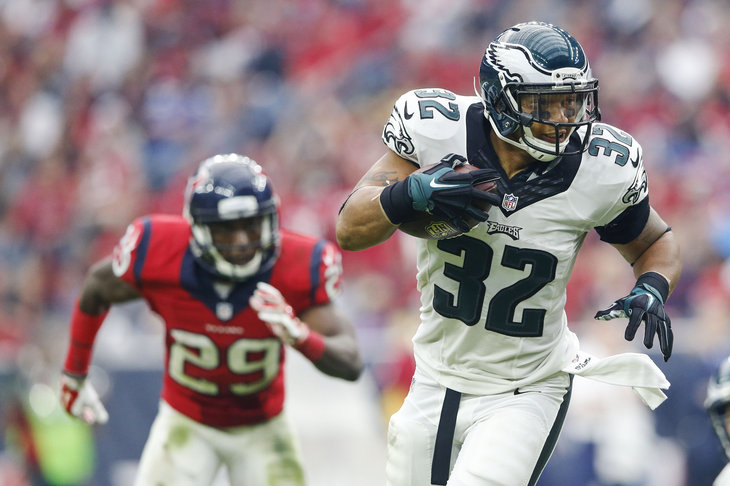
 

Eagles Winning, But Need Winning Formula

NFL: Philadelphia Eagles at Houston Texans

By GORDON GLANTZ

Gordonglantz50@gmail.com

@Managing2Edit

GORDONVILLE — Former Eagles coach Buddy Ryan had a saying that stats were for losers.

In a way, the cartoonish caricature of a coach had a point.

In football, perhaps more than any of the other major sports, there is no cause to pause in the heat of battle to play actuary. It detracts from zeroing in on the intense chess match between coaches and coordinators to get the edge in match-ups.

Even an era when playing stat-based fantasy football seems to be a court-ordered activity, doing so could be paralysis by analysis.

But the problem with Ryan’s hypothesis was that he didn’t even want to address questions about the stat sheet after the game was over, let alone when trends were forming over the marathon that is a season.

Stats are for losers?

Could be why Ryan lived up to his “you got a winner in town” self-billing, but also why Buddy Ball did not equate to any triumphs in three postseason tries.

There is a time and a place for an in-depth look at the numbers.

Merrill Reese going apoplectic because LeSean McCoy just went over 100 yards in a game very much in doubt? Not the time or place.

After the game? Sure.

At the midway point of the season, when enough water has passed under the bridge to discern between anomalies and trends? Not even a question.

First and foremost, the Eagles are 6-2 halfway in to what has been a somewhat surreal 2014 season.  Winning more than losing is the most important number (and Ryan’s point, had he been more eloquent).

It is a mark achieved despite two season’s worth of adversity, mostly in the form of injuries to vital personnel, and puts them on a pace to finish 12-4 – a good two to three games ahead of the projections of pundits.

Unless the Eagles lose twice to the Dallas Cowboys, who sit a half-game back in the NFC East at 6-3, a 12-4 mark would easily mean a repeat as division champs and a probable first-round bye.

But it’s not that simple.

As we crunch the numbers with more of a jackhammer, we realize the Eagles will need to raise the bar – on both sides of the ball – in order to maintain the current bottom-line pace.

Turning over new leaf

The most glaring statistic is their 21 turnovers – succinctly termed as “living on the edge” by current coach Chip Kelly. At minus-10 in giveaway-takeaway, they are the company of the league’s bottom feeders (tied for second-to-last with winless Oakland, one notch ahead of the one-win New York Jets).

Turning the ball over more than you get it back is a recipe laced with toxins in the NFL, and yet the Eagles have managed to eke by and defy logic.

The Eagles have compounded the issue with only four interceptions. Three came in the first three games from free safety Malcolm Jenkins, who took one to the house. The only since was when DeMeco Ryans picked off Houston’s Ryan Fitzpatrick and proceeded to fumble it right back in the midst of tearing his Achilles in what could be a career-threatening injury.

In order to break even, the Eagles will need to force 10 more turnovers than they commit in the final eight games. It would be encouraging if some came by way of interceptions from the cornerbacks. For example, slot corner Brandon Boykin had six picks a year ago. He, along with starters Cary Williams and Bradley Fletcher, has yet to commit a theft.

Unacceptable. Period.

Almost as much so as how generous the Eagles have been with the pigskin.

Eagles-Foles4Last year, they gave it away a grand total of 19 times. A big part of that was Nick Foles (left) throwing just two interceptions, against 27 touchdown passes, after he took over as starting quarterback for Michael Vick.

This year, as Foles exits for as long as six weeks with a broken collarbone, he has thrown 10 interceptions (against 13 touchdown passes) and has also fumbled the ball away three times.

In last week’s win in Houston, Mark Sanchez threw two touchdowns but also two picks. There is a collective sigh of relief that a more-than-competent quarterback takes the helm in Foles’ stead. And yet, the sobering reality is that Sanchez has thrown more interceptions (71) than touchdowns (70) in a career that saw him take the Jets (coach by Ryan’s son, Rex) to a pair of AFC title games before being run out of the Big Apple.

The Eagles, if they are to get where they want to be by season’s end need to take much better care of the football. It would be fair to say that anything more than 4-6 total turnovers in the last eight games would spell doom and push them over the “edge.”

They may have to take a bit of air out of the ball in order to protect it.

Band on the run

With the offensive line as intact as it is going to be. Evan Mathis and Jason Kelce are back from the MASH unit, but Todd Herremans in done for the season, meaning either Matt Tobin or Andrew Gardner will play right guard while the other will be the first man off the bench for all spots except center, and the Eagles are going to have to get back to basics and run the ball.

While it could be argued that Sanchez does some things better than Foles, who seemed have lost last year’s confidence as a passer and reader of defenses, he lacks Foles’ arm strength on deep throws and doesn’t have the same touch.

Kelly’s offense is practically scripted for the quarterback to have a QB rating in the ballpark of 100, particularly with the return of Kelce taking the wraps off a screen game that had been practically shelved.

That will be where Sanchez will need to go after a passer rating of 89.6 last week.

The receivers are currently on pace for big numbers. Jeremy Maclin, a leading candidate for NFL Comeback Player of the Year, is on pace for 90 catches for 1,580 yards and 16 touchdowns. Although it appears Riley Cooper isn’t the same player as last year, he is also on pace for a career-high 62 catches. Rookie Jordan Matthews is on pace for 64 catches and 6 touchdowns.

Riley CooperOther than maybe Cooper (left) upping his touchdown projection – after eight last year, he is one pace for just two – it may not even be healthy for those projected numbers to be reached in the season’s back end.

Instead, increased touches from the backs – running and in the aforementioned screen game – could lead to more consistency and cohesion and fewer struggles in the red zone.

That would mean McCoy, currently on pace for 1,244 yards, finishing with more than 1,400 yards and getting into the end zone a few more times (he has just one touchdown this season, as compared to 11 last year (9 rushing, 2 receiving).

It means Chris Polk, who scored his first touchdown on the season last week, getting increased work as a power back when defenses are worn down from trying to corral the elusive McCoy. Kelly hinted at Polk’s hidden value after the win in Houston, but that pesky heat-of-the-battle thing could cause amnesia, particularly in the red zone.

At present, at 53.2 percent (even after going 3-for-3 last week), the Eagles still rank next-to-last in the league in red zone efficiency.

And then there is the X-factor, all-purpose back Darren Sproles. Despite missing a game in the Arizona that the Eagles may have won with him, Sproles projects to 456 yards and 6 touchdowns, along with 40 catches. Maintaining those numbers, along with his conference-best punt-return average of 15.4 would be crucial in terms of moving the chains and taking pressure off of Sanchez.

Additionally, the return of Mathis and Kelce might take the reins off the tight ends a bit. Zach Ertz was expected to have a breakout year, but fellow tight end Brent Celek has played an equal number of snaps so far before of his superior blocking skills. A big second half from Ertz – currently on pace for a middling season of 50 catches for 716 yards and four touchdowns – would balance out the attack, and help in the red zone, even if it means less dink-and-dunk  grabs for the receivers.

Case for the defense

Going the other way, the Eagles have been sacking the quarterback well. Perhaps a few more putdowns from the down linemen – only Vinny Curry has more than 1.5 sacks (from another reserve, Brandon Bair), with four – would be nice, but outside linebacker Connor Barwin is on pace for 14 sacks while the platoon of Trent Cole and Brandon Graham is on pace for a combined 13 sacks and 12 forced fumbles.

It remains to be seen if the devastating loss of inside linebacker/spiritual leader DeMeco  Ryans will mean more or less blitzing from emerging star Mychal Kendricks from the inside linebacker spot. Despite missing a good chunk of the first half of the season, Kendricks has two sacks. It is not unrealistic for him to have at least a half-dozen by season’s end.

On special teams, it is hard to ask for much from rookie Cody Parkey, who has been next to perfect (15-for-16). The concern would be the colder weather and swirling winds. The Florida native kicked at Auburn in the state of Alabama. Punter Donnie Jones remains the consummate professional.

Rookie Josh Huff seems to be returner at present on kickoffs, even though Polk took one 102 yards to the house and averages 40.4 yards on 5 returns (Huff averages 22.3 on three tries).

At some point, after two blocked punts for touchdowns on successive weeks for touchdowns and returns for touchdowns by Polk and Sproles, one would have to hope that the special teams units top off their steady play with another score or two.

Meeting the statistical standards, with a difficult stretch of road laid out by the league’s schedulers, is difficult.

But not impossible.

Not if you strive to be winners.

With a winning formula.

This article originally appeared at http://www.phillyphanatics.com

Heaven A Place On Earth For GA’s Fenerty

Fenertypic

By GORDON GLANTZ

GordonGlantz50@gmail.com

@Managing2Edit

GORDONVILLE — When Jim Fenerty was first invited to tour the Fort Washington campus of Germantown Academy, the then head basketball coach at Bishop Egan was a reluctant visitor.

Though not winning much in Bucks County, he was content where he was — often pinching himself that he was a head coach, matching wits against legends, in the storied Philadelphia Catholic League – but still made what he figured was a polite courtesy call to a school whose athletic department had been impressed with his style during a holiday tournament.

But during the visit, something strange happened.

“I felt like I had died and gone to heaven,” said Fenerty, who is going to be inducted into the Montgomery County Coaches Hall of Fame two nights before Thanksgiving at Westover Country Club (For more information, call 610-279-9220 or e-mail Gordonglantz50@gmail.com or tleodora@aol.com).

“There were 10 to 12 in a class. I thought, ‘this would be a great place for my kids to go to school.’”

And in the intervening years – dating from the 1989-90 season to the present, which have netted 13 Inter-Ac League titles in 23 years for a program that was previously often the Washington Generals to the Harlem Globetrotters of the circuit — his initial instinct was correct.

Almost too correct.

In the winter of 2012, Germantown Academy was almost where he died and went to heaven.

And it was his daughter, Erin, who may have saved his life.

Fenerty was teaching his senior-elective class in constitutional law when he went numb on his right side.

“I tried to teach the class,” he said, which is held around a big round table. “We had a big game that day with Malvern Prep. I thought it was just nerves.”

But for those in the class – specifically Erin and fellow history teacher Peter McVeigh, who likes to sit on the discussions for edification purposes – something serious was going on.

“My daughter broke school rules, but if she didn’t, I might not be here,” said Fenerty. “She texted the school nurse, saying ‘something is wrong with my dad.’”

Although some of the feeling had returned enough for Fenerty to finish the class, he found the nurse, Lori Andress, waiting for him at the bottom of a set of stairs.

She took his blood pressure, which was “off the charts.”

Fenerty protested any talk of going to the emergency room, citing the big game with Malvern Prep, but was told the rival school had already been called and agreed to a postponement.

At Abington Hospital, initial suspicions of a stroke were ruled out.

“They said something was wrong with my blood,” recalled Fenerty.

As fate would have it, a specialist Dr. Peter Pickens, was in the building, teaching other doctors about rare blood disorders.

And now they had a live case on their hands.

The diagnosis was Polycythemia Vera (PV).

Fenerty’s blood was tested at 19.8.

“Pickens said that if you get to 20, you’re not going to see the next day,” said Fenerty, who then underwent four hours of treatment and spent four days in the hospital before the wonders of insurance dictated that he then be treated as an outpatient.

At the time, Fenerty’s win total sat at 499.

Obeying doctor’s orders not to coach “under any circumstances,” Fenerty sat behind the bench while loyal assistant, Mike Hannigan, guided the Patriots to a one-point win.

The following day, a Saturday, was Senior Day. Erin, the team’s scorekeeper, was among those to be honored at halftime of a non-league game against the Peddie School.

Fenerty decided to coach.

“The next day, while at church with my family, the same thing happened,” he lamented. “My wife, Mary, and kids knew, right away, what was happening.

“This time, I was in Abington for a week.”

And when he exited the hospital, he agreed to take a coaching hiatus.

“My part of the deal was that I couldn’t coach the rest of that year,” said Fenerty, who has his doctor’s blessing to keep on coaching, as long as he follows the protocol of having his blood checked every week during the season and every two weeks the rest of the year.

He is back in the saddle, back in heaven.

“(God) wasn’t ready to take me,” he said. “I feel very fortunate.”

Taking A Sad Song And Making It Better

Roseman

By GORDON GLANTZ

GordonGlantz50@gmail.com

@Managing2Edit

GORDONVILLE — Former Eagles head coach Andy Reid had a saying – on those rare occasions when he decided to speak in full sentences – that nothing happening was as good or as bad as it seemed.

Sounded a bit like fortune-cookie wisdown, which “Big Red” is surely using on the unsuspecting Kansas City media, but it made more sense that “I need to do a better job.”

Or so it seemed.

That was until the era of enlightenment that is the tenure of second-year coach Charles “Chip” Kelly. Now, you can take the baby that was one of Reid’s more semi-lucid comments and throw it out with the pickle juice.

With Kelly bending and breaking unwritten rules of pro football, we have learned that we can have both extremes.

And it can still be all good.

Look no further than the breather that is the bye week in a schedule that is about to become a lot more relentless for the next half-dozen games, which will then set the stage for December homestretch of what will surely be four telltale clashes.

There were times when the pre-bye set of six games seemed as bad as it could get for the Eagles.

The question of whether or not Nick Foles could continue to be nearly flawless at quarterback was quickly answered as a nay (a lower-rung QB rating of 82.0 after a league-best 119.2 in 2013). The team’s strength – the offensive line – was so ravaged by the types of injuries that kill seasons that even defending rushing champion LeSean McCoy looked more like Heath Sherman for whole games.

Defensively, the play in the secondary remained, to be kind, inconsistent.

With all that as the back story, one would think that Kelly’s apparent beginner’s luck from the previous season had run out.

You would think they would be off the pace.

And yet life in the Eagles Nation could not be any better.

Most residents of Expertville had the Birds – even with Foles picking up where he left off, and McCoy still running like the wind  behind an injury-free offensive line – sitting at 4-2 right now. It was reasoned that they would drop road games in Indianapolis and San Francisco and win the others, or maybe steal one of the perceived tougher games but come up short in another.

Either way, 4-2 at the break would put them on schedule to finish in the the 9-7/10-6 range seemingly required to take what we all expected to again be the lamest division in the league.

And here they sit, not only at 5-1, but less than two yards away from 6-0.

Yes, the same Dallas Cowboys the Eagles had to beat in the season finale to take the division a year ago are keeping pace, but it is too early for scoreboard watching.

The Eagles are already 2-0 in the division, having outlasted DeSean Jackson and the Washington Redskins in a shootout and spanking the New York Giants. The Birds control their own destiny, with two meetings remaining against a Cowboys team that has a recent history of implosions during the second half of seasons.

How and why did the Eagles arrive at the station a game ahead of schedule?

You could point to a lot of players who have led the way – like running back/return man Darren Sproles and left tackle Jason Peters on offense and safety Malcom Jenkins (3 interceptions, including a touchdown) and a young-and-hungry defensive line on defense – and not be wrong.

But the kudos should really go all the way to the top.

General Manager Howie Roseman and Kelly and his assistants are, plain and simple, head and shoulders above Joe Banner and Andy Reid and the likes of the assistant coaches who moved on when the new staff arrived.

Kelly, who says his team “trains” more than it practices, gave the players a few days off to self-scout the roster and evaluate.

It would seem the best self-scouting took place in the offseason. While fandom pined for big-time safeties, the Eagles went right to Group B and grabbed Jenkins, who is doing all he can without much around him – save nickel back Brandon Boykin.

The other signees were not starters, but top-notch special teamers like Chris Maragos and Bryan Braman. For the price of a fifth-rounder, Sproles was acquired from New Orleans and has been the Eagles’ most explosive player thus far, as a mercurial change-of-pace back (6.6 yards per carry, 3 TDs) and punt returner (15.6 yards per return, TD).

Before the season, Roseman sent a sure-to-be-cut running back named David Fluellen to the Colts for the rookie kicker Cody Parkey who, through six games, is on a Pro Bowl track. He has made 12 of 13 field goals, including a game-winner against the team that traded him away, and has been a touchback machine on kickoffs.

The special teams units are probably at their best since maybe the Dick Vermeil era, and credit has to go to the unit’s coordinator, Dave Fipp, for making the pieces fit. Those pieces include the likes of undrafted rookie tight end Trey Burton, handyman Brad Smith and many others.

In addition to Sproles’ punt return for a touchdown, Chris Polk returned a kickoff for a score and two blocked punts have been turned into touchdowns.

And then you have to give kudos to the coaching staff. Behind Fipp, you have offensive line coach Jeff Stoutland.

The offensive line began the season without right tackle Lane Johnson, who was suspended for the four games. His backup, Alan Barbre, was lost for the season. All-Pro left guard Evan Mathis went on the shelf for eight weeks. He was followed to the M.A.S.H. unit by high-end center Jason Kelce.

Matt Tobin, who was the best offensive lineman in the preseason, was injured in the final preseason game wasn’t able to immediately help in Mathis’ spot until the last two weeks. David Molk, who was out of football last year, has held down the fort at center.  Games were won with the likes of Dennis Kelly and Andrew Gardner starting.

While the defensive line – with starters Fletcher Cox, Cedric Thornton and Bennie Logan backed up by designated pass rusher Vinnie Curry (4 sacks), role player Brandon Bair and rookie Beau Allen – has thrived under Jerry Azzinaro, defensive coordinator Billy Davis, and inside linebackers coach Rick Minter, have made it work with Mychal Kendricks out of the lineup since the second game of the season.

The much-maligned Casey Matthews had fallen off the radar quicker than a Malaysian airliner, and may not have even made the team if Travis Long were not injured, has played his best football as the primary replacement for Kendricks, recording 17 tackles (10 solo) along with a half-sack and a fumble recovery. Emmanuel Acho , who began the season on the practice squad, and work-in-progress first-round Marcus Smith II have been pressed into service, particularly when DeMeco Ryans got dinged up as well.

Meanwhile, Bill McGovern is getting the most of out of the outside linebackers. Connor Barwin (6 sacks, 2 passes defensed, forced fumble) is playing at a Pro Bowl level and the combination of Trent Cole (3.5 sacks, 3 forced fumbles) and Brandon Graham (2 sacks, 3 forced fumbles) are solid on the other side.

All a coincidence, or has the old axiom about it never being as good or bad as it looks given way to something more indicative of the regime that took over a program lost at sea and turned around?

Is it truer that even when it looks as if it couldn’t get any worse – vital players dropping like flies to injury, the star running back average two inches per carry until a breakout game before the break, the quarterback proving to be fallible – it couldn’t be any better?

So far, as we arrive at the Bye Week Station ahead of schedule, the latter explanation would seem to be the case.

This column first appeared at http://www.phillyphanatics.com.

Taking Flight, The Sequel

Mathis

By GORDON GLANTZ

Gordonglantz50@gmail.com

@Managing2Edit

GORDONVILLE — And, now, for the encore.

Looking back on last season – the first for Chip Kelly after what seemed like an eternity of peaks, which included being turned away at the gates of the Promised Land, and valleys of falling off the map under Andy Reid – the new coach’s papers were stamped with a free pass.

Coming from the collegiate ranks, with as much NFL experience as a beer vendor going up and down the aisles plying dime-store experts with libation, he was bringing in a system and approach from Oregon that many doubted would work –at least without serious modification – in the big time.

The general vibe was that Kelly would need to find his players to fit in and fall in line, which would likely mean roster turnover – before, during and after a season of trial by fire and error.

But, as long as he spoke in full sentences and showed more emotion than Mr. Spock during press conferences following agonizing losses, the restless Eagles Nation was going to go easy.

Even another 4-12 campaign would have felt like a breath of fresh air.

Anything above and beyond that was a true fall romance novel for those aching to fall back in love with their football team.

In the Nick of Time

After stunning the Washington Redskins to open the season, the Eagles fell to 1-3 after the first four games and were 3-5 at the midway point.

Although Michael Vick went into the season at the starting quarterback, the all-too-familiar injury bug led to Nick Foles moving into the limelight and becoming one of the league’s surprising story lines as a second-year quarterback.

Foles threw 27 touchdown passes (29, counting the postseason) against two interceptions and led the entire league in passer rating (119.2). He had the luxury of handing the ball off to LeSean McCoy, who led the league in rushing (1,607 yards) and yards from scrimmage (2,146), and throwing to reborn mercurial wideout DeSean Jackson (career-best 82 catches for 1,332 yards and nine TDs).

Up front, Foles benefitted from an offensive line that avoided injuries and asserted its will on opponents. Left tackle Jason Peters and left guard Evan Mathis were All-Pros. Center Jason Kelce seemed unscathed from the knee injury that shelved him in 2012. Veteran Todd Herremans slowly adjusted to right guard playing alongside rookie Lane Johnson, who had the best year of the three rookie tackles taken high in the draft.

Riley CooperIn the process of posting an 8-2 regular-season mark (as opposed to 2-4 for Vick), Foles developed instant chemistry with receiver Riley Cooper (left), who was kept on the team after a controversial off-field incident involving Copper using a racial slur was caught on video.

Cooper, who had a grand total of 46 catches and five touchdowns his first three years in the league, overcame a slow start to collect 48 catches for eight touchdowns. He was among the league leaders in yards per reception (17.8) and, along with hauling in some highlight-reel catches, pulled in a five-year deal worth a reported $25 million to stay put.

Foles also developed a feel for rookie tight end Zach Ertz as the season progressed. Ertz is being looked upon to have a breakout year in 2014.

The defense, initially a sieve that couldn’t get off the field with much success on third down, improved from awful to acceptable as the season wore on.

After taking the division with a 10-6 mark, a crown even more fulfilling because it was captured in Dallas on the last night of the season with the division on the line, the same team that no one expected much from was hosting New Orleans in the first round of the playoffs. After Foles rallied the Eagles from behind, the Eagles fell, 26-24, on a last-second field goal.
Greater Expectations
A season later – with a vital loss from the core and two key additions, ironically from New Orleans – the expectations couldn’t be any different.

Foles is expected to pick up where he left off at the controls of an attack that, because of its dizzying pace, appears more complex than it is.

The defense is expected to improve from the confidence it gained the second half of last year, but more from the presumption that players like defensive end Fletcher Cox and inside linebacker Mychal Kendricks will evolve into stars while veterans such as outside linebacker Trent Cole and inside DeMeco Ryans don’t decline.

Last year, there may have been some modicum of beginner’s luck – or it was case of karma being overdue.

Aside from Vick going down – a blessing in disguise, as it paved the way for Foles – the Eagles were not beset with an unusual amount of injuries. Yes, accomplished receiver Jeremy Maclin was lost for the season with a knee injury, but that torn ligament was sustained early in training camp, with plenty of time to circle the wagons.

And the Eagles seemed to catch some fortuitous breaks. Opponents came into games battered and bruised, and the bounces – the fumbles, the ball dying near the goal line on punts – seemed to go their way.

While you could argue that you make or break your fate by making your own luck, there is no automatic reset button from year to year.

But don’t tell that to the average diehard.

Don’t dare say that this remains a young team – one with only nine players, including punter Donnie Jones and long snapper Jon Dorenbos, above the age of 30 – even though there are 35 players (including nine rookies) with three, or fewer, years of NFL experience.

And even though Kelly is a second-year coach that the league has had a full offseason to figure out, the expectation level is now as high as it had been in the best of the Reid era.

There will be no free passes this time around.

Ramblin’ Gamblin’ Man

At the barest minimum, failure of another repeat performance with what looks – on paper – to be a more troublesome schedule, will give life to second-guessing.

This will come even though the Eagles remain, on many levels, a work in progress.

This is still a franchise with a rabid following that is 54 years removed from a championship.

The dice has been rolled, and a vibe of self-love is starting come off of Kelly. It is still endearing, but duly noted by wolves dressed in the midnight green clothing.

The Eagles restrained themselves from chasing after prime-time free-agent safeties, including some with the Oregon connection, to fill the glaring weakness present since Brian Dawkins left after the 2008 season (an eternity in football years). Instead, they sold Malcolm Jenkins of the Saints as the ideal fit to settle down a secondary where the corners were often left without timely help downfield.

While the Eagles also brought in vintage utility back Darren Sproles from the Saints for the price of a fifth-round pick, it seemed to pale in comparison to letting Jackson walk – for nothing – to the rival Redskins for reasons that have yet to be sufficiently explained/revealed.
Any dreams of a three-head receiver tandem of Jackson, Cooper and a fully recovered Maclin were dashed.

Come the draft, Kelly & Co. continued using “My Way” as its theme song. Instead of filling the void of Jackson with someone like receiver Marqise Lee in the first round and coming back with Jordan Matthews in the second, the Eagles rolled the dice with outside linebacker Marcus Smith in the first round (but still took Matthews, the team’s prized rookie, in the second).

The ripple effect of tabbing a player who cannot be cut but can’t help out this year, put them into a box when it came to shaping a final roster that will feature one more gamble – an undrafted rookie kicker, Cody Parkey, supplanting veteran Alex Henery on the basis of one good week of practice and a strong showing in one preseason game.

They also raised eyebrows by keeping only two healthy running backs – the potential lethal tandem of McCoy and Sproles – on the roster, as third back Chris Polk nurses a troublesome hamstring. Two backs that stood out in the preseason, Matthew Tucker and Henry Josey, were both jettisoned. Tucker was signed to the practice squad, while Josey joined the practice squad of the Jacksonville Jaguars.

Difficult Road Ahead

The Eagles open at home with those Jaguars, who are coached by the same Gus Bradley who would have been hired here if Kelly hadn’t reversed his field and accepted the Eagles’ overtures.

Jacksonville started last season 0-8, won four of its next five and then ended the season with three straight losses.

Playing at the Linc, with stop-gap quarterback Chad Henne under center, the Jaguars shouldn’t be much of a test. Then again, the first week of the season usually features plenty of upsets. The Eagles are living proof. A year ago, in Washington, they were a nonentity playing a playoff team with high expectations.

To put it more succinctly, the Eagles need to soar out of the gate because the first six games – heading into the bye week – include a Monday night challenge at Indianapolis and, after a home meeting with the mysterious Redskins and Jackson, a trip to the left coast to face San Francisco. The first six games conclude with visits from a Rams team that lost starting quarterback Sam Bradford for the season but features a defense that could keep the Foles-led Birds in check, and then the New York Giants.

Anything less than 4-2 after the first six games would be a bad omen.

Following a bye week, during which is realistic to expect suspended right tackle Johnson to resume bookending that top-shelf offensive line, comes a difficult six-game stretch that begins on the road at Arizona and then at Houston.

They return home to face Cam Newton and his Carolina Panthers on a Monday night, and then travel to Green Bay on a short week before coming home to play Tennessee and then playing at Dallas on even shorter week in a Thanksgiving Day tilt.

Realistically, it may be hard to find three wins in that stretch, making the first half-dozen games all the more important.

The last month of the season? Home on a longer rest with Seattle, the defending Super Bowl champ, and then Dallas again. The season ends on the road with two more divisional foes in the Redskins and Giants.

Two of four in December, again presuming at least four wins in the first six, would mean a 9-7 mark that should give them at least a one-game edge on any team in what projects to be another down year for the NFC East.

That would mean a home game in the playoffs, assuring an encore performance.

But the “ifs” – some self-created by calculated risk – remain as prevalent as cheez whiz dripping from a cheesesteak.

This article originally appeared at http://www.phillyphanatics.com

Cuts? It’s Complicated

Henry-Josey-Darren-Sproles-937x538

By GORDON GLANTZ

Gordonglantz50@gmail.com

@Managing2Edit

GORDONVILLE — For fans, training camp is a chance to attend open practices and take selfies on their cells phones with their heroes practicing on the background.

It is a chance to see football again in a town that was forced to become fixated on a Little League team because the Major League Baseball team’s only form of consistency was its brutal play.

But the preseason, for coaches, is a little more complicated.

The decisions made during scrimmages in the heat and disjointed preseason games could directly correlate to cold days in November when the goal is to have the right pieces on the chess board to match wits with opposing coaches.

It is a three-pronged process, and a balancing act.

The first is the development of the cohesiveness of the starters, which seemed slow to come around for second-year Eagles coach Chip Kelly prior to Thursday night’s 31-21 calling-card victory over the Pittsburgh Steelers. The Eagles, who saw their second string work against the Steelers’ starters for a quarter and the deep reserves against the Steelers’ second string, built a 17-0 lead by halftime and a 31-7 lead by the end of the third quarter.

The second part of the process involves the back end of the roster, trying to answer who is going to beat out whom – and what positions to go long at – for the final 53-man roster. (And which 10 players are worth keeping around for the practice squad, a unit Kelly takes seriously for reasons of development.)

Lastly, there is the middle of the roster, where coaches evaluate which players are best suited to key situational roles.

While the starting units have likely allayed any major fears for Kelly and Co., sorting out the depth chart and the final cuts remain at issue with the sands running through the hourglass.

Although some moves had already been made – linebacker Jason Phillips was cut and his spot was filled by running back/returner Kenjon Barner, acquired via trade, while running back David Fluellen was swapped to the Indianapolis Colts for kicker Cody Parkey – the first official cuts need to be made by 4 p.m. Tuesday.

While it is seemingly simply to take a sharpie and cross off no-names from your roster, the process can often become more complicated in the chambers of the coaching staff.

Draft picks, for better or worse, get some modicum of preferential treatment. Ditto for free agent signees and veterans who have spent more time during camp in the training room than on the practice field.

Versatility also has to be examined.

Here’s an example of the banter that might be going down: If this guy and that guy go down, who can also slide to another position to get us through a game?

It is not uncommon to issue walking papers to a player good enough to make a team somewhere in the first round of cuts as a humanitarian gesture to improve that player’s chance of catching on with another team, and, at the same time, doing a favor to another player with less of chance by letting the league – or other leagues (Canadian, Arena, etc.) – see him stick around until his name turns up on the final list of cuts.

Cornerback Curtis Marsh, who was singed last week in New England and played so-so against the Steelers, would be a likely candidate for a late sendoff.

Also, don’t be stunned if a player or two cut Tuesday – say fourth quarterback G.J. Kinne or defensive end/war hero Alejandro Villanueva – resurfaces on the practice squad while those cut at the end of the process do not.

This is done because warm bodies at other positions, like offensive line and linebacker, might be needed just to get through practice.

That said, we can logically deduce the following:

  • Kicker: “Murder Leg,” we hardly knew ye. Kicker Cary Spear, after doing decently in OTAs after being signed post-draft out of Vanderbilt, struggled in camp to the extent he didn’t even get to boot an extra point in live game action as a keepsake of his visit. Alex Henery, who purportedly has been so accurate in practice that it was embarrassing to watch Spear, continues missing kicks in games. Parkey, who was more highly touted coming out of Auburn than Spear, will get a long and serious look. He booted one point-after kick Thursday that, for what it’s worth, split the uprights.
  • Cornerback Nolan Carroll, signed away from Miami as a free agent, is going to play a key role in the defense.  He introduced himself to the faithful with an athletic interception Thursday, in what was his first action of the preseason, but he is slated to be a pseudo linebacker on passing downs while Brandon Boykin mans the slot and Cary Williams and Bradley Fletcher take care of the outside. Because he can also play in the slot or outside, this plan might allow for one less linebacker to be kept.
  • Running back: It is going to be real interesting what the Eagles do at running back, especially after acquiring Barner, the former first-team All-American under Kelly at Oregon. Matthew Tucker and undrafted rookie Henry Josey have had excellent preseasons. Tucker scored twice against the Steelers, giving him four preseason rushing touchdowns, and gained 46 yards on 10 carries. Josey had a long touchdown run negated by a holding penalty on Will Murphy that was hard to detect in super slow-motion. He still led the team in rushing, for the second straight week, with 48 yards on only four carries. Chris Polk, automatically presumed to be the third back behind McCoy and Sproles, has not played a down yet because of nagging injuries. With McCoy nursing his thumb, and no real reason to expose Sproles next Thursday against the Jets, look for the battle to continue. For sure, the Eagles will keep four backs on the active roster. Josey could be placed on the practice squad, but could be targeted by teams thin at the position. If Barner can distinguish himself as a returner, and if Turner can continue to run hard as a power runner, might Polk be in jeopardy of being cut or placed on injured reserve?
  • Receiver: Like running back, it will be interesting to see what happens at wide receiver. With the return jobs still in question, the two correlate. If Barner stays, for example, one less receiver – i.e. Damaris Johnson or Brad Smith, both with some return-game chops – could be kept. All Kelly would say, when asked, was that five receivers are needed to suit up on game day. Three spots are filled by Jeremy Maclin, Riley Cooper and rookie Jordan Matthews. There is no way rookie Josh Huff is jettisoned, but his rather severe shoulder injury, suffered after a foolhardy attempt to return a kickoff from deep in the end zone, is likely to land him on IR to start the season.  B.J. Cunningham, a practice squad player dating back to the Andy Reid era, has seemingly played his way ahead of likely practice squad assignee Ifeanyi Momah and into the picture with the likes of Smith, Johnson, Jeff Maehl, oft-injured Arrelious Benn (left Thursday’s game with a “head injury” and has concussions on his long medical chart). These are the candidates – along with me, you and a dog named Boo – for the final receiver spots. It’s not really a plethora of talent as much as it is a bunch of guys with similar, albeit marginal, skill sets.
  • Tight end: A surprise name in the cuts, unless he’s traded, could be tight end James Casey. He makes a decent salary after being signed as a free agent last year and then being reduced to a small role in the offense after the drafting of budding star Zach Ertz. While he has contributed on special teams, starting the season with two tight ends – Celek and Ertz – would allow room for kick-coverage mercenary Bryan Braman, who is not really an option to play at linebacker, to stick as a special teams specialist. And the encouraging play of rookie free agent Trey Burton has likely earned him a spot on the practice squad, meaning a third tight end is available if Celek or Ertz were to be sidelined for an extended period of time.
  • Defensive line: While the offensive line looks settled – with guard/tackles Matt Tobin and Dennis Kelly, along with center David Molk, playing well enough to secure backup jobs (along with tackle Andrew Gardner, at least until Lane Johnson returns from suspension after four games) – the defensive line bears watching.  Behind starters Fletcher Cox, Bennie Logan and Cedric Thornton, there are as many as six ascending talents vying for three or four jobs. Vinny Curry, who recorded a sack against the Steelers, remains a man possessed. Rookie Beau Allen, though drafted in the seventh round, is more of a prototypical nose guard than Logan and has played his way onto the active roster. Brandon Bair, after a year of seasoning on the practice squad last year, started strong and keeps getting better. Another former Oregon Duck, he has height (6-foot-7) and a nose for the ball, traits that can’t be taught. If those six make it, what becomes of second-year man Damion Square, a blue-collar type who made the squad last year as an undrafted rookie from Alabama? Last year’s seventh round Joe Kruger, who is also 6-7 and has made some plays in the preseason, might be a practice squad stash – but one that other teams would have on their radar. And they have likely seen enough positives from fifth-round pick Taylor Hart not to cast him aside easily. Villanueva, away from football for several years, is also trying to learn a new position (at 6-9, he mostly played receiver at Army before going into active duty). All in all, he has held his own and shown hustle. He is worth the practice squad, but the question would be if he would ever crack this young lineup anyway. Ditto for rookie free agent Francis Mays, who is also 6-9.
  • Linebacker: Linebacker and secondary come down to numbers and how to get to 53 with what’s left. Behind inside linebackers DeMeco Ryans and Mychal Kendricks, perhaps only one backup is needed. With Phillips gone, it leaves three guys – Casey Matthews, Najee Goode and Emmanuel Acho – in the mix. All have NFL experience. Matthews, with the Oregon advantage, is also from the famous football-playing Matthews family, and pedigree is weighed heavily in the NFL. To that end, Acho is the brother of Arizona’s Sam Acho. Goode was trusted to start last year and seems to be the most athletic, but the fact is that – like backup receiver – none seem like burgeoning talents. The Eagles have worked Travis Long, a head-hunting outside linebacker, on the inside recently. On the outside, behind starters Connor Barwin and Trent Cole, there is also a logjam. They are locked into work-in-progress first-rounder Marcus Smith, and Brandon Graham has played too well to ignore.  He remains the most trusted to start in the event of injury to Barwin or Cole. Then there is case of Braman, who looks lost in the defense but is needed on special teams. And what of Jake Knott, who is suspend for the first games? Unlike Lane Johnson, he has barely practiced because of injury. Cut him now with an injury settlement or wait until four weeks into the season and survey the landscape then?
  • Secondary: The biggest issue in the secondary is safety, as the five corners – Williams, Fletcher, Boykin, Carroll and rookie Jaylen Watkins – are set in stone (sorry Curtis Marsh fans).  Realistically, only four safeties are needed but five names are in the mix. Neither Nate Allen nor Earl Wolff has claimed the starting job alongside Malcolm Jenkins. From the naked eye, it would seem that Wolff is more active and willing to stick his nose into the fray while working with the second team than Allen is with the first. Hard to say what the coaches see, but they seem to remain supporters of Allen. Chris Maragos is similar to Braman, in that he was signed to primarily help on special teams. However, he is a viable option to play some safety in a pinch. The Eagles also have fifth-round pick Ed Reynolds, who got a late start because he missed OTAs while finishing up his schooling at Stanford. Given that obstacle, he has shown up reasonably well, albeit in garbage time, of preseason games.

PREDICTION: Expect these 15 names on the cut list by Tuesday (*practice squad possibility): Spear (K), Murphy (WR) *Kinne (QB),  Blake Annen (TE), Kadron Boone (WR), Roc Carmichael (CB), Josh Andrews (OG), Emil Igwenagu (TE), Josh Kaddu (LB), *Davon Morgan (S), *Quron Pratt (WR), Julian Vandervelde (C, injury settlement), Karim Barton (OL), Keelan Johnson (S) and *Wade Keliikipi (NG)

This analysis originally appeared at http://www.phillyphanatics.com
From A Whisper To A Scream

Foles

By GORDON GLANTZ

Gordonglantz50@gmail.com

@Managing2Edit

GORDONVILLE — Can we be real, for just a second?

Please?

I know Eagles Nation has plenty of well-meaning, albeit impetuous, dues-paying members who could play Jimmy Whispers in a remake of “A Bronx Tale.”

And what they would be whispering after the much-anticipated first preseason game – a 34-28 loss to the Chicago Bears, who rattled off 17 straight points to erase an 11-point deficit – is that Mark Sanchez out-played incumbent Nick Foles and maybe should start.

That was in the dark of night, an in-the-moment reaction.

In the light of day, such whispers should be made audible enough that we can all share a laugh.

For now, we will chalk up Nick Foles’ pair of interceptions against the Bears – on two poorly thrown balls that may or may not have been the result of less-than-familiar receivers running the wrong route – to a fluke outing.

Before the first pick, Foles stepped up into the pocket and threw a perfect strike to Brent Celek. That all-important first down was under their belts. They could set up shop at midfield and run another play without giving the Bears a chance to get set.

But, wait, this is not only preseason, but the first game of preseason.

That means it is the NFL’s version of Flag Day.

Evan Mathis, the All-Pro guard, was called for holding.

On third-and-a-mile, Foles threw a pass to a wide-open Bear.

Consider that favorite target Riley Cooper was on the sidelines in a walking boot and that the other wideout, Jeremy Maclin, was in his first game action in a more than a year after a serious knee injury.

Ifeanyi Momah started in place of Cooper. Brad Smith started in the slot position vacated by Jason Avant and yet to be claimed by the heir apparent, rookie second-round pick Jordan Matthews (four drops and little run-after-the-catch flash in his first action off the practice field, where he made a name for himself running every 3-yard gain to the end zone with no one chasing him).

I am as big of a Foles supporter there is, and I think with good cause. He is not my next-door neighbor or a relative, so there is no personal agenda other than I believe the Eagles can hitch themselves to his humble wagon and go places.

At some level, Foles may be a system quarterback who is in the right place at the right time, but that is not a bad thing.

The same could be said of Joe Montana, and it worked out OK for him with Bill Walsh in San Francisco.

So, yeah, let’s simmer down.

Those two interceptions the other night can be filed under fluke.

To be fair, his two interceptions all of last season – including the playoffs – were a fluke as well.

The long-term reality with Foles is that he will always be a quarterback who takes care of the ball pretty well. But things happen in this league. Balls get tipped at the line of scrimmage and land in enemy hands. Receivers make bad breaks.

And, yes, quarterbacks throw ill-advised passes that they want to have back.

The reality is that Chip Kelly’s offense, for all its perceived gadgetry, is fairly basic – and conservative – at its core. They run the ball a lot, and throw safe passes, while waiting for the wind-sucking defense to leave its guard down long enough for the big play to get mixed in.

Foles, despite not being Steve Young, runs it well.

The touchdown-to-interception ratio may change to something more mortal this season, but not his knowledge of the playbook.

So the whispers that Sanchez, the New York Jets refugee seeking to redeem a once-promising career, might be pushing Foles for the No. 1 job – instead of the more reasonable observation that he is clearly a more viable No.2 option over fellow USC alum Matt Barkley, need to be met with a scream.

A scream to just knock it off and be real.

The column initially appeared at http://www.phillyphanatics.com
GPS Needed To Reach Route 53

Burton

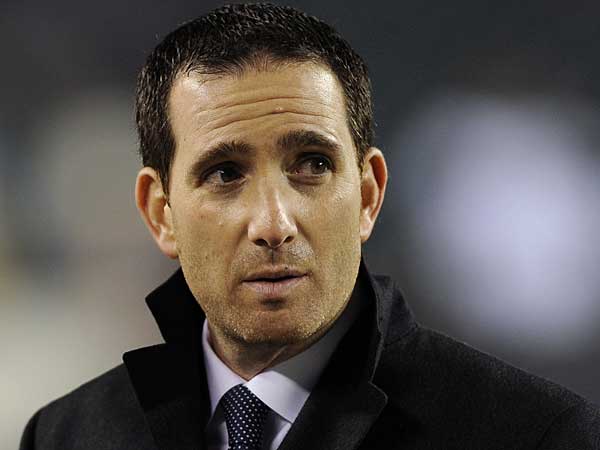
By GORDON GLANTZ

Gordonglantz50@gmail.com

@Managing2Edit

GORDONVILLE — There is a magic number, representing a harsh reality, hanging in the air at Eagles’ training camp.

Out of 90 hopefuls, only 53 can make the active roster.

That can be a lot or a little, depending on how one looks at it. The reality is that the bare minimum comes in at a much lower head count.

On offense – with three quarterbacks, three running backs, two tight ends, four receivers and eight offensive linemen – you have 19 spots.

Going the other way, in a 3-4 base defense – with six defensive linemen, six linebackers, four corners and three safeties – you have  19 more.

Add in three specialists – kicker, punter and long snapper – the total is 41.

The other 12 spots can be filled as coach Chip Kelly and his coaching staff, perhaps with input from general manager Howie Roseman and others in the front office mindful of contracts and salary-cap hits, sees fit.

The option is there to go heavy at certain positions – but not all – creating the need for versatility (i.e. offensive and defensive linemen who can multiple spots).

In some cases, it will come down to need, whether that relates to the system or the health of locked-in starters.

But, in most scenarios, it is about the dozen out of the remaining 59 players stepping up and becoming difficult to axe.

The process began with OTAs, continued with pads on in training camp and shifts into high gear with preseason games (the first test is Friday in Chicago against the Bears).

For those of you who bemoan preseason games, saying there is nothing to watch and that you just hope the key players emerge unscathed, you are probably not looking hard enough.

Barring injuries, let’s take an early positional snapshot of the roster and the quest to get to 53:

OFFENSE

Quarterback (3): The locks are starter Nick Foles, likely No. 2 Mark Sanchez and second-year man Matt Barkley.

That would leave G.J. Kinne on the outside looking in, but the Tulsa product is a well-liked team guy and could be kept on the practice squad with an eye toward being the future No. 3 a year from now when Sanchez moves on and Barkley moves up as Foles’ backup. At the least, Kinne will get enough snaps early in the preseason to audition for other teams not as well-stocked.

Running Back (3 or 4): The locks are reigning rushing champion LeSean McCoy, utility back Darren Sproles and Chris Polk.

Kelly would be rolling the dice by sticking with three running backs, but it could be done. He proclaimed that Matthew Tucker, who propelled himself into a paycheck last year with a strong camp as an undrafted rookie out of TCU, is reportedly entrenched as the No. 4. They have two undrafted backs of note in Henry Josey (Missouri) and David Fluellen (Toledo). Josey, who had a horrific knee injury in college and returned to have a solid year, could probably be slipped onto IR while Fluellen could slide to the practice squad. That would keep continuity for next year’s camp, but they would have to show enough to earn the investment. Either that, or one or the other could wrest the job from Tucker, assuming Kelly decides to keep four running backs.

Wide Receiver (5 or 6): This one bears watching, even with four spots nailed down by starters Riley Cooper (left) and Jeremy Maclin and rookies Jordan Matthews (second round) and Josh Huff (third). Matthews has been the talk of camp, and Huff played for Kelly at Oregon and was tabbed a round or two higher in the draft because of that gateway.

With Sproles in the mix, and second-year tight end Zach Ertz almost like a glorified slot receiver, there is really not a compelling need to go beyond five pairs of hands.

For those who dig redemption stories of redemption, there is Arrelious Benn. He’s 25 and former second-round pick of Tampa Bay, but has missed 27 games – including all of last year – with a laundry list of serious injuries (two knee surgeries, concussion, etc).

Much will depend on who lands the wide-open return job(s). Brad Smith and Damaris Johnson are both experienced NFL return men, but Kelly has already stated that both Matthews and Huff will get looks. Part of the decision may depend on Sproles, who was once a feared return man. Sproles broke the Eagles’ back with kick return in the playoffs last year, but his overall numbers in New Orleans last year pretty much mirror the pedestrian per-return stats posted by Johnson (although his decision-making is better).

Smith, a college quarterback and NFL veteran signed late last season, brings versatility that includes a locker room presence and special teams prowess. It would seem that he, or Oregon product Jeff Maehl, would be who Kelly would secretly like to see step out and shine. Maehl, along with Cooper, has spent training camp on the sidelines in a walking boot. That has opened the door for 6-7 project Ifeanyi Momah, and former Miami draft pick B.J. Cunningham, whose off-and-on fringe affiliation with the Eagles dates back to the prior coaching staff, to recently taking first-team reps in Cooper’s stead.

Tight End (2 or 3): Brent Celek entered the league as a fifth-round pick who had receiving skills but couldn’t block his own shadow. To his credit, he is now more of a blocker than receiver, with the aforementioned Ertz expected to give opposing defenses match-up fits.

Is anyone else needed? James Casey had just three catches last year, but did lead the team in solo special teams tackles. He is also the closest thing the Eagles have to a fullback and, like Smith, is a quality veteran on a young team. A player to watch is Trey Burton, an undrafted and versatile rookie out of Florida. While he may not make the roster, Burton could intrigue the staff enough to warrant a year on the practice squad to add bulk and take Casey’s place a year from now.

Offensive Line (9 or 10): This sound unit was thrown into disarray by the four-game suspension levied against second-year right tackle Lane Johnson for using a banned substance. For the time being, Alan Barbre has been plugged in at right tackle and the rest of the line – the Pro-Bowl left side of tackle Jason Peters and guard Evan Mathis, center Jason Kelce and right guard Todd Herremans – remains intact.

Johnson, who can stay through the preseason but can’t return to the team until after the fourth game and won’t count against the 53-man roster until then, has been working with the second unit. He likely won’t start until after the bye week, which is after six games.

Matters are further complicated by backup center Julian Vandervelde’s lingering back issues, which could open the door for journeyman David Molk, who has drawn some praise from the coaches. Second-year tackle Matt Tobin, who made the roster last summer as an undrafted rookie, is likely safe.

Others in the mix are Dennis Kelly, who started nine games at tackle as a rookie two years ago but was not activated at all last season, and journeyman Andrew Gardner. Kelly has been working at guard, next to Johnson, which may or not help his stock. It depends whether the coaches can envision the tough-but-slow Kelly as a viable option at tackle in this break-neck system or if his only shot is as a guard.

Some undrafted rookies – namely tackle Kevin Graf out of USC – have made early impressions as well, meaning that the attempts to make 6-8 and 340-pound Mike Bamiro into an NFL player could be chalked up to a well-meaning experiment gone awry.

DEFENSE

Defensive Line (6, 7 or 8): This is where the ripple effect of other positions, such as receiver and offensive line, can be felt. Defensive ends Fletcher Cox and Cedric Thornton, along with returning nose tackle Bennie Logan, are locks.

Word is that former second-round pick Vinny Curry, despite being more of a natural 4-3 end, has added bulk to his frame and is ready to be more than just an option on passing downs. Fifth-round pick Taylor Hart, another Oregon product who got his Duck on for defensive line coach Jerry Azzinaro, would have to play himself out of job as a reserve defensive end (with some capability to also line up over the nose on obvious passing downs). Aside from Matthews on the offensive side of the ball, rookie nose tackle Beau Allen – a seventh-round pick from Wisconsin – has been earning the most positive headlines among the rookies at training camp.

The above group – the three returning starters, two rookies and Curry – provides six young and ascending linemen. How many jobs are left? There is Damion Square, who made it as an undrafted rookie last year out of Alabama. Square found himself as the backup nose tackle, despite being undersized (south of 300 pounds, which is virtually unheard of for the position). He has NFL ability but might be better suited as a backup tackle in a 4-3 scheme.

This would seem like a position they could go short on, staying at six, unless a player on the bubble steps up. In this context, keep an eye out for second-year ends Joe Kruger and Brandon Bair. Kruger was a seventh-round pick last year but spend the season on IR. Bair – from, you got it, Oregon – is sort of like the Kinne of the defense. Nobody is more in his corner than the coaches.

Where does that leave Alejandro Villanueva, the war hero looking for a Vince Papale-like storyline? They owe him a spot on the practice squad, if he wants it. Problem is, with so many young linemen in the mix, there is no guarantee of a job opening in the future.

Linebacker (8 or 9): Locked in are the starters, Connor Barwin and Trent Cole (left) on the outside and the heart of the defense on the inside, with spiritual leader DeMeco Ryans and emerging star Mychal Kendricks.

The backup jobs are where it gets interesting. First-rounder Marcus Smith, though a project, makes it five linebackers. With the need to improve kick coverage, Bryan Braman has a job all but secured. The question would be if they are comfortable with either Smith or Braman being the next up if there were an injury. If not them, then who? Former first-round pick Brandon Graham, who is a 4-3 end trapped in a system forcing him to be an OLB? Untested but intriguing second-year man Travis Long?  Logic would dictate Long or Graham make the team, but not both. Graham has more experience, but Long makes less money and is probably a more willing special teamer.

Assuming they end up keeping five outside linebackers – with neither Smith nor Braman really options to do more than finish up a game out of necessity – what do they do at backup inside linebacker? Kelly singled that out as a spot of need heading into the draft. They came out the other end without anyone new.

Of the holdovers, it would seem Najee Goode, who was picked up on waivers last season from Tampa Bay and actually started a game, has the early edge over Casey Matthews, Emmanuel Acho and Jason Phillips. All but Acho can play some outside linebacker, if needed, and are above-average special teams players.

Don’t be surprised if a veteran cut loose from another team later in the preseason is added to the mix here, making any and all of the middling group of inside linebacker candidates expendable.

Secondary (8, 9, or 10): Ideally, with the league the way it is now, you can never have too many defensive backs. Five corners and five safeties would be a defensive coordinator’s dream. But, there is reality to consider. Ten could be a luxury, and probably will be with this group.

The corners are set with Cary Williams, Bradley Fletcher and Nolan Carroll on the outside and Brandon Boykin manning the nickel. Also worth watching is how much of a chance Carroll and/or Boykin get at return jobs, which could affect how many receivers stick.

Curtis Marsh is finally “getting it,” and having a good camp, but that might only be enough to land him a job elsewhere. Fourth-round pick Jaylen Watkins, provides the versatility of playing corner – outside and slot – and safety. Watkins’ versatility, combined with his special teams prowess, might take a job away from a fifth pure safety.

Behind Malcolm Jenkins, the gem of the free agent class, there is the ongoing battle between Earl Wolff and Nate Allen to start beside him. Behind them are fifth-round pick Ed Reynolds, who was heralded a steal but has reportedly taken some lumps in camp, and special-teams ace Chris Maragos. Add in rookie free agent Daytowion Lowe and second-year man Keelan Johnson, who is facing some legal issues back in Arizona, and this position is one of the more hotly contested in training camp.

It would seem that if Wolff beats Allen cleanly for the starting job, Allen’s lack of special teams experience could put him on the unemployment line, but that remains a big “if,” given Wolff’s inability to stay healthy.

SPECIAL TEAMS

Specialists (3): Easy. Alex Henery is likely to remain the kicker. Punter Donnie Jones and snapper Jon Dorenbos do not even have token competition in camp.

SUMMARY

We started off with 41, with 12 jobs up for grabs. Counting the high-end projections at each spot, we have 56. That’s three over the maximum (four, if Lane Johnson’s spot is filled until he returns, which is not a guarantee). Sometimes these things work themselves out with injuries. Other times, hard decisions have to be made.

For Eagles Nation, the hope is that the decisions are the right ones.

This analysis originally appeared at http://www.phillyphanatics.com
 

Turning Away From The Trainwreck

Bube2

By GORDON GLANTZ

Gordonglantz50@gmail.com

@Managing2Edit

GORDONVILLE — May 25, 2014.

That was the day that the president used the occasion of Memorial Day weekend to visit troops in Afghanistan, California was memorializing the victims of a shooting rampage two days earlier and Pope Francis visited the Holy Land and talked about … peace in the region.

It was also the day that Sofia had a play date about 45 minutes from our house. Not too far to say no, but too far to go home just to come back 2½ hours later.

My wife and I decided to use the occasion to explore the thriving metropolis of Harleysville (Montgomery County).

Not feeling much like the Vikings of yore, we wound up at a joint called the Harleysville Hotel, which is a pub/sports bar that I suppose is hoping on Friday and Saturday nights.

We sat down at a table that, literally, had a TV screen right above us.

There was no choice but to look at it.

And the Phillies game was on.

I told my wife that this was the first time I had bothered to lay eyes on the Phils this season. Surprised, she asked why.

I answered her question with a question: why should I?

While I rarely win an argument – especially when your wife is lawyer – she accepted my rationale.

It was already predetermined that the 2014 season was going to be like a B-level action-adventure flick with the well-worn plot twists, mandatory car chases, gratuitous violence and predictable ending.

It’s the kind of movie that permeates the cable dial, and the kind that I click right through in a desperate attempt to stimulate the few remaining brain cells I have left.

The 2014 Phillies, by design, were pretty much the same way. They entered the season needing everything to go absolutely perfect to maybe linger in the conversation for a wild card berth.

Instead, nothing has gone right.

And I say goodbye and good riddance.

On May 25, the villain of this horror movie was Josh Beckett of the Dodgers. From the few early-game pitches I watched, while also checking out the more enthusiastically played college softball game on another screen, I muttered that the feeble Phillies were not going to touch him.

As the burger and fries arrived, I paid more attention to the stubborn ketchup bottle than to the Phillies.

It wasn’t until I got home later and was scouring the Internet for sports information as I prepared for the pending PhillyPhanatics.com Blog Talk Radio show that I saw Beckett had actually no-hit the Phillies.

I was neither mortified nor embarrassed to be Philly-born and bred.

I was simply bemused.

And in the months since, I have looked back on that day with regret.

Had we not walked into the Harleysville Hotel, a place with more television screens than patrons, I would be able to say that I made it through the current season without watching a pitch.

Instead, there is a caveat: I have not watched a pitch by conscious choice, and the only time I did by happenstance was the same day when they were humbled into a state of hitlessness in a season that has seen a once powerful offensive team come up as futile as the pope’s pleas for peace.

OBJECTIVE VIEW

It’s not like I am some sort of sports seer – like some Vegas oddsmaker with the soul of Nostradamus – to know that the Phillies were not going to be worth the time and effort.

I was just objective enough to not be like a subjective kid in a Phillies’ cap.

And it’s not like I dislike baseball.

The Phillies were my first favorite team in 1970. I learned to read the sports agate page by comparing their record against that of the National League West cellar-dwelling San Diego Padres. I watched repeated showings of highlights on the 1950 World Series during rain delays until the slow and steady rise by the middle of the “Me” decade culminated with a highlight to wash away being swept by the Yankees as the high-water mark.

In 1980, and in heart-stopping fashion, they won it all.

I never really mustered the same enthusiasm for the Phillies, or baseball, after the moment when Tug McGraw fanned Willie Wilson with Philly’s finest walking behind the backstop with police dogs on leashes.

It was like finally getting to kiss your high school crush at graduation, and checking it off the bucket list.

Baseball was probably No. 4 on my list – football slowly overtook hockey, with basketball a semi-distant third – but anyone who knows me knows that there pretty much is no No. 5.

No golf. No tennis. No soccer. No NASCAR. No Boxing.

Just the big four – including baseball, and I’m not wired to do anything other than to root, root, root for the home team.

Yes, I still cringed when Jim Fregosi pulled Roger Mason for a worn-out Mitch Williams. From my sixth sense, I knew the Joe Carter homer was coming, just like I knew this disastrous season was on the horizon before the first story about a non-roster invitee coming off Tommy John surgery ran in the antiques known as newspapers on the day when pitchers and catchers reported back in February.

I still played fantasy baseball in a carry-over league, building a team that was ready to dominate before the strike of 1994 caused the league to fold.

I still went to Cooperstown a few years later and considered it the hallowed ground that it is, even without Pete Rose and Shoeless Joe Jackson enshrined.

And I’ll talk baseball – arguing matters like whether the 1977, 1980 or 2008 Phillies were the best in franchise history (I got 1977) and what 25 guys would make the roster of the All-Jewish Team – without hesitation.

Heck, my favorite all-time board game remains Strat-O-Matic Baseball.

I enjoyed the window of opportunity being reopened in the first decade of the new century, one that saw a World Series title in 2008 and a loss to the Yankees in the 2009 World Series before the slow and steady decline to where we are now began.

It now seems that my 7-year-old Sofia, who I will have seen bat more times this year in her coach-pitch softball league (I was an assistant to the assistant coach) than Ryan Howard or Chase Utley until the ends of their careers, will also be watching highlights of a World Series loss (circa 2009) to the dang Yanks two decades from now.

The difference is that she probably won’t care.

And if she does, it won’t be from my influence.

FINAL STRAW

If I had a final straw on the back of a camel under the care of a chiropractor, it was the trade deadline that just passed with nary a move by overmatched GM Ruben Amaro Jr.

It is true confession time, folks.

I may not have been subjecting myself to the pitch-by-pitch torture of games – although maybe I would if I suffered from insomnia – but I have been following the Phillies fairly closely.

I check the boxscores, and team stats, every morning after a game. I read whatever I can about the progress – or lack thereof – of the few farmhands that, through attrition, they sell to the unwashed masses as prospects.

And I was getting psyched for the possibilities of the trade deadline.

Understanding that baseball is not like other sports, where being brutal does not guarantee a chance for a short wait before retooling through the draft or farm system (even if the stink in the barn is fumigated by the arrival of imports from other organizations), it was clear a push onto the reset button was vital.

They may have even become worth watching, dare I say it, if only for the sake of morbid curiosity.

It came and went with nothing.

A hollow feeling, to say the least.

I had the MLB Network on the tube for more than two hours – after clicking through some “B” movies – and they didn’t even mentioned the word “Phillies” until a half-hour after the deadline pass.

And when they did, it was with a passing chuckle and shrug.

A recent potentate, your Phillies have plummeted that far off the radar screen.

Bottom line: This organization can’t get out its own way if it tried.

The farm system is in shambles, both in terms of finding talent and cultivating what bit of it remains. Everywhere you look, you see once-heralded homegrown players – Maikel Franco, Freddie Galvis, Roman Quinn Jesse Biddle, etc. – backsliding.

And they can’t even make a trade, if only for the sake of doing it to make themselves relevant (with the Eagles about to render them completely irrelevant), while in “seller” mode.

Amaro can’t be trusted to rebuild. And his boss, Dave Montgomery, is best-suited to be in his office deciding what date would best to give away Harry Kalas bobblehead dolls.

But the real issue, the core of the matter, is not about either one of the non-dynamic duo who get pushed out in front of television cameras to bemoan bad luck of injuries.

GETTING OWNED

I recently came across a poll that asked which Philadelphia team you’d buy if money were no object.

My answer, after careful consideration, was the Phillies.

Even though they are No. 4 on my list.

Even though baseball, compared to the other three major sports, brings up the rear here in Gordonville.

Even though I haven’t watched a pitch – by choice – this season, and certainly don’t plan to with the sounds of pads popping at Eagles’ training camp.

Why?

Better question than about my blind eye to their B-movie script and Bollywood ending.

The other three teams are in better hands. They may make mistakes, but the goal is to win, not just exist in a state of suspended animation.

My purchase of the Phillies would be done as a public service. Personally, I am good with the Phillies, overall. Numerous division titles, five pennants and two World Series titles since I dared to care at age 5.

But what about everyone out there who still cares? They are the ones being slapped in the face while being asked to present their mortgage papers to bring their families to a game.

You could say the Phillies’ high payroll is proof that the mystical ownership group lurking in the shadows cares about winning, but it was more caring about the windfall of a window of opportunity opening by happenstance – and in spite of a dunce for a manager – a few years back.

They developed man-crushes on the nucleus of the team, sticking themselves with onerous contracts and not realizing they needed to make pragmatic moves before standing in quicksand and yelling “help” at the 2014 trading deadline while the rest of the league laughs.

Without going to Google, can you name one of the Phillies’ owners?

I can’t.

And until one steps out of the shadows and takes charge, I am not watching.

Not even at the Harleysville Hotel.

This column first appeared at http://www.phillyphanatics.com
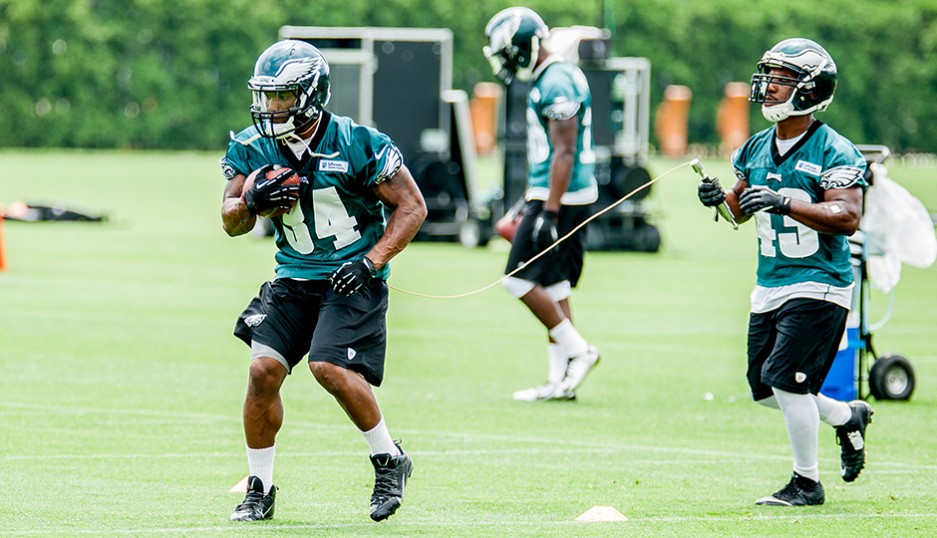
The Vince Papale Brigade: Gonna Try Like An Eagle

Papale

By GORDON GLANTZ

Gordonglantz50@gmail.com

@Managing2Edit

GORDONVILLE – How does Jeremy Maclin look, and feel, after the second major knee surgery of his football career?

What does Nick Foles have to say – or not have to say – as he boards the S.S. Season After?

Will the defense rest, or surge forward, with free agent signee Malcom Jenkins taking over as the captain of the secondary?

These, and other questions, have been exhausted – sometimes so much that they have gone into auto-pilot – just during the OTA workouts that were open to the media at Fort Chip Kelly (i.e. the Novacare Complex).

With training camp around the immediate bend, there are enough side stories that as many reporters and bloggers – and cameramen who could audition as lead blockers on short-yardage situations – will be initially around the lockers of players whose names are barely known to the casual fan as those of Foles or Maclin or LeSean McCoy or Brandon Boykin or Fletcher Cox or DeMeco Ryans.

And while every player who made it to this level has a tale to tell, some have journeys – and backgrounds – that are more compelling than others.

Part of the urgency for the all-out blitz is to get these stories told is not only while they are hot, but also before they rot.

Before the first round of cuts, hope is in the air.

We are talking about some longshots whose ceiling of expectations is landing on the practice squad, or doing enough positive things to end up on the practice squad of another team – or to get a call from the CFL, Arena League or one of the ancillary pro leagues that are popping up.

In some cases, if only from being in the right place at the right time, there are actually guys who could be Philadelphia Eagles this season or who are seen as worthy of long-term investments.

It’s a tough task, getting onto Kelly’s radar, as we are talking about an ascending team that went 10-6 and won the division last season with a young nucleus.

But, in some cases, difficult is a long way from impossible. The odds are that there will be disheartening injuries and surprises cuts, opening the door of opportunity for those who dare to knock.

Given this reality, consider this look at 10 intriguing VPTs (Vince Papale Types) as a public service. An informed fan base is better than having to ask “Who is this guy?” when a player makes a key special teams play in the ninth game of the season. You don’t want to be “that dude” when watching a game with your buddies, do you?

So get ready to run through the gauntlet of snapshots of the longshots:

Alejandro Villanueva, DE, Army: This could be where it begins and ends. The former wide receiver doesn’t dwarf that of the others only because of his stature (6-foot-9, 277 pounds), but also in overcoming adversity. A true war hero, with seven decorations to prove it, his attempt to make it the NFL is beyond compelling. Whether it is eventually fodder for Hollywood or the Hallmark Channel is up to him.

At Army, Villanueva was a defensive and offensive lineman who moved to receiver as a senior and caught a team-high 34 passes (five touchdowns) before heading into real combat as a Captain. His size alone would have likely gotten him a look as a tight end project coming out of school, but he had a commitment to serve his country. With the Eagles, whose 3-4 defensive scheme requires tall defensive linemen bookending a stout nose tackle, he is getting a chance to fulfill his dream at his original college position. The early reviews on a player who hasn’t played football since 2008 are long on how hard he is working, and how he is a quick learner, but short on lauding any standout skills (“intriguing” was the best Kelly could muster).

The Eagles did right by Villanueva by allowing him to pursue his dream in the birthplace of the country, but they have put themselves in a bit of bind. If he doesn’t stick, he goes back into active duty. It is unclear if that applies to the practice squad, though, and it is unclear if Villanueva himself will consider it dishonorable to be stashed on injured reserve with a contrived injury. He will need to convince the brass to keep seven or eight defensive linemen, as opposed to six, and will have to then beat out the likes of fourth-round pick Taylor Hart of Oregon and last year’s seventh-round pick, Joe Kruger, who spent last season on injured reserve and returns more polished.

Because none of the others are war heroes trying out for the NFL after four years of active duty, they are listed in alphabetical order:

Beau Allen, NT, Wisconsin: The Academic All-Big 10 choice who apparently has been on Kelly’s radar for a while, was picked in the seventh round. But Allen, literally and figuratively, fills an immediate void with his girth (6-2, 333 pounds). A colorful character with Thor-like blond locks dangling from him helmet, Allen may end up contributing as much as any draft pick, at least on the defensive side of the ball. That includes first-round pick Marcus Smith, who may be deactivated early on while learning the nuances of playing outside linebacker. Allen, meanwhile, is pure run-stuffing nose tackle. His presence will, at the very least, save wear and tear on second-year starter Bennie Logan (6-2, 317). At the most, Allen could play enough snaps on running downs that the smaller-but-quicker Logan, a third-round pick last year, can line up at end.

Michael Bamiro, OL, Stony Brook: A year ago, the NFL admittedly goofed by not allowing Bamiro declare for the draft, during which it was purported that he might have been a middle-round pick. He was declared a free agent, and the Eagles won a bidding war. What they soon learned about the small-school product was that while you can’t teach size – he’s 6-8, 340 – you also can’t iron out rough edges. He was cu,t but brought back onto the practice squad. This year, during the OTAs that he missed a year ago, Bamiro was shuttled between guard and tackle. Could be a sign they see versatility or it could mean that they don’t see him having the footwork to be an NFL tackle. However, with right tackle Lane Johnson suspended for the first four games of the year, Bamiro is one of several linemen with a shot to hold down the job. Opportunity knocks. Will he answer?

Trey Burton, WR/TE, Florida: As a Gator, Burton was an “athlete” without a position. And if you can’t find a niche at the college level, it should be nearly impossible in the NFL. But as a talent who was recruited asa  running quarterback and eventually lined up at every skill position, one would have to think Kelly’s wheels were turning in double time when the Birds pounced on Burton after the draft.  He is 6-2, 225, and ran a 4.54 40 at the combine. That made him one of the bigger-but-slower receivers or one of the smaller-but-faster tight ends. If Kelly can figure out a role for a guy who scored 20 college touchdowns in a variety of ways, he could factor in the offense down the road – even if that is a year or two down the line. How he is utilized, and how much, will be intriguing to watch for those who actually maintain focus during preseason games.

Henry Josey, RB, Missouri: Another one of those guys with a back story that will elicit justifiable sympathy. Back in 2011, Josey (5-8, 195) was in the midst of a dream season – sitting at second NCAA at 8.1 yards per carry – when the dream turned a nightmare. He suffered a knee injury so severe that it was considered a medical miracle when, after a year away, he played in all of Missouri’s 14 games last season. He put up numbers (1,166 yards rushing, 14 touchdowns), but concerns about his knee surely led to him going undrafted, which may have made him regret not returning for his senior year. But when the Eagles traded away Bryce Brown, moving up in the seventh round to grab Allen and also picking up a future middle-round pick, he seemed like a logical priority post-draft free agent. The job is there – behind McCoy, Darren Sproles and Chris Polk – but Josey will not only have to stay healthy and grasp the system, but also fend off second-year man Matthew Tucker, who made the team last year as an undrafted free agent out of TCU, and fellow undrafted rookie David Fluellen.

G.J. Kinne, QB, Tulsa: Kinne was working on an oil rig when he came to camp last year and impressed Kelly when he volunteered to play special teams. He was cut, but brought back to the practice squad and kept throughout the offseason, which would indicate they made have some long-range plan for Kinne to be a the third-string quarterback of the future. He will enter camp behind Foles, Mark Sanchez and Matt Barkley and isn’t likely to move up the depth chart. But considering how well he knows the system by now, and that Sanchez is only here on a one-year deal, the thinking could be that Barkley moves up to No. 2 in 2015 and Kinne becomes the No. 3. A mobile quarterback with some zip on his passes, Kinne could play well enough in the early preseason games to stick around again for another year. Either that, or go back to the oil rig.

Travis Long, OLB, Washington State: Right now, Long could go down to Pat’s or Geno’s for a cheesesteak and not be asked for an autograph. When the dominos fall at outside linebacker, Long – after living the life of Job in college, suffering injuries that kept him being a middle-round pick (or even being signed immediately after the 2013 draft) – remains on the radar of the coaching staff after year on the practice squad. He has the size (6-4, 255) and toughness, and now has the scheme down. If he shows up on special teams, the higher-paid Brandon Graham could be out of work.

Daytawion Lowe, FS, Oklahoma State: Somebody will realize that two plus two equals four soon enough and run up to the undrafted free agent soon enough with a notepad in hand. With the exception of Josey, Lowe was the highest rated of players signed after the draft. And he plays safety, a position of need. Write the name down and tuck it away.

Ifeanyi Momah, WR. Boston College: He’s back. The wide receiver landscape for the Eagles is vastly different this year, and the 6-8 Momah, who was a raw project the Eagles brought to camp last year and cut before the season, could benefit. With Sproles and tight end Zach Ertz able to line up at more than just their traditional positions, the Eagles may not keep more than five receivers on their active roster. That would necessitate extra sets of hands – like Burton – for the practice squad. You can’t teach size (see Bamiro), so Momah has a legitimate shot to at least be in the program for further development. If he can’t stick this time, though, don’t expect any third chances.

Carey Spear, PK, Vanderbilt: The story line that won’t die, unless the rookie free agent kicker dubbed “Murder Leg” pulls the plug himself. Spear was an OK kicker in college, but only worked out for five pro teams and went undrafted. Some of his tackles went viral on You Tube, but one has to wonder about his leg strength on kickoffs if he had to make so many touchdown-saving stops. As a field goal kicker, he did well enough in OTAs to stick on the team for camp, but remains token competition for third-year kicker Alex Henery, who is coming off a sub-par season but remains the most viable option.

This analysis originally appeared on http://www.phillyphanatics.com on July 20, 2014.